
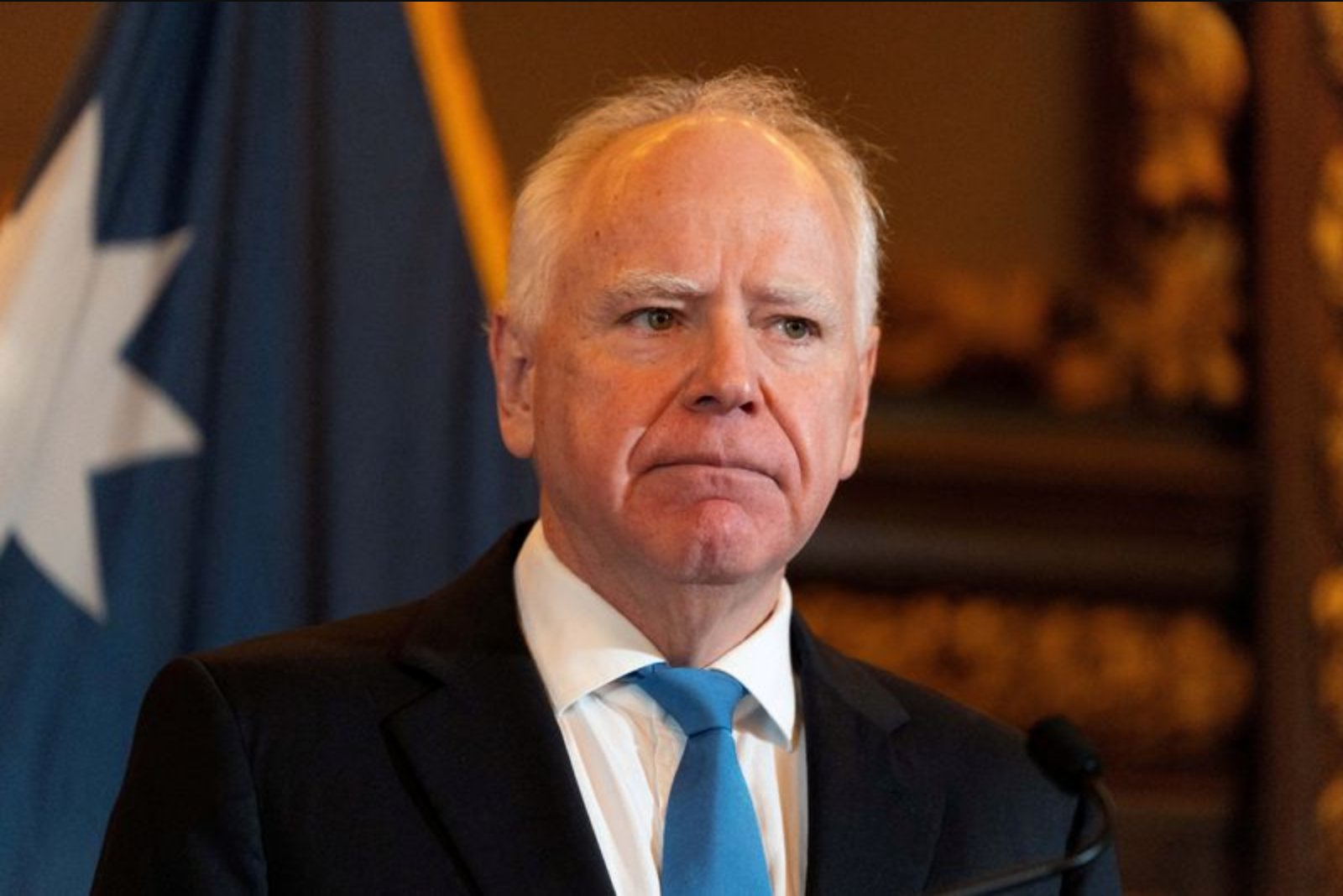
Minnesota Governor Tim Walz told reporters on Tuesday that he expects the federal immigration enforcement operation in his state to cease within days following conversations with senior officials from the Trump administration.
Walz said he spoke on Monday with Tom Homan, the administration's border czar, and on Tuesday with Susie Wiles, the president's chief of staff. He described the state as operating in a "trust but verify" posture and said he anticipated additional official communication from the administration "in the next day or so."
"Minnesota has asked that this surge of folks leave. I spoke with Tom Homan yesterday. I spoke with Susie Wiles, the president's chief of staff this morning," Walz said in a press briefing. "We're very much in a 'trust but verify' mode. But it's my expectation - and we will hear more from them I think in the next day or so - that we are talking days, not weeks and months, of this occupation."
The Department of Homeland Security, which oversees U.S. Immigration and Customs Enforcement, directed inquiries about the matter to the White House. According to Walz, the White House did not respond to a request for comment.
The Trump administration had deployed roughly 3,000 federal immigration agents to Minnesota by the end of January. Tom Homan said last week that about 700 of those agents would be withdrawn.
"It would be my hope that Mr. Homan goes out before Friday and announces that this thing is done, and they're bringing (it) down and they're bringing (it) down in days. That would be my expectation," Walz added.
Officials in the Trump administration have framed the enforcement action as an effort to combat fraud and strengthen domestic security. The operation has generated substantial pushback locally: state and city officials and human rights organizations have criticized the tactics used by federal immigration officers, arguing the enforcement measures infringe on due process and legal rights.
Minnesota has also experienced large-scale protests tied to the presence of federal agents. Those demonstrations intensified after federal immigration officers fatally shot two U.S. citizens, Renee Good and Alex Pretti, in Minneapolis last month. Video recordings of those shootings circulated widely and prompted public outrage.
Advocacy groups representing immigrant and minority communities have warned the federal action has fostered a climate of fear, especially among groups such as Minnesota's Somali community, which rights organizations say has been repeatedly targeted by comments from Trump administration officials. Critics further contend that isolated cases of alleged fraud have been used to justify a broader targeting of immigrant communities, and they point to pardons previously granted by the president to individuals with prior fraud convictions as undermining the administration's stated focus on fraud.
At present, Walz's expectation that the enforcement surge will be short-lived rests on his recent contacts with administration officials and on public statements about partial withdrawals. Officials have not provided a definitive timeline beyond those accounts, leaving the situation subject to confirmation from federal authorities.
What to watch next: Further statements from the White House or from Tom Homan confirming an official timeline for the reduction or end of the federal deployment.