
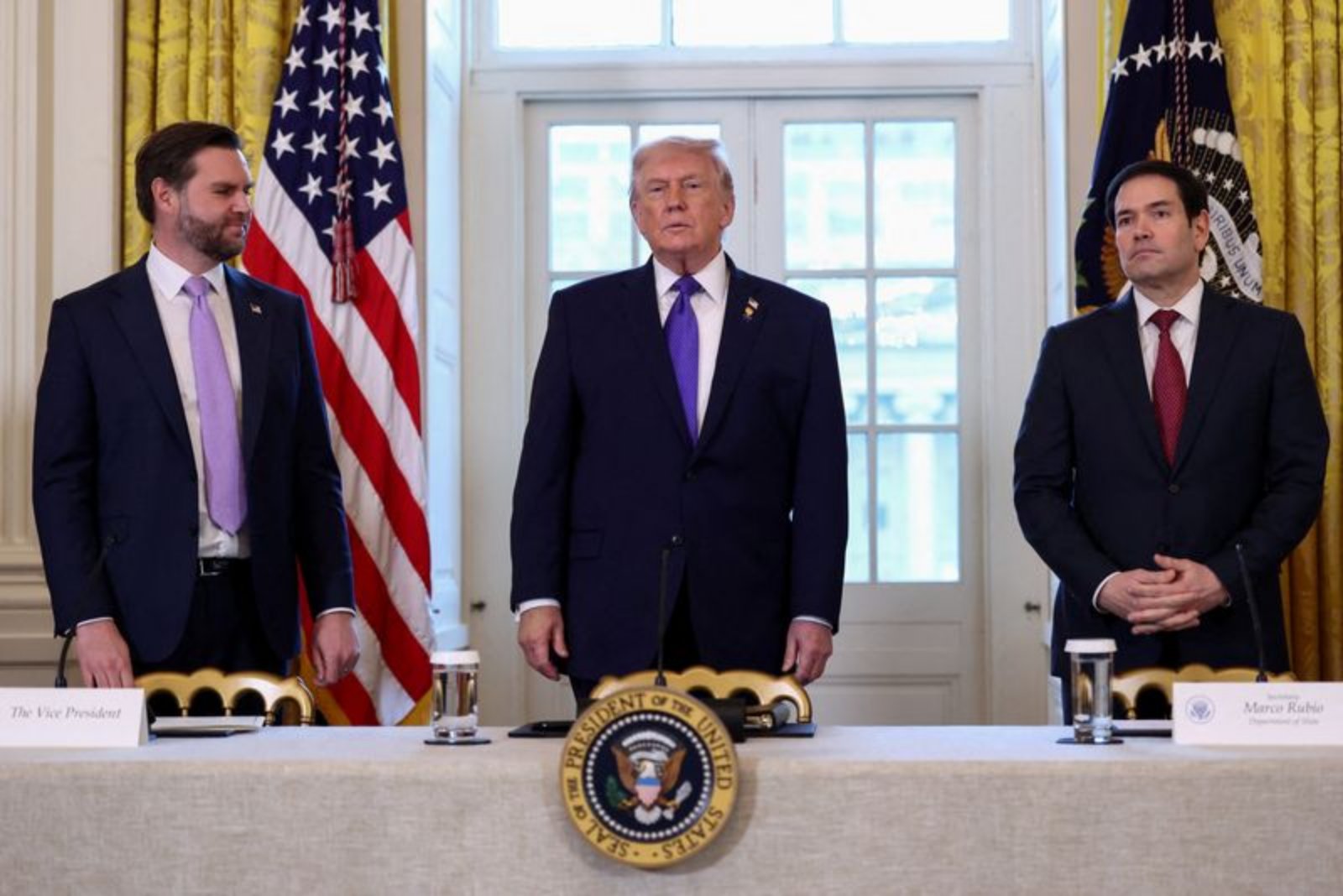
President Donald Trump on Wednesday declined to pick a favored successor between his vice president, JD Vance, and his secretary of state, Marco Rubio, saying he did not want to engage in a public dispute between them even as he signaled he might ultimately endorse someone closer to the election.
When asked during an interview with NBC News whether he would back Vance or Rubio as the most likely candidate to follow him in 2028, Trump said he would "be inclined" to endorse a successor but that he preferred not to address the subject at this time. "We have three years to go. I don't want to, you know, I have two people that are doing a great job. I don't want to have an argument with, or I don't want to use the word 'fight' — it wouldn't be a fight. But look, JD is fantastic, and Marco is fantastic," he said.
Vance, a former Republican senator from Ohio, has indicated that he plans to speak with Trump about the possibility of launching a presidential campaign after the November midterm elections. Rubio, who served as a senator from Florida and sought the Republican nomination in 2016 before losing to Trump, has not ruled out a 2028 bid and has spoken favorably about Vance as a strong potential candidate.
Trump suggested that the two men could complement one another on the same ticket, a pairing he has often advocated. He described both as highly intelligent and capable, while distinguishing their approaches. "I would say one is slightly more diplomatic than the other," he said, adding that "I think there’s a difference in style. You know, you can see the style yourself. But they’re both very capable. I do think this: The combination of JD and Marco would be very hard to be beaten, I think. But you never know in politics, right?"
The president also reiterated a comment that had drawn attention last year when he suggested the possibility of remaining in office beyond the customary two terms - a prospect widely regarded as unconstitutional. Asked whether he could envision "any scenario" in which he would still be president when the next president's term begins in January 2029, Trump replied: "I don't know. It would be interesting." He had previously raised the idea last year but later stepped away from it.
Political operatives and observers expect the 2028 race to be highly contested on both sides of the aisle, with a broad field of contenders likely to emerge. In the meantime, Trump emphasized his current confidence in both Vance and Rubio while declining to make an immediate choice that might pit one aide against the other.
Note on scope: The reporting above is limited to statements and developments detailed by the subject in the interview and related public remarks; it does not include additional analysis or external claims beyond those expressed by the individuals cited.