
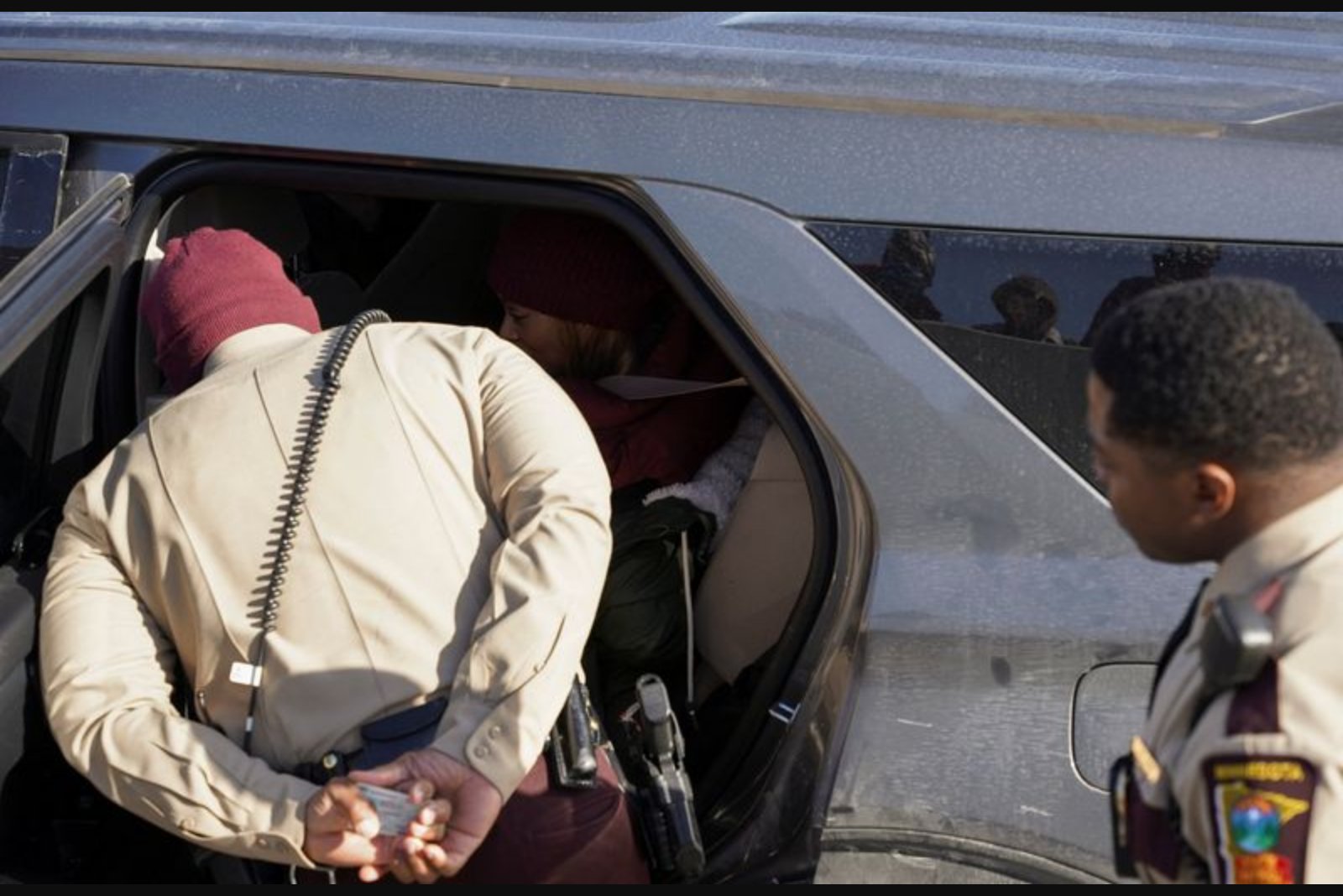
Negotiations over Department of Homeland Security (DHS) funding have stalled in the Senate as lawmakers debate a package of immigration-related restrictions sought by Democrats and safety and enforcement provisions demanded by Republicans. A vote on legislation to fund DHS past a Friday cutoff was blocked on Thursday, leaving Congress racing to reconcile sharp differences in just a short negotiation window.
At the heart of the dispute are five main areas of contention that both parties must resolve to avert a shutdown.
1) Identification and recording of enforcement officers
Democrats in both chambers want stringent controls on how Immigration and Customs Enforcement (ICE) and Customs and Border Protection (CBP) agents conduct operations. Key Democratic proposals would require agents - particularly those operating on roving patrols - to remove face coverings and display legible name and badge identification. They are also pushing for agents to wear body-worn cameras, and for statutory procedures that would make camera footage accessible during investigations of officer conduct.
Additional Democratic language would require judicial warrants before DHS officers can enter private property. Supporters of these measures characterize them as bringing ICE and CBP into alignment with longstanding practices used by many police departments and other law enforcement agencies.
Republicans counter that imposing such constraints could jeopardize the safety of agents and their families by limiting operational discretion.
2) Limits on where ICE and CBP can carry out enforcement
Democrats seek legal prohibitions on ICE and CBP conducting enforcement actions at sensitive locations, including churches, schools, hospitals, polling places and courts. The aim, according to advocates of the restrictions, is to prevent enforcement activity in sites where vulnerable populations gather or where civic functions occur.
3) Access and oversight at detention facilities
On detention oversight, Democrats propose tighter safeguards at DHS facilities that hold migrants. They want to require immediate access for detainees' lawyers and to remove barriers that they say have hindered congressional oversight. Democrats argue that these steps would prevent U.S. citizens from being arrested or detained in error and would restore lawmakers' ability to visit detention centers without the impediments they contend the administration has erected.
4) Republican focus on protecting federal agents
Republicans emphasize the need to ensure federal officers can carry out arrests and deportations of individuals in the country illegally as directed by the President. They argue that enabling enforcement will make American communities safer. Within a $64.4 billion DHS funding bill, Republicans seek provisions that would punish so-called "sanctuary cities" that do not coordinate with federal immigration efforts.
Legal constraints, however, complicate that aim. There is no statutory definition of what constitutes a sanctuary jurisdiction, and courts have repeatedly ruled that state and local governments cannot be compelled to enforce federal regulatory programs. In addition, the federal government cannot withhold funds from localities to coerce cooperation, according to existing court rulings.
5) The timeline - the clock and the calendar
The imminent Friday deadline means negotiators have roughly two weeks to reconcile these complex and politically fraught proposals. Democrats have argued that the timeframe is adequate to reach agreement. Republicans contend that the issues are too complicated to be resolved, then translated into legislative text and sold to rank-and-file lawmakers in that period.
As talks continue, the standoff highlights a broader clash over the balance between civil oversight and enforcement discretion within federal immigration operations. Lawmakers face the immediate technical task of drafting language that can achieve bipartisan support while maintaining deeply held priorities on both sides.
The outcome will determine whether DHS receives continued funding before the deadline and will shape statutory limits or protections governing ICE and CBP operations, detention oversight, and the role of state and local jurisdictions in immigration enforcement.