
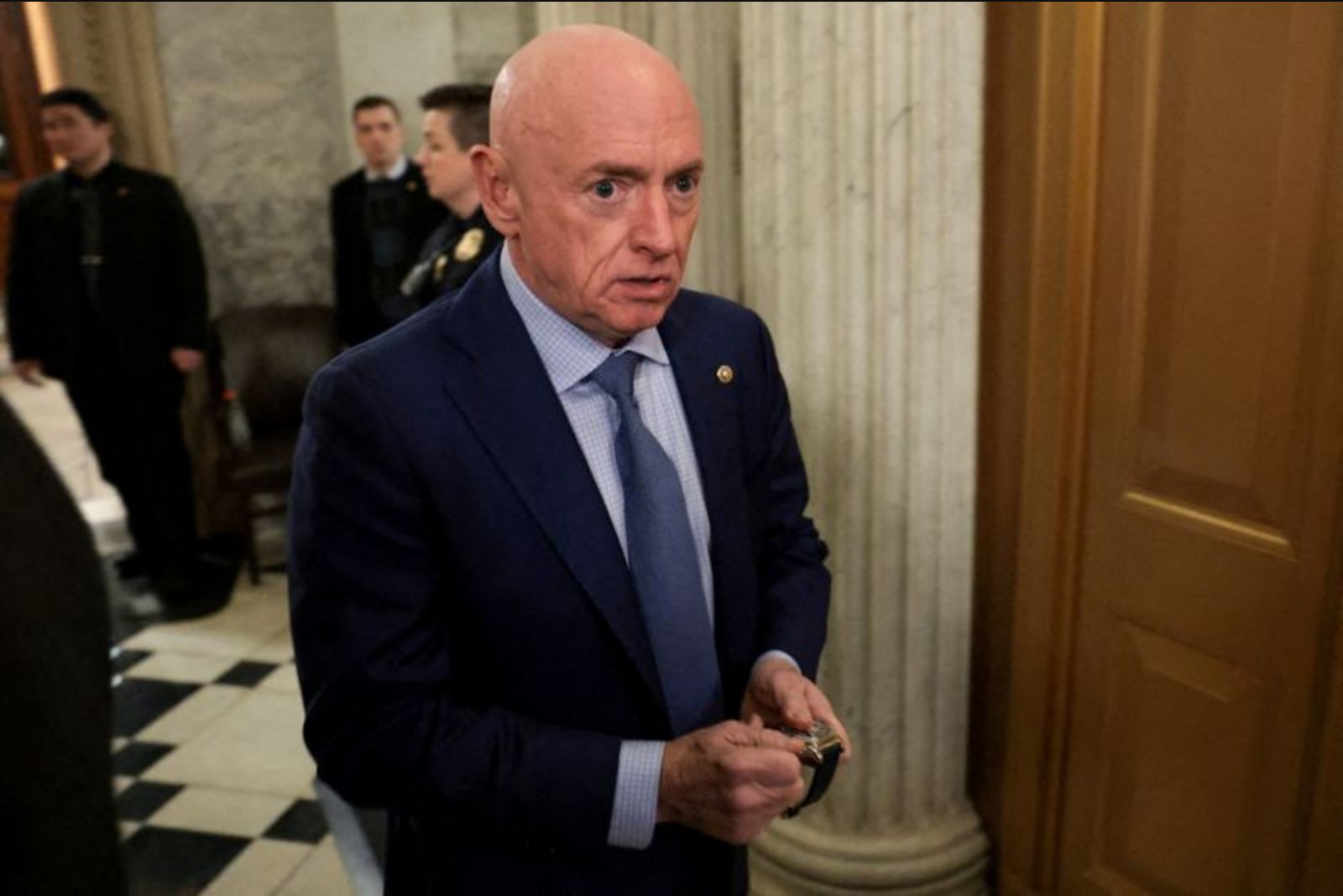
Several Democratic lawmakers said they found out through press coverage that the federal government had attempted, but did not succeed, in seeking indictments and arrests against them - and some are now considering legal action in response.
"This is not a good news story," Democratic Senator Mark Kelly of Arizona said at a news conference. "This is a story about how Donald Trump and his cronies are trying to break our system in order to silence anyone who lawfully speaks out against them."
A source familiar with the matter said on Tuesday that a grand jury had rejected an effort by the Republican president's administration to bring charges against the group of Democrats after they urged members of the military not to comply with unlawful orders.
The episode comes amid a pattern, lawmakers and others say, of the president and his allies calling for punitive measures against perceived political opponents. Since returning to the presidency in January 2025, the president has publicly advocated for imprisoning adversaries, and the Justice Department has pursued cases against critics including former federal officials John Bolton and James Comey.
In a separate high-profile instance, Federal Reserve Chair Jerome Powell said in January that the administration had threatened to indict him over congressional testimony concerning a Fed building project.
The six Democratic lawmakers who became the focus of the recent probe have military or intelligence backgrounds. In November they released a video urging members of the U.S. military to refuse unlawful orders. That video prompted the president to accuse them of sedition and to label them traitors who could face execution.
The White House described the video as a threat to national security and later said the president did not want congressional Democrats executed. The video did not reference specific incidents. It was released at a time when those Democrats were vocally critical of military strikes on vessels alleged to be involved in Venezuelan drug trafficking in the Caribbean and Pacific, and of the administration's deployment of National Guard troops to U.S. cities.
Senate Republican Majority Leader John Thune commented to reporters that while he thought the video was "a really dumb move," he did not believe the lawmakers should face indictment. "No, I don’t think so. I mean, that wouldn’t have been my response to that, but we are where we are," he said.
At the news conference, Senator Elissa Slotkin of Michigan, a former intelligence analyst and Iraq War veteran, said she was reserving judgment on whether to pursue litigation. Slotkin said the lawmakers did not know what charges the Department of Justice had sought.
"If things had gone a different way, we’d be preparing for arrest," Slotkin said. She described the timeline as beginning with an inquiry opened in December, carried into January, and then moving to a grand jury after the lawmakers declined to sit for voluntary interviews.
Slotkin said she had requested that U.S. Attorney Jeanine Pirro and other officials preserve documents related to the investigation and provide confirmation that the probe has concluded.
Separately, an attorney for Representative Jason Crow of Colorado - a former Army Ranger who served three tours in Iraq and Afghanistan - demanded that U.S. Attorney Pirro cease pursuing the matter and preserve records. The lawyer, Abbe Lowell, argued in a letter that the case could infringe on Crow's constitutional free-speech rights and on legal protections afforded to members of Congress, according to a copy of the letter reviewed by news organizations.
Senator Kelly has also filed suit against Defense Secretary Pete Hegseth, alleging that efforts to strip Hegseth of his retired Navy captain rank over the video violated free-speech protections.
Lawmakers who were targeted in the inquiry say they learned of the government's actions indirectly and are taking steps to secure documentation and legal clarity. Officials named in their requests for preserved materials include the U.S. attorney overseeing the inquiry and other Justice Department personnel they say were involved in the process.
The sequence described by the lawmakers outlines an inquiry that moved from an initial investigation to grand jury consideration after voluntary interviews were declined, and ultimately did not produce an indictment. The rejection by the grand jury is the central fact lawmakers cited as the point at which the effort halted.
As they consider litigation and demand formal confirmation that the probe is closed, the targeted Democrats continue to stress protections for free speech and the special legal safeguards that apply to members of Congress when performing official duties.