
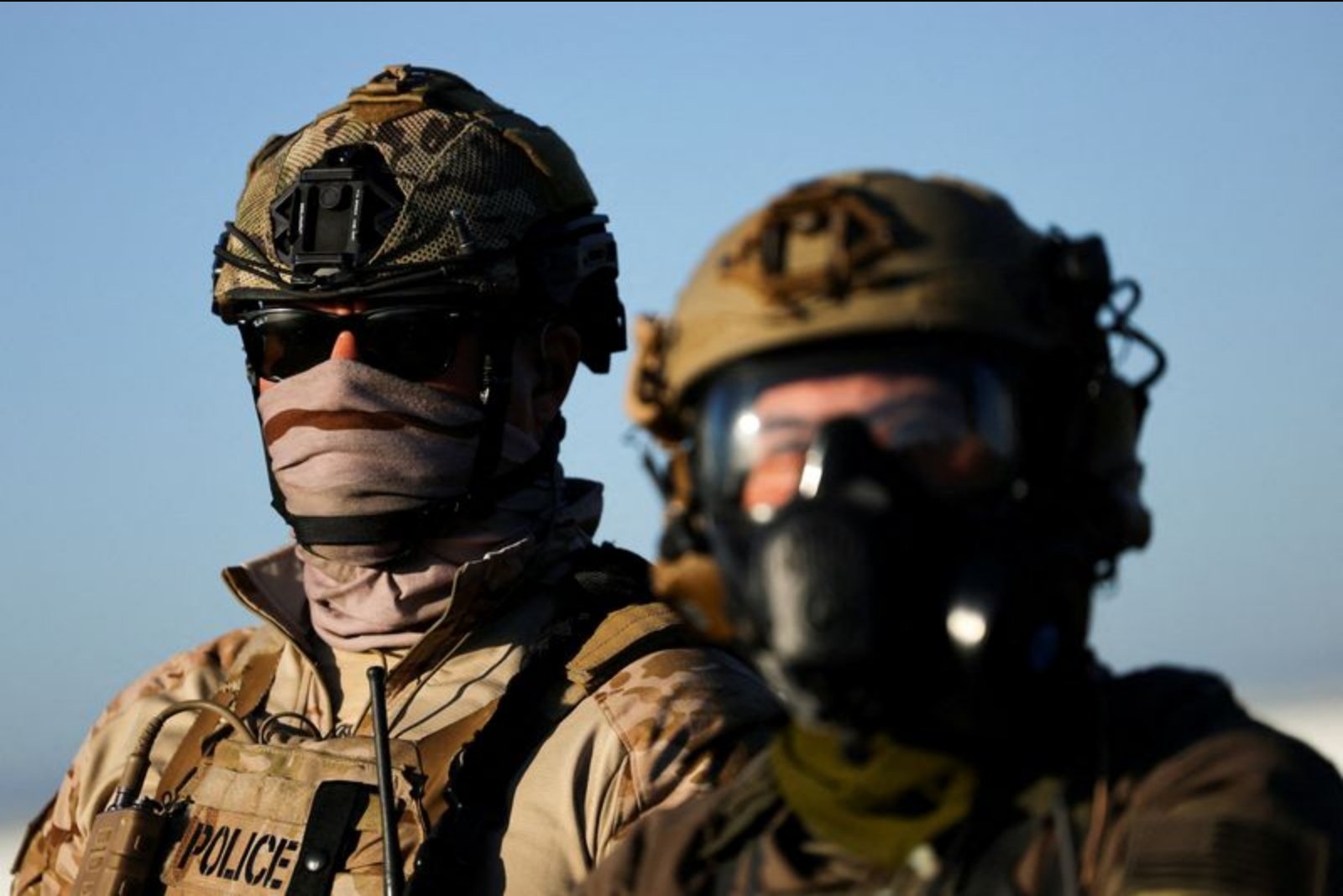
A federal judge in Los Angeles has provisionally blocked enforcement of a California statute that would forbid federal officers from wearing masks while carrying out their duties, ruling that the U.S. government is likely to succeed on constitutional grounds.
U.S. District Judge Christina Snyder issued the preliminary ruling at the request of the Department of Justice, finding that the federal government had established a likelihood of proving the mask ban unconstitutional and granting an order to prevent the state from enforcing that provision for now.
In the same decision, Judge Snyder declined to strike down a separate California provision that requires federal officers to display identification when performing official duties. The judge's ruling therefore splits the two contested provisions: the masking prohibition is enjoined, while the identification requirement remains in force.
California Governor Gavin Newsom reacted to the mixed ruling by calling the court's decision on the identification requirement "a clear win for the rule of law," and saying that "no badge and no name mean no accountability." The governor signed the two provisions into law in September amid the deployment of National Guard troops to Los Angeles by Republican President Donald Trump during protests connected to immigration enforcement operations.
The Justice Department filed a lawsuit in November seeking to invalidate the California measures and publicly stated it would not comply with the state laws. In its complaint, the department argued that federal officers "face a real threat of criminal liability from state officials who have made clear their intent to target federal officers and disrupt federal law enforcement activities, including federal immigration enforcement."
Judge Snyder - an appointee of Democratic President Bill Clinton - agreed with the Trump administration's contention that the mask ban runs afoul of the U.S. Constitution's Supremacy Clause, which bars states from obstructing federal functions. The judge concluded that the law singled out federal officers by applying to them while expressly excluding state law enforcement officers from the same masking prohibition.
U.S. Attorney General Pam Bondi issued a statement on social media calling the decision on the mask provision "ANOTHER key court victory." Bondi said federal agents are "harassed, doxxed, obstructed, and attacked on a regular basis just for doing their jobs," and added, "We have no tolerance for it."
The court's ruling leaves in place the identification requirement while pausing the mask ban, and preserves the parties' legal positions for further proceedings. The injunction on the mask provision is preliminary, meaning the substantive constitutional challenge to that part of the law remains to be resolved in the litigation.
Context noted in the record
- The bills were signed by the governor in September at a time of National Guard deployment to Los Angeles tied to immigration enforcement protests.
- The Department of Justice sued in November and stated it would not comply with the contested state statutes.
- The department asserted that federal officers face threats of criminal liability and targeted interference from state actors.