
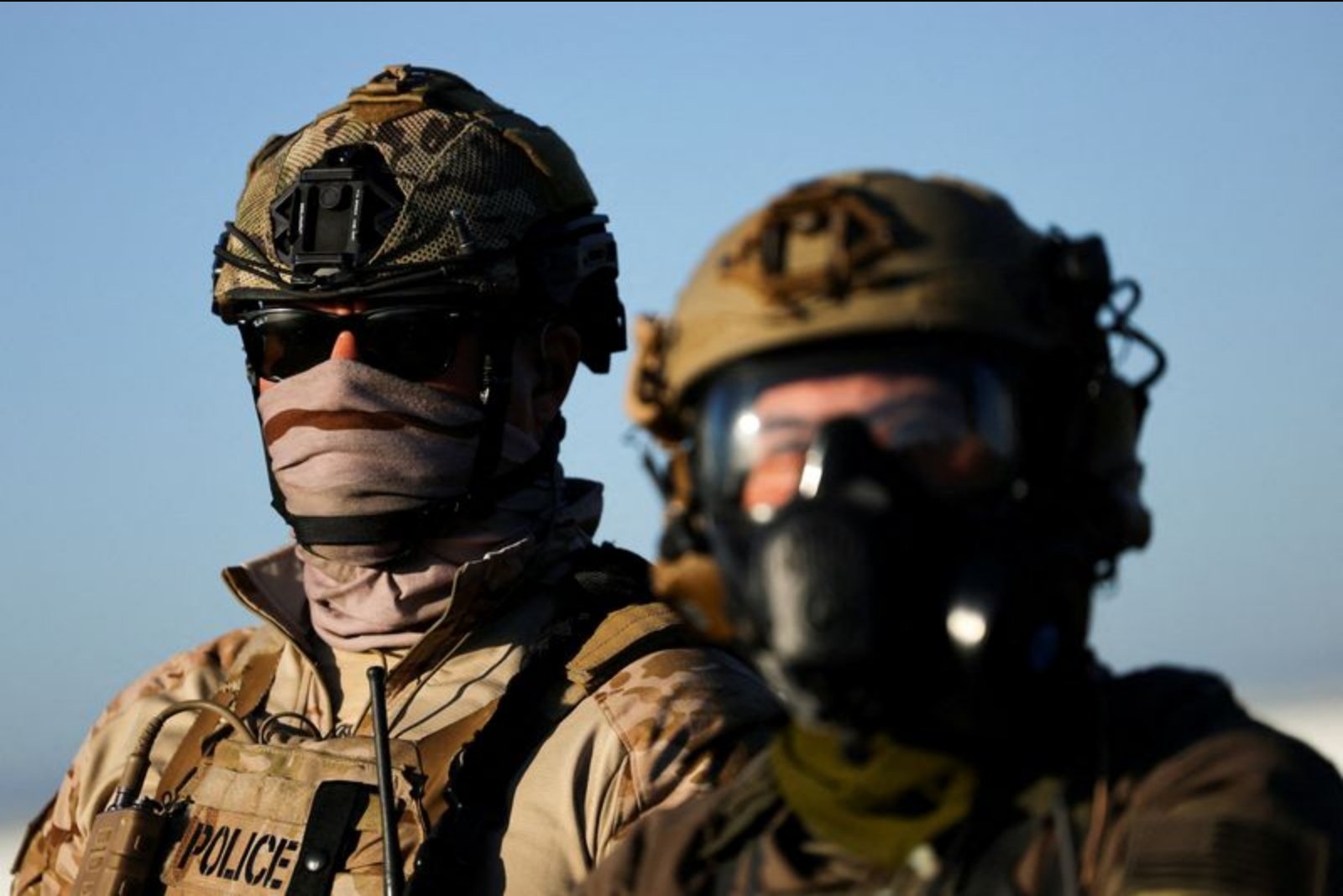
A federal judge in Los Angeles on Monday issued a preliminary ruling that blocks enforcement of a California statute prohibiting federal officers from wearing masks while carrying out their duties. The court found the U.S. government is likely to demonstrate that the mask prohibition is unconstitutional, and it granted the federal government's request for an order preventing the state from enforcing that provision.
In the same decision, the judge upheld a different California measure that obliges federal officers to show identification while they are performing official duties.
California Governor Gavin Newsom hailed the ruling on the identification requirement, saying in a statement that it was "a clear win for the rule of law," and adding that "no badge and no name mean no accountability."
U.S. Attorney General Pam Bondi praised the court's action on the mask issue in a post on X, calling it "ANOTHER key court victory." Bondi said federal agents face frequent harassment and other harms, asserting, "These federal agents are harassed, doxxed, obstructed, and attacked on a regular basis just for doing their jobs," and adding, "We have no tolerance for it."
The contested provisions were signed by the governor in September amid the deployment of National Guard troops to Los Angeles by Republican President Donald Trump during protests tied to immigration enforcement operations. The U.S. Department of Justice filed suit in November seeking to nullify the laws and stated that it would not comply with them.
In its complaint, the Justice Department argued that federal officers "face a real threat of criminal liability from state officials who have made clear their intent to target federal officers and disrupt federal law enforcement activities, including federal immigration enforcement."
U.S. District Judge Christina Snyder, an appointee of Democratic President Bill Clinton, sided with the Trump administration's contention that the California mask prohibition violates the Constitution's Supremacy Clause, which bars state interference with federal functions. The judge wrote that the law improperly singled out federal officers for differential treatment because state law enforcement personnel were expressly exempted from the mask ban.
The preliminary injunction prevents California from enforcing the mask restriction against federal officers while the litigation proceeds. The other provision requiring identification remains in effect following the court's ruling.
Context and immediate effects
The ruling creates a bifurcated outcome: federal officers are temporarily protected from a state ban on masks, but they remain subject to California's identification requirement. The legal dispute, brought by the Department of Justice, frames the issue as one of federal supremacy and differential treatment between federal and state law enforcement personnel.