
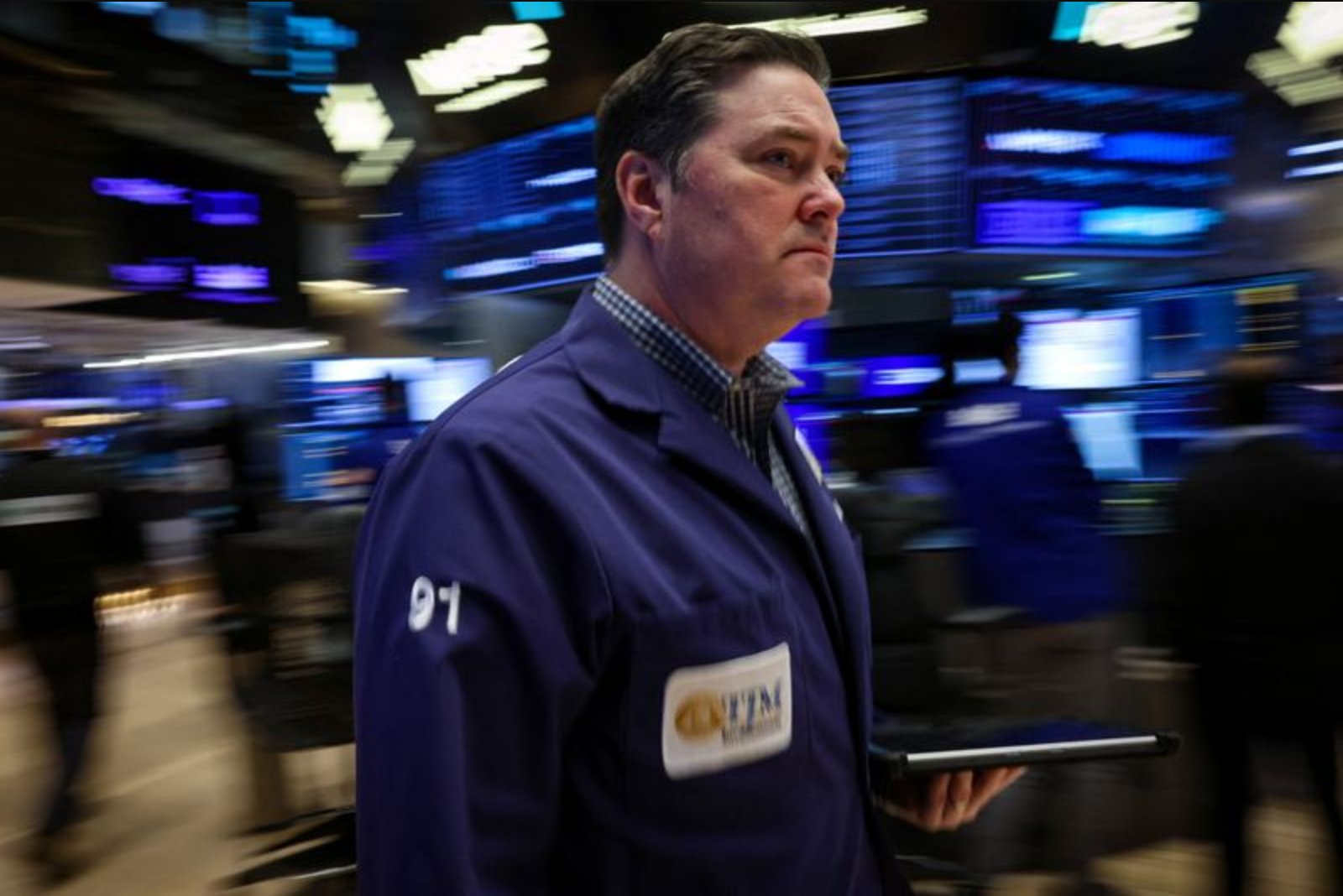
U.S. stock index futures opened the week with modest declines as concerns about disruption tied to artificial intelligence continued to rattle investors following the long weekend. The renewed anxiety over AI-driven change, which hit software companies, brokerages and trucking businesses last week, contributed to Wall Street’s three major indexes posting their largest weekly drops since mid-November.
Mohit Kumar, an economist at Jefferies, described the trend as more of a rotation trade than an outright risk-off event, noting that while AI adoption is broadly positive it will alter the business models of some industries. The market reaction has been uneven as participants weigh which firms will benefit versus those that may see their economics reshaped.
Adding to the uncertainty were developments among Chinese technology firms. Alibaba introduced a new AI model called Qwen 3.5 intended to carry out complex tasks autonomously. U.S.-listed shares of Alibaba were up 1% in premarket trading on Tuesday.
Most major U.S. technology names slipped on Tuesday, with Nvidia down 1% and both Microsoft and Apple retreating about 0.4% each in early trade.
At 05:46 a.m. ET, futures were lower across the board: Dow E-minis were off 69 points, or 0.14%; S&P 500 E-minis had lost 23.25 points, or 0.34%; and Nasdaq 100 E-minis had declined 191.75 points, or 0.77%.
Beyond equity moves, attention in Washington and on Wall Street is focused on this week’s personal consumption expenditures report - the Federal Reserve’s preferred inflation gauge. That dataset follows a consumer inflation reading last week that came in cooler than expected, which has slightly increased market odds for interest rate cuts this year.
Traders are currently pricing in a 25-basis-point rate reduction in June, with the probability estimated at 52%, up from about 49% a week earlier, according to the CME FedWatch Tool.
Corporate earnings remain a central theme for investors. Constellation Energy, eToro and Labcorp were scheduled to report before the market opens. Through the quarter, more than 73% of S&P 500 companies had reported results, with 74.5% beating analysts’ estimates, compared with a long-run typical beat rate of 67%, LSEG data showed.
Market participants were also set to take in remarks from Federal Reserve Governor Michael Barr and San Francisco Fed President Mary Daly during the trading day.
In premarket movers, Norwegian Cruise Line surged 10% after a report that activist investor Elliott has accumulated a stake exceeding 10% in the cruise operator. U.S.-listed shares of Zim Integrated Shipping climbed roughly 35% following an announcement that Germany’s Hapag-Lloyd agreed to acquire the company for $4.2 billion.
Medical device maker Masimo jumped about 37% after reports indicated Danaher was nearing a deal to purchase the pulse-oximeter manufacturer for nearly $10 billion; Danaher’s shares fell about 4.8%.
Investors were also watching the Supreme Court’s next opinion day on Friday, when a decision related to U.S. President Donald Trump’s tariffs could be released.
Summary
Futures pointed lower as AI-related disruption fears continued to pressure technology and other sectors, while traders monitored upcoming corporate earnings and the PCE inflation report that could shape the Fed’s path on rate cuts.
Key points
- AI concerns drove last week’s selloff in software, brokerages and trucking firms and continued to influence market sentiment into Tuesday.
- Investors await the PCE inflation report this week - the Fed’s preferred gauge - amid slightly stronger market odds for a June rate cut.
- Corporate earnings remain in focus, with several companies scheduled to report and a high share of S&P 500 firms already posting results that beat estimates.
Risks and uncertainties
- Ongoing AI-driven shifts could materially change business models in affected sectors, creating winners and losers among software, brokerage and logistics companies.
- Inflation readings and the PCE report may alter expectations for Federal Reserve rate cuts, affecting interest-rate sensitive markets.
- Event-driven moves from corporate news and activist investments or acquisition announcements can produce sharp stock swings, as seen in cruise lines, shipping firms and medical device makers.
Note: This article reflects the data and company actions reported ahead of and during Tuesday’s session and does not include any additional forecasts or outside information.