
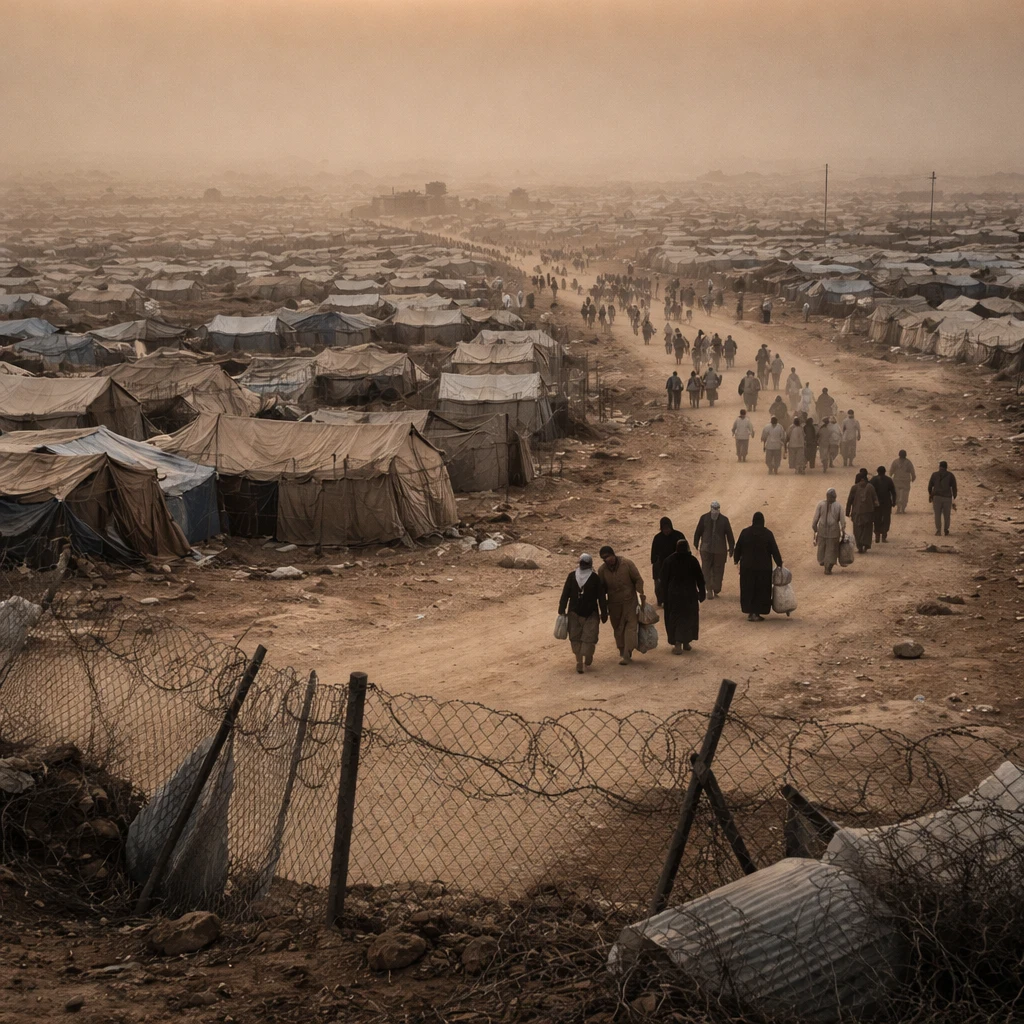
U.S. intelligence agencies estimate that roughly 15,000 to 20,000 people are now unaccounted for in Syria after leaving a facility that held relatives of Islamic State fighters, according to officials familiar with the estimate. The departures followed a sharp deterioration of security at the Al-Hol camp in recent weeks.
Al-Hol, situated in Syria's eastern desert, had been under the protection of the U.S.-backed Syrian Democratic Forces for several years. The camp's security apparatus collapsed after the Syrian government routed those forces, leaving the camp vulnerable and precipitating widespread departures.
Security specialists have long expressed concern about the environment inside Al-Hol, warning that wives of Islamic State fighters were raising children inside the sprawling encampment who could be influenced by militant ideology. The potential release of people who may have been radicalized during extended stays behind razor wire has become a central worry among analysts and officials.
At its post-caliphate peak following the 2019 military campaign that dismantled the Islamic State's territorial control in Syria, Al-Hol held more than 70,000 people. The population had declined over time, and a recent Pentagon Inspector General report noted that by the end of 2025 the camp held more than 23,000 individuals.
Western diplomats in Damascus reported that more than 20,000 camp residents left within days amid rioting and escape attempts after the Syrian government assumed control last month. The mass departures transformed a facility that had been tightly controlled into a scene of disorder and movement, raising questions about the whereabouts and status of those who left.
The episode at Al-Hol underscores persistent challenges in securing and managing large populations of detainees and internally displaced people linked to armed groups. Officials continue to monitor the situation while assessing the implications of such a sizable movement of people who had been held in a facility associated with Islamic State families.
Context and immediate developments
Security at the camp deteriorated over several weeks, culminating in a collapse of the guard structure following the routing of the Syrian Democratic Forces by the Syrian government. That sequence of events directly preceded the large-scale departures observed by diplomats and estimated by intelligence agencies.
Ongoing concerns
Authorities and security analysts remain focused on the risk that some who left Al-Hol may have been radicalized during their time in the camp, particularly given longstanding warnings about the influence of militant networks on children and family members housed there. Tracking and managing such populations presents logistical and security challenges for regional actors.