
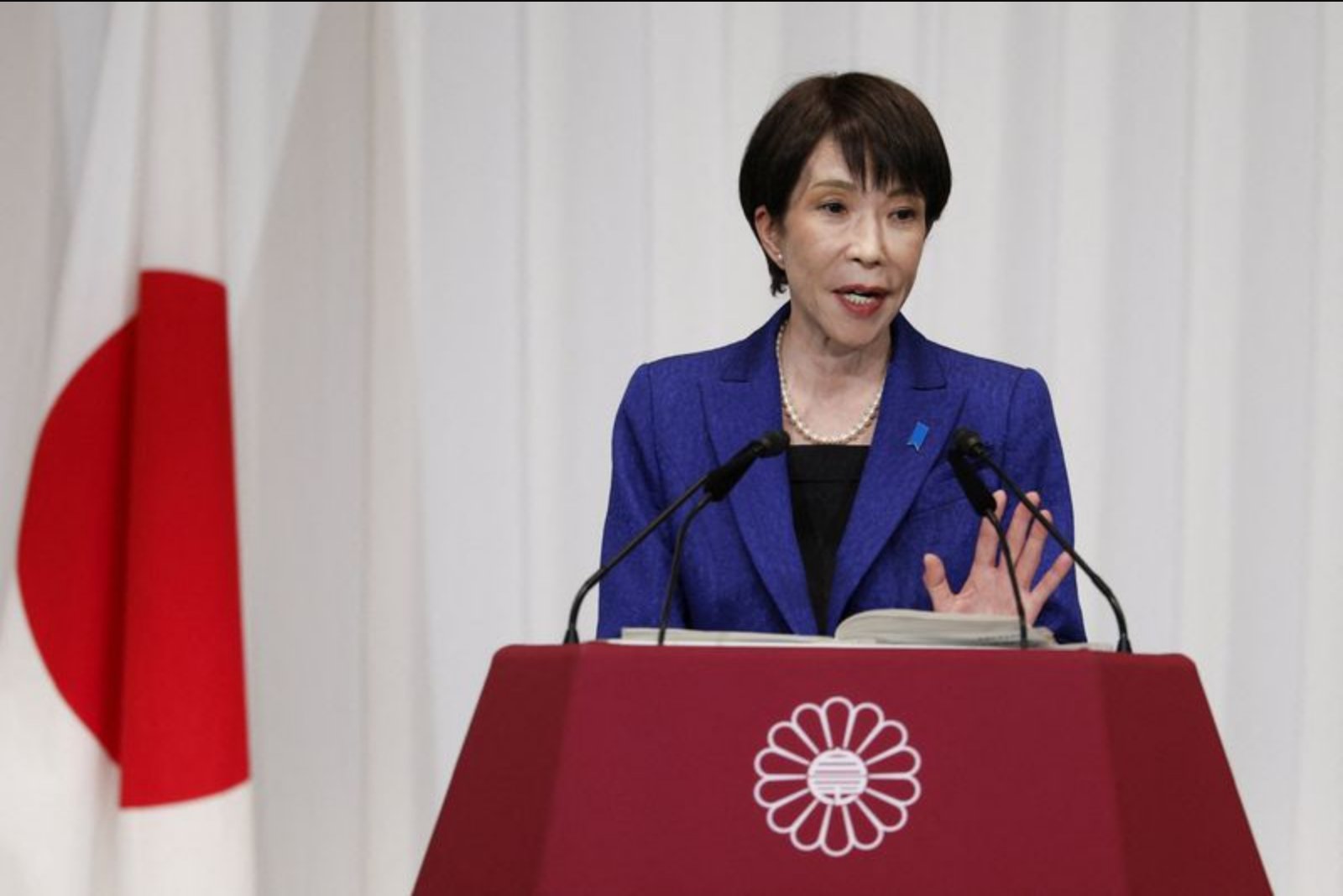
Bank of Japan Governor Kazuo Ueda and Prime Minister Sanae Takaichi are set to meet on Monday at 5 p.m. local time (0800 GMT) for their first one-on-one conversation since the ruling party’s commanding election victory. The session arrives at a moment of heightened market attention, with traders and analysts watching whether the government and the central bank will discuss the BOJ’s path for additional rate increases.
Markets have been abuzz with conjecture that rising living costs - a trend driven in part by the yen’s weakness - could accelerate the BOJ’s timetable for raising interest rates, with some participants pricing the chance of another hike as soon as March or April. The upcoming meeting follows a pattern of periodic bilaterals: the BOJ chief typically meets the premier about once each quarter to review economic and price developments.
The two officials previously met in person in November, a gathering that preceded the BOJ’s December increase in its short-term policy rate. After that November discussion, Ueda told reporters the premier "seemed to have acknowledged" his explanation that the BOJ was lifting rates gradually to help Japan achieve a smooth landing toward its inflation target. A month after that November exchange, the central bank raised its short-term policy rate to 0.75%, a level described as a 30-year high.
Takaichi’s electoral victory on February 8 has sharpened scrutiny of whether she will renew earlier calls for sustained low rates. During her campaign she made remarks that markets interpreted as endorsing the benefits of a weaker yen. Known as an advocate for expansionary fiscal and monetary approaches, she has so far remained quiet on specific BOJ policy actions since taking office.
Recent currency moves have shifted the backdrop for policy deliberation. After slipping toward the psychologically sensitive 160 per dollar level in January, the yen posted its largest weekly gain since November 2024, strengthening by nearly 3% last week. In Asian trading on Monday the dollar was quoted at 152.66 yen. Some analysts say that the yen’s partial rebound may alter the government’s assessment of how quickly further rate hikes would be desirable.
Under Japanese law the BOJ is formally independent, yet that independence has not prevented political pressure in the past for looser monetary support during periods of economic weakness. Yen fluctuations have historically provoked political calls for central bank action as policymakers seek measures to influence market moves.
Within the BOJ’s governance structure, the prime minister also has the authority to nominate members to the nine-member board. This year two seats on the board will become vacant, a factor that could influence internal policy debates depending on who is appointed.
Since taking charge, Ueda has overseen a departure from his predecessor’s extensive stimulus program and has incrementally raised short-term rates throughout 2024, including the December increase noted above. With inflation having exceeded the BOJ’s 2% target for nearly four years, the central bank has emphasized its preparedness to keep raising interest rates as needed. Market pricing currently implies roughly an 80% probability of another rate hike by April.
Context and next steps
The meeting provides a formal setting for the two leaders to exchange views on price trends, currency developments and the pace of future policy adjustments. While neither side has disclosed an agenda in detail, the interaction will draw attention from financial markets sensitive to any signals about the BOJ’s next move.