
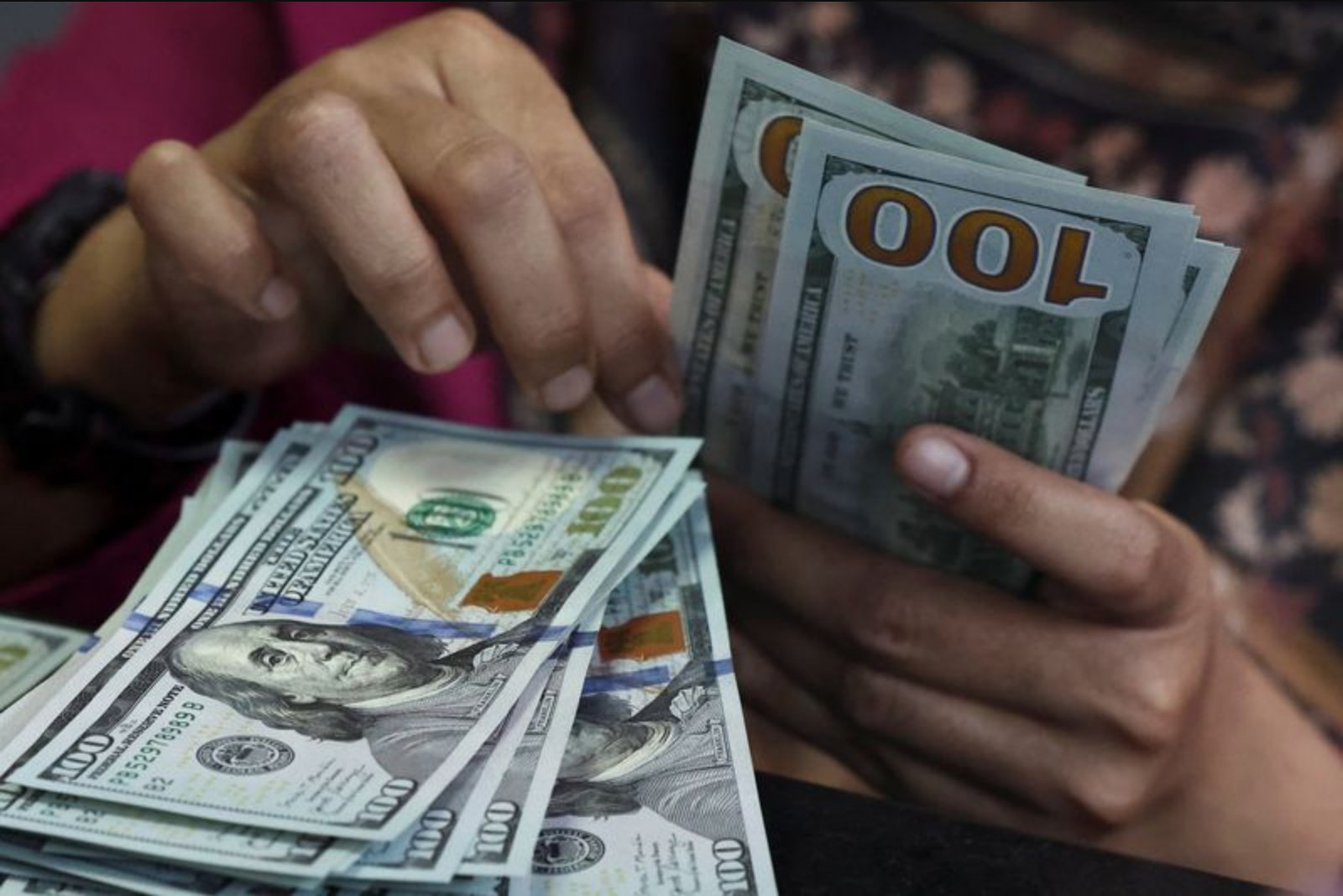
The U.S. dollar looks set for at least a temporary reprieve after losing ground for four months, as shifts in both political and economic forces give the currency some renewed support. Market participants and strategists say the combination of brighter U.S. growth signals, continued foreign demand for American stocks and bonds, and a change in perceptions about Federal Reserve policy have taken some pressure off the dollar.
For much of the recent stretch, the greenback was pushed lower by a constellation of factors: a strong euro, market expectations for interest-rate cuts from the Fed, and uncertainty tied to President Donald Trump’s trade and fiscal approaches. That downward pressure has, for now, eased, according to analysts who monitor currency flows and derivatives positioning.
The dollar index - which tracks the currency against six major trading partners - has remained below the 100 mark since November, has declined 6.7% since Liberation Day, and hit a four-year low in January. The currency’s heaviest losses this year have come against the higher-yielding Australian dollar. It has also weakened even relative to the Japanese yen, a currency that has otherwise been relatively soft.
A move higher in the dollar would reverberate across global markets, affecting trade patterns, corporate results for multinationals and allocation decisions for the vast pools of cross-border capital. Analysts note that a reversal could also reduce stress on emerging market currencies and prompt different hedging calculations by global investors who had been increasing hedge ratios during the dollar’s decline.
Why some strategists are turning bullish
Dan Tobon, head of G10 FX strategy at Citi in New York, described his team’s stance succinctly: "We are dollar bulls in a world of dollar bears right now." Tobon expects the dollar to strengthen at least through the third quarter of the year, particularly versus the euro, the Canadian dollar and sterling. He acknowledged that headwinds remain - including hedging activity by foreign investors and a perceived risk to Fed independence from the administration - but said that an administration that becomes less politically aggressive ahead of the midterm elections would provide additional support.
"We think animal spirits will be coming back a bit. All of these things in conjunction, in our view, should actually be quite positive for the dollar," Tobon said.
Jane Foley, head of currency strategy at Rabobank in London, said much of the negative sentiment toward the dollar has already been priced in. She pointed to the relative strength of the U.S. consumer as a factor that is attracting investment flows into the country.
Derivatives and positioning show a tentative rotation
Investor behavior in derivatives markets supports the view that sentiment is shifting. After months of increased hedging - which itself intensified the dollar’s slide by raising supply of dollar-related trades - options and other derivatives now indicate a slower reallocation. January currency options data from the CME Group showed traders buying protection against further dollar depreciation while also taking bullish positions on the euro.
Data from OptionMetrics shows a decline in risk reversals for the euro and sterling from their January peaks, a move that coincided with Kevin Warsh’s nomination to the Fed. Market participants interpreted Warsh’s record as that of a steady hand, one not inclined toward further large-scale asset purchases by the central bank. That perception has helped soothe fears that the Fed could move toward aggressive easing or lose its independence, analysts said.
Garrett DeSimone, head of quantitative research at OptionMetrics, noted growing interest in option structures known as butterflies, which are used to profit when underlying currency pairs remain relatively stable. "Taken together, this suggests the market is dialing back bets on U.S. dollar debasement, while investors are still paying for convexity in either direction," DeSimone said.
Counterarguments and lingering skepticism
Not all major houses expect a sustained dollar comeback. Strategists at J.P. Morgan and Bank of America remain unconvinced that the currency can mount a significant rally from here. Francesca Fornasari, head of currency at Insight Investment, highlighted a recent shift in perceptions about how the U.S. administration views currency policy. "We are in an environment in which the administration would like to have a weaker dollar," Fornasari said. On that basis, she expects the dollar to continue grinding lower over the course of the year.
The divergence of views underscores uncertainty about the durability of any recovery. While some data and market behavior point toward a moderation of the factors that drove the dollar down, other institutional strategists remain cautious, which leaves room for a range of outcomes in foreign exchange markets.
Implications for markets and investors
Should the dollar strengthen, the consequences would be broad: trade flows could shift, multinational earnings measured in dollars could move, and investors might revisit hedging strategies that were increased during the dollar’s slide. Conversely, if the dollar continues to weaken, that pattern of increased hedging and the pressures it imposed on the currency could persist, affecting emerging market currencies and cross-border capital allocations.
What are the best investment opportunities in 2026? The source material offered an investment product message suggesting that better data and institutional-grade analysis can guide choices, noting that such tools do not guarantee winners but aim to improve decision-making. Readers should weigh that perspective against their own analysis and risk tolerance.
Summary
The U.S. dollar has been under pressure for months but may be positioned for a pause or recovery as economic indicators and political signals shift. Some strategists are turning more bullish, driven by improved U.S. growth prospects, sustained foreign demand for U.S. assets and reduced concerns about aggressive Fed easing following Kevin Warsh’s nomination. Other major institutions remain skeptical, and the dollar’s path will depend on how these competing forces play out.