
CIBC economists Benjamin Tal and Katherine Judge have delivered a stark appraisal of Canada’s ongoing housing correction, arguing the market is trapped in a paradoxical state where "prices are still too high to buy and not high enough to build." While nominal prices have declined from their pandemic-era peaks, the pair say the apparent softening does not fully reflect the realities faced by builders and prospective homeowners on the ground.
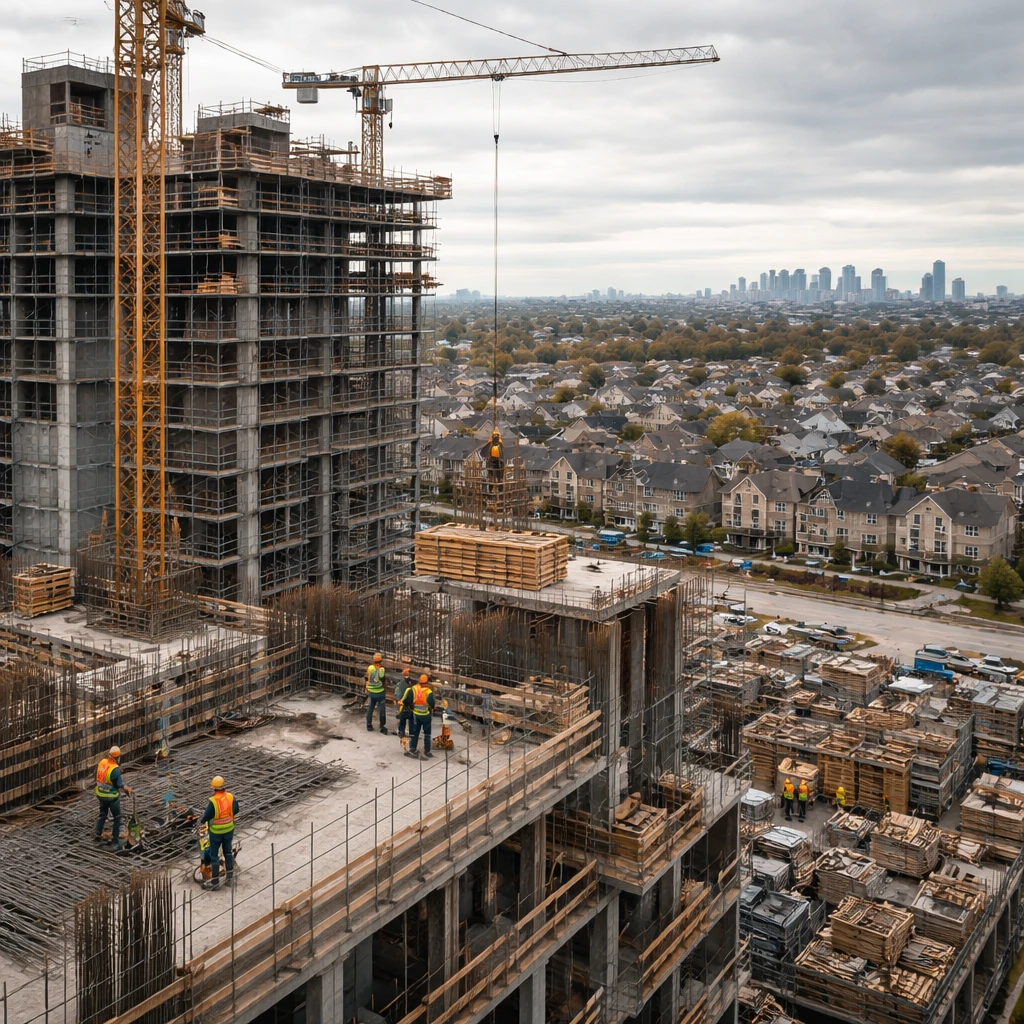
The economists highlight a divergence between headline statistics and current market conditions, asserting that the industry’s economic model is effectively "broken" in key segments, especially high-rise developments where the cost of delivering projects has outpaced what the market will support. That disconnect, they warn, is contributing to stalled activity despite falling headline prices.
Tal and Judge emphasize that standard measures of construction activity can be misleading in the near term. They caution that official housing starts are a "lagging indicator" because the CMHC housing starts data reflect decisions made 12-18 months earlier. As a result, those published figures may conceal a much sharper, more immediate downturn in real-time building activity.
Compounding the problem, the economists identify an emerging strain on the residential construction labour pool. Workers are shifting into the infrastructure sector, reducing capacity available for homebuilding. CIBC warns this dynamic creates a structural risk: "the future labour shortage in the homebuilding sector will get worse" once housing demand recovers, potentially slowing any rebound.
On the demand side, Tal and Judge expect household consumption to face headwinds as the "negative wealth effect" from falling home values takes hold. They note this financial and psychological drag on consumer behaviour tends to exert a larger influence than the positive effects seen when housing markets rise, implying broader implications for spending patterns.
Although the economists acknowledge that the recent improvement in affordability could help some first-time buyers, they stress it does not solve the deeper problem. The CIBC note concludes with a call for policy attention, arguing the current correction should prompt action to address the "unsustainably high cost of homebuilding" across Canada.
Key takeaways
- Nominal housing prices have fallen since pandemic peaks but remain unaffordable for many purchasers.
- Delivery costs, particularly in high-rise construction, have outstripped market viability, signaling a broken industry model.
- Published housing starts lag actual market decisions by 12-18 months, obscuring a sharper present downturn.
Economic and market sectors affected
- Residential construction and homebuilding firms
- Consumer spending and household consumption
- Labour markets within construction and infrastructure