
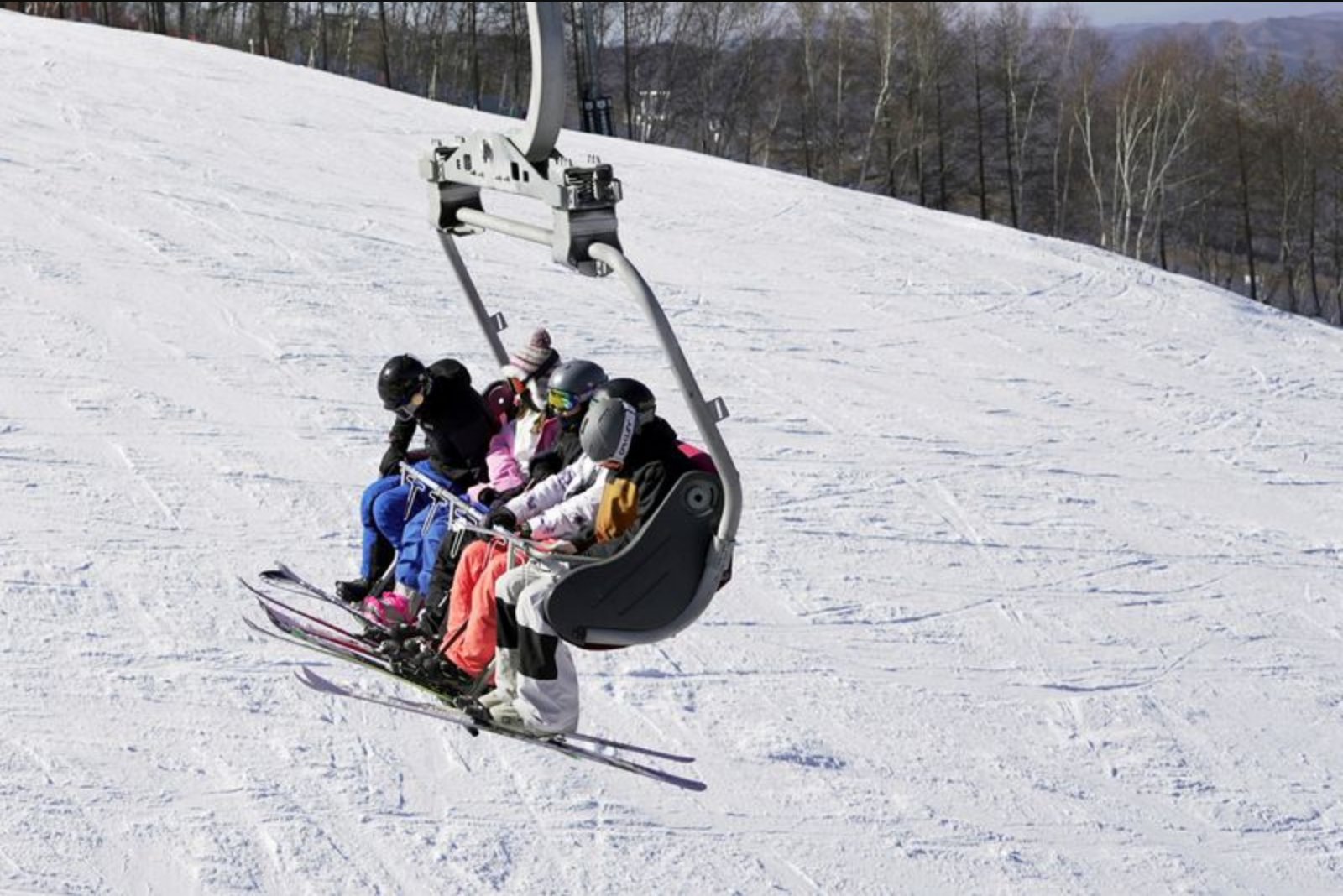
CHONGLI, China - The transformation of a once-sleepy agricultural county into a bustling winter sports hub highlights a broader policy recalibration in Beijing: a tilt toward state-led investment in services. That shift is emerging as an important theme for 2026 policy, though analysts warn it carries familiar risks.
Luo Li, 64, who runs the Wanlong ski complex roughly 200 kilometres outside Beijing, recalls the early years when customers were scarce and staff outnumbered visitors. His resort’s fortunes changed after China hosted the 2022 Winter Olympics and the region gained improved transport links. Seven more resorts opened nearby, and once COVID-19 restrictions were lifted in early 2023, visitor numbers climbed. Wanlong recorded its second consecutive profitable year, serving about 600,000 guests this year and employing 1,200 people.
"We created the demand," Luo said, describing the positive effects of multiple resorts clustering together. "Agglomeration effects really matter. When I was the only ski resort here, it was very hard to attract people on my own."
Beijing has signalled a policy shift away from some of the traditional heavy investments in transport, housing and industrial infrastructure toward services. Officials hope this reallocation can redirect stimulus toward areas that may be more productive and that can also unlock dormant household demand once the necessary facilities are in place.
Per-capita services consumption remained low by international comparisons, at 46.1% in 2025 versus 70% in the United States, a gap Beijing aims to narrow. Authorities see a dual benefit: building out services supply while reviving consumption, a long-standing structural weakness for China’s economy.
State media coverage has spotlighted the expanding "ice and snow" economy, which covers ski resorts, related hospitality and dining, and winter sports equipment manufacturing. Those reports project growth from 1 trillion yuan in 2025 to 1.5 trillion yuan in 2030. Local governments across the country have since outlined plans to back services expansion, although few published concrete spending figures.
Planned initiatives vary by province. Jilin and Hebei in the north intend to expand winter sports facilities; Henan is promoting the "night-time economy" around bars, clubs and concerts; Hainan is focusing on yachting and medical tourism; and Beijing aims to grow education, health, elderly and child care services. The services theme is expected to feature prominently in policy documents released at the annual parliamentary meeting beginning March 5.
Analysts and economists outline both the potential and the pitfalls of deploying public investment to build service-sector capacity. Tommy Xie, head of Asia macro research at OCBC Bank, pointed to Chongli as an example of how easing frictions and adding capacity can trigger strong demand: "Chongli’s experience highlights an important dynamic: when frictions are reduced and capacity constraints are alleviated, demand can respond strongly." He added a caution: "China has no shortage of examples where overinvestment ... eventually resulted in underutilised or abandoned assets."
Fred Neumann, chief Asia economist at HSBC, made a similar point, saying the winter sports expansion shows how infrastructure can unlock previously dormant demand. "The risk, however, is that overincentivising supply can also lead to excess capacity, with demand ultimately unable to meet the expectations," he said.
On the ground in Chongli, economic indicators have been strong. The county’s growth averaged 6.5% annually over the past five years, outpacing national figures. Streets that were once quiet now bustle with tourists, and businesses tied to leisure and hospitality have multiplied. Winter gear shops and roasted lamb restaurants line the town’s commercial areas.
For many local residents and migrant workers, the new economy has improved wages and employment. Student Yan Jingyi, 23, says as a ski instructor she earns more than 10,000 yuan per month, surpassing many entry-level salaries across China. Taxi driver Ren Bing reports monthly earnings of about 9,000 yuan - roughly a third more than when he worked as a truck driver in Beijing. "Life is much better than before," Ren said.
Yet these gains exist alongside broader constraints in household income growth that could limit the scale of demand expansion elsewhere. Some indebted local governments cut pay after the COVID-19 pandemic, and manufacturers have trimmed wages as they confront price competition stemming from persistent overcapacity. As a result, consumer budgets remain constrained in many places.
Social media has reflected these pressures. The hashtag "poor people skiing" has circulated as users share tips on buying second-hand equipment and choosing budget options for winter clothing. Collinder Chen, 32, who works in the cultural sector in Guangzhou, said she earns only slightly more than a Chongli ski instructor and capped her spending at 6,000 yuan for a recent five-day trip. "Skiing as a regular sport is definitely quite expensive," Chen said. "But as a single trip it’s still okay."
Policymakers have pledged to reverse a sharp contraction in fixed asset investment recorded last year - a 3.8% decline, the first such drop since at least 1996. That fall reflected difficulties local governments faced in identifying additional infrastructure projects. Beijing’s promise to restore fixed-asset investment signals readiness to deploy fiscal measures, including state-led initiatives, to stimulate the economy.
Still, some analysts argue that increasing state involvement in service-sector supply may not be the optimal path. Louis Kuijs, chief Asia economist at S&P Global Ratings, said that if the investment climate improves, private firms could expand capacity without heavy government intervention. "If the investment climate is right, the government doesn’t need to get overly involved in expanding supply. It can and should leave that to the private sector," he said.
Analysts caution that applying the same supply-side, 'build it and they will come' approach that supported the rise of megacities and industrial clusters risks reproducing the wasteful investment and overcapacity problems that have troubled parts of China’s export-oriented economy.
As Beijing leans into services with state-directed investment, Chongli stands as a visible case where expanded infrastructure and private activity have combined to unlock consumer demand. Whether that model can be replicated nationwide without repeating the excesses of past investment cycles will depend on the balance between public spending, private initiative, and stronger income growth among households.
(Currency conversion used in reporting: $1 = 6.9109 Chinese yuan renminbi)