
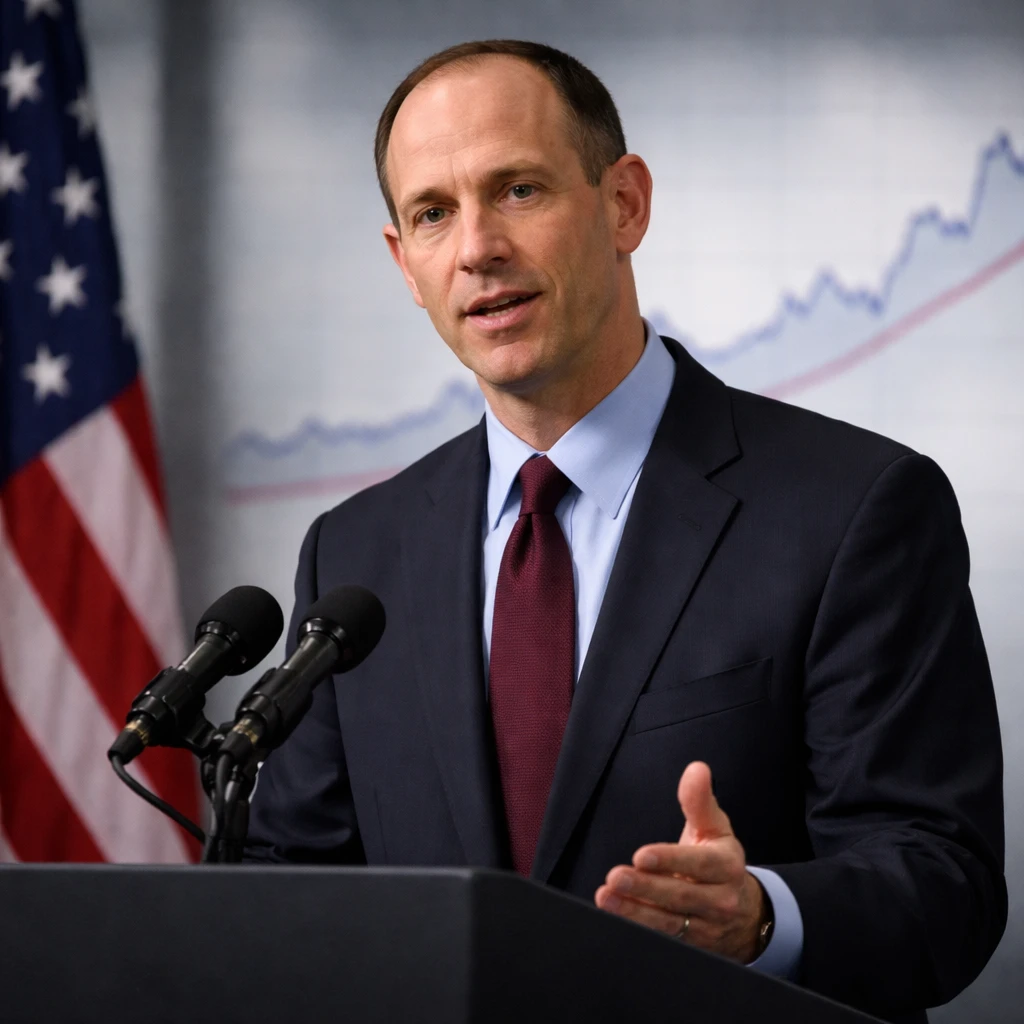
Federal Reserve Bank of Chicago President Austan Goolsbee on Friday framed the latest Consumer Price Index (CPI) report as reflecting both progress and persistent challenges for policymakers.
Speaking to Yahoo News, Goolsbee singled out services inflation as a continuing problem, saying it is "not tame" and remains "pretty high" in the latest CPI data. He called elevated services inflation "worrisome," highlighting it as a key element that complicates the central bank's assessment of overall price pressures.
The U.S. consumer price index increased 2.4% in January compared with the same month a year earlier, a 0.3 percentage point decline from the prior month and the lowest annual reading since May 2025. Despite that slowing in the headline figure, Goolsbee said the U.S. is not on track to meet the Federal Reserve's 2% inflation goal, adding that inflation appears to be "stuck around 3%."
On the question of interest rates, he indicated that rates "can still go down," but stressed that the Fed needs to see more definitive progress on inflation before moving in that direction. Goolsbee thus framed potential easing as conditional on further improvement in the inflation picture.
The Chicago Fed president also acknowledged uncertainty about the stance of monetary policy, telling the outlet, "I don't know how restrictive Fed policy is." That admission underscores the Fed's continued caution as it weighs incoming data against its inflation target.
Turning to labor market dynamics, Goolsbee described conditions as "steady" with only "modest cooling" evident. He identified U.S. consumers as "the strongest thing in the U.S. economy" and said consumer resilience should continue provided the job market remains stable and inflation moves lower.
Finally, Goolsbee expressed optimism that the economy may have already seen the "peak impact of tariffs" on inflation, though he framed that as a hope rather than a settled conclusion.
Key points
- The CPI rose 2.4% year-over-year in January, down 0.3 percentage point from the prior month and the lowest since May 2025.
- Services inflation remains "not tame," "pretty high," and "worrisome," according to Goolsbee.
- Goolsbee said rates "can still go down" but that more progress on inflation is required; he also said he does not know how restrictive policy is.
Risks and uncertainties
- Persistent services inflation could hinder the Fed's path to its 2% target - this affects interest-rate-sensitive sectors such as housing and corporate borrowing.
- Uncertainty about how restrictive current policy is may complicate timing and magnitude of future rate moves - this introduces volatility for financial markets and fixed-income investments.
- Reliance on consumer strength leaves growth exposed if job-market stability or inflation trends deteriorate - impacts retail, transportation, and consumer-facing services.