
ATLANTA FED VOICE
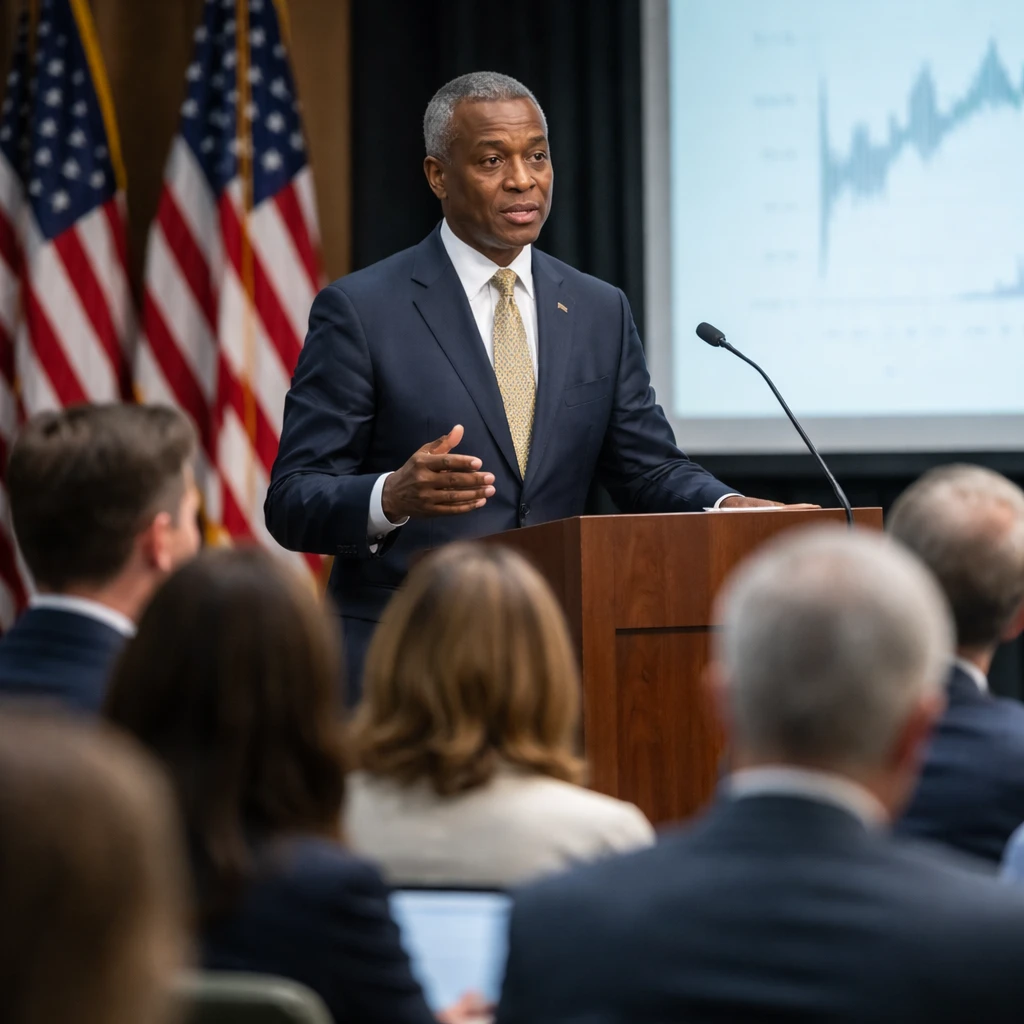
Atlanta Federal Reserve President Raphael Bostic said the U.S. economy's full-year expansion of 2.2% is "a pretty strong number" and strong enough to prompt worries about sustained inflation, arguing that such growth is likely to require tighter monetary policy to restrain price pressures.
"Our economy has remained remarkably resilient," Bostic said at an economic event in Birmingham, Alabama, adding that he expects growth to accelerate to 2.4% this year - a pace he believes sits above the economy's underlying potential.
Pointing to the inflation backdrop, Bostic noted that inflation running at around 3% is "a long way" from the Fed's 2% goal. That gap, he said, increases the need for caution in setting interest-rate policy.
Given these dynamics, Bostic said it would be "prudent" for the Federal Reserve to keep interest rates at levels sufficiently restrictive to slow the economy and exert downward pressure on inflation, which he said has shown little progress in recent months.
Data and Context
Newly released data showed end-of-year economic growth at a weaker-than-expected 1.4%, but the economy expanded 2.2% for the full year. Bostic described the full-year figure as particularly impressive in light of "all the turbulence we’ve seen, with the disruptions in trade relationships, and the uncertainty around where policy will land."
He emphasized that the 2.2% outcome exceeds what he regards as the economy's underlying annual growth potential of about 1.8% - a figure that also matches the median long-run growth outlook of his colleagues.
Implications and Internal Fed Debate
Bostic argued that growth considerably above underlying potential is likely to feed inflation and is therefore an argument against cutting interest rates. His comments come as part of an emerging internal debate at the Fed about whether the spread of artificial intelligence will alter the economy's potential growth and the consequences of that for inflation.
He contrasted his view with that of a Fed chair nominee who has argued that an approaching productivity boost could permit faster growth without producing inflation. Bostic also noted his impending retirement this month and that he attended his last Fed meeting in January.
Concluding observation
Bostic's remarks underscore a cautious policy stance: with full-year growth outpacing his estimate of potential and inflation well above target, he urged that keeping rates sufficiently restrictive is the prudent course to bring inflation back toward the 2% objective.