
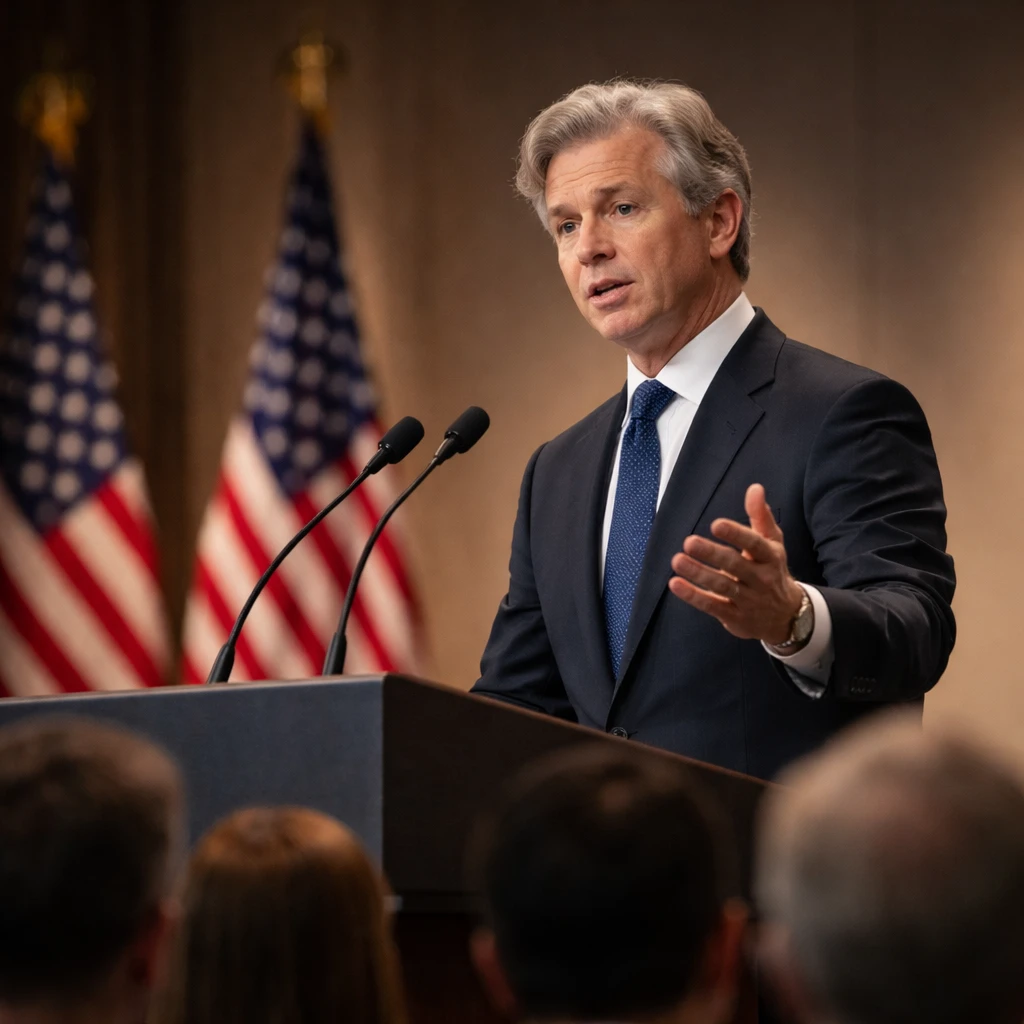
Treasury Secretary Scott Bessent told attendees at the Economic Club of Dallas that the administration will pursue other legal avenues to sustain its tariff program following a 6-3 Supreme Court decision limiting the use of the International Emergency Economic Powers Act for this purpose.
Addressing the high court’s ruling, Bessent framed the decision as a narrow constraint on IEEPA rather than a judgment against the broader policy objective. "Let’s be clear about today’s ruling. Despite the misplaced gloating from Democrats, ill-informed media outlets, and the very people who gutted our industrial base, the Court did not rule against President Trump’s tariffs," he said. "Six Justices simply ruled that IEEPA authorities cannot be used to raise even one dollar of revenue."
According to Bessent, the administration will pivot to other statutory authorities - specifically Section 232 and Section 301 - which he said have withstood thousands of legal challenges. He indicated that the use of Section 122 authority, alongside potentially expanded Section 232 and Section 301 measures, underpins Treasury estimates that tariff receipts in 2026 will be "virtually unchanged."
The Supreme Court’s 6-3 ruling found that IEEPA does not grant the president authority to impose tariffs, creating a legal obstacle to the administration’s prior reliance on emergency economic powers for trade policy. The decision has been characterized by the Treasury as a setback limited to the IEEPA mechanism rather than a rejection of tariffs generally.
In a wider presentation of the administration’s economic-security agenda, Bessent outlined three central pillars: industrial and technological dominance, investment in America, and preparedness. He argued that these priorities are essential for ensuring productive capacity that can absorb shocks, deter adversaries, and support rising prosperity for citizens. He criticized previous administrations for allowing short-term profit motives to overshadow resilience and long-term value.
Bessent also said that current policies have prompted companies to rethink supply chains and commit significant new capital to U.S. manufacturing and strategic sectors. He described this corporate response as a material flow of investment back into domestic production and strategic industries as part of a broader effort to strengthen economic security.
Key points
- The Supreme Court held 6-3 that IEEPA does not authorize presidential tariffs, limiting that legal route for trade policy.
- The administration plans to use Section 232, Section 301 and Section 122 authorities to sustain tariff measures; Treasury projects tariff revenue in 2026 will be virtually unchanged under this approach.
- Policy emphasis centers on industrial and technological strength, investment in America, and preparedness, with reported corporate shifts toward U.S. manufacturing and strategic sectors.
Risks and uncertainties
- Legal constraint on IEEPA presents a clear setback for one statutory tool used for tariffs - this affects trade policy and market participants in international trade and manufacturing.
- Transitioning tariff authority to Sections 232, 301 and 122, while presented as validated, introduces uncertainty about the composition and mechanics of tariff revenue despite Treasury's projection of virtually unchanged receipts in 2026 - this bears on fiscal planning and trade-exposed industries.