
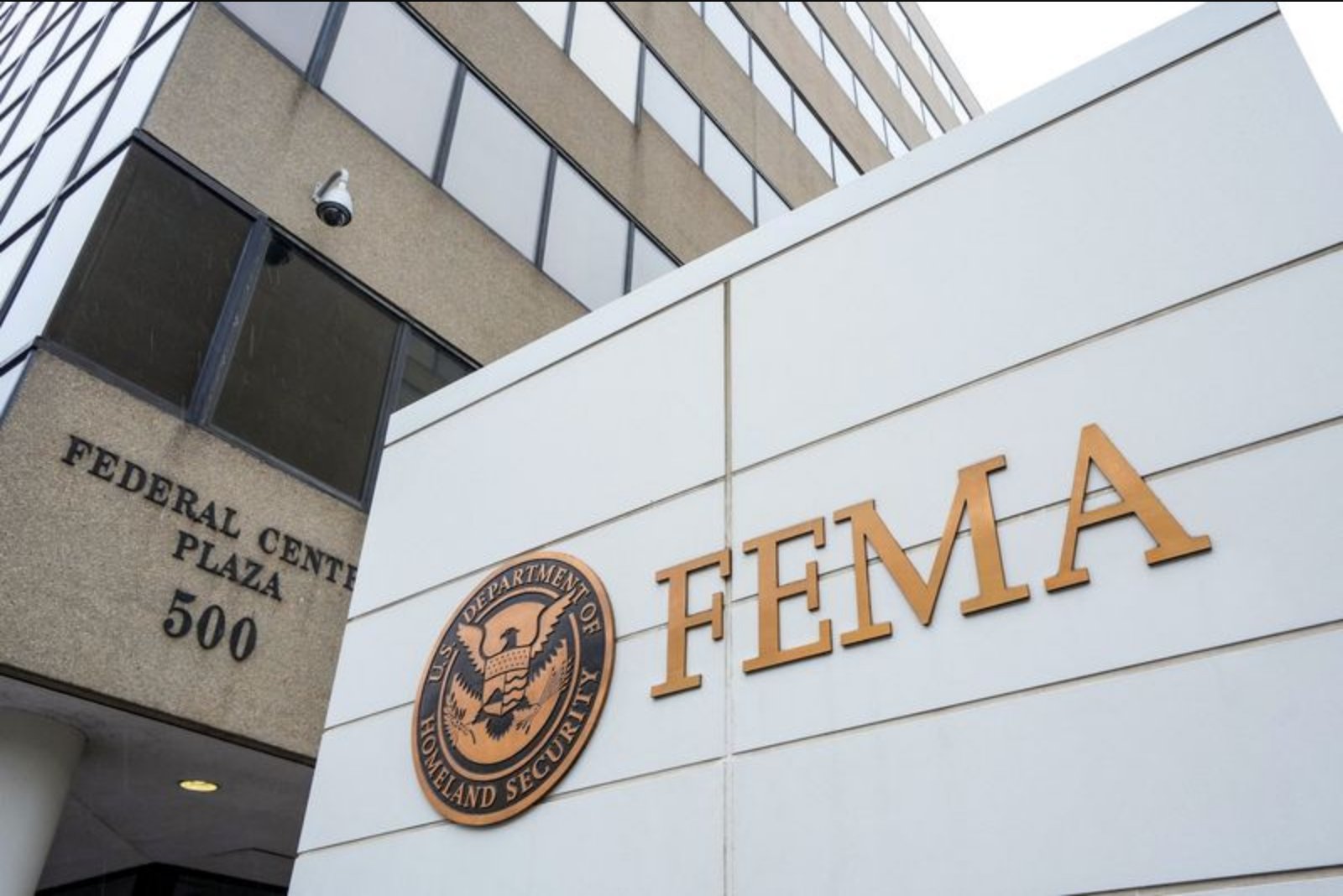
The Department of Homeland Security has instructed the Federal Emergency Management Agency to suspend all DHS-funded travel for the duration of a partial funding lapse, an internal FEMA message shows. The travel freeze, effective 2/18/26, explicitly covers travel related to disaster response, according to the internal email from Kurt Weirich, a FEMA chief of staff.
DHS entered a partial shutdown on Saturday after congressional negotiations over immigration enforcement reforms failed to reach agreement. Although many DHS functions continue in operation because they are designated essential, the stop-travel order has prompted FEMA to halt the movement of personnel that would be funded through DHS appropriations.
More than 300 FEMA disaster responders who had been preparing for assignments were instructed to stand down. Some of those personnel were at a training facility when the order arrived, according to reporting cited in agency accounts. The pause affected planned deployments across multiple disaster-affected areas around the country.
The travel restriction follows public remarks by the President that the federal government would step in to address contamination in the Potomac River after the collapse of a large sewer line in the Washington, D.C., region. The pipe failure in Montgomery County, Maryland, on January 19 sent more than 240 million gallons (909 million liters) of wastewater into the Potomac River. The President said FEMA would coordinate the response.
Despite that statement, agency officials have indicated limited on-the-ground federal deployments to the spill so far. Reporting from inside the agency suggests FEMA has sent few, if any, resources to assist with the sewage discharge, though exact deployment activity remains limited in public detail.
A FEMA spokesperson described the travel restrictions as not optional but required to comply with federal law. The statement also said that "FEMA travel related to active disasters is not cancelled," clarifying how the agency views exceptions in active disaster scenarios.
FEMA's stated mission is to assist people before, during and after disasters by bringing personnel, supplies and equipment to affected communities. The current suspension of DHS-funded travel affects that logistical function while the funding lapse continues.
Context and implications
The stop-travel order affects pre-positioning and response capacity at a time when the Potomac River remains the focus of federal attention after a substantial wastewater release. The shutdown stems from a failure by Republicans and Democrats to agree on immigration enforcement reforms, leading to the lapse in DHS appropriations that triggered the travel freeze.
Agency officials and spokespeople have provided constrained public comment, noting legal compliance as the driver of the restrictions and asserting that trips tied to declared active disasters remain covered. Operational details and the full scope of affected missions have not been released more broadly.