
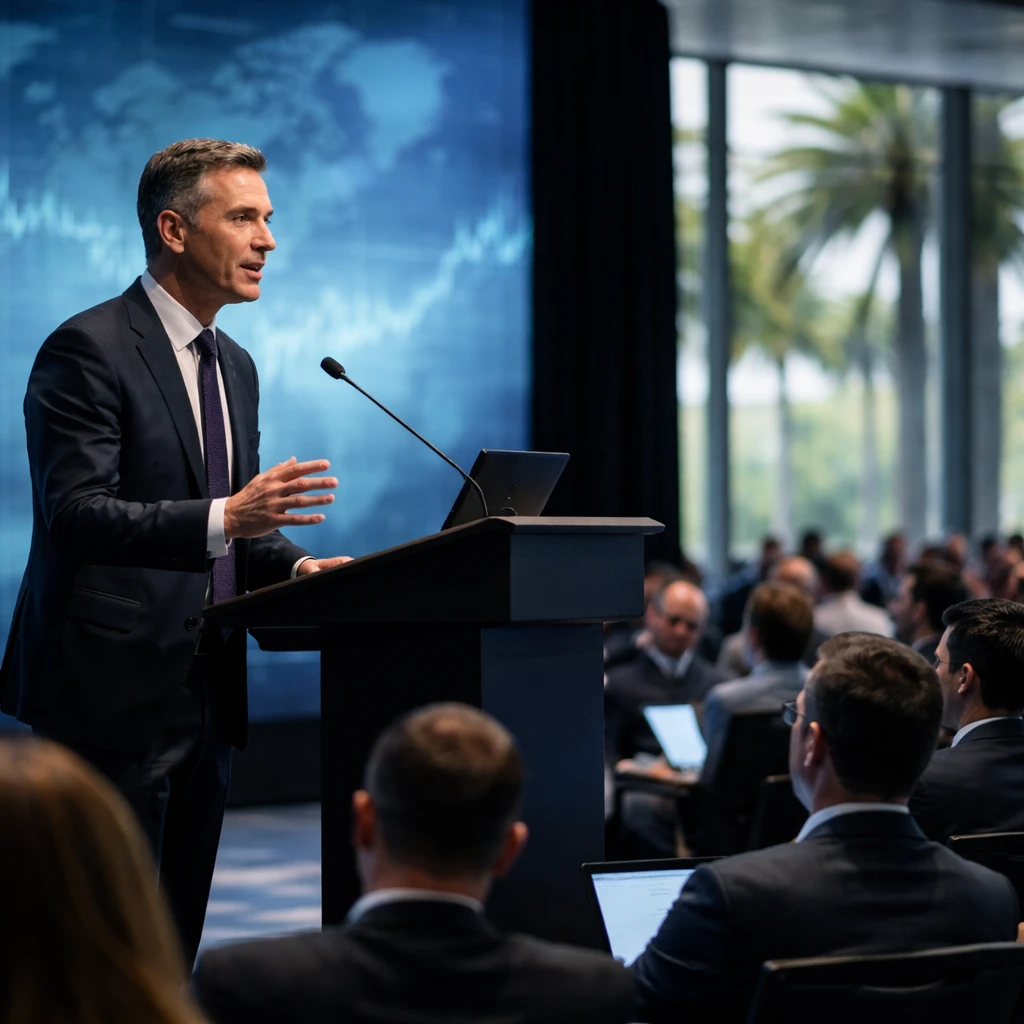
State Street Corp. strategist Lee Ferridge warned that the U.S. dollar faces meaningful downside if the Federal Reserve pursues a larger easing cycle than markets now expect. Speaking at the TradeTech FX conference in Miami, Ferridge said a 10% decline in the dollar this year is possible should the Fed cut rates more aggressively under a new chair.
Traders presently expect the Fed to begin trimming rates around June, with markets pricing at least two 25-basis-point reductions by the end of the year. Ferridge, however, sees scope for an additional cut in 2026 - a scenario he attributes in part to political pressure on the central bank's leadership.
"Three is possible," Ferridge said in the interview. "Two is a reasonable base case, but we have to accept we are going into a more uncertain period of Fed policy." The strategist pointed to the prospect that President Donald Trump will press the incoming chair to lower borrowing costs, a dynamic that underpins his view of a potentially larger easing cycle.
Ferridge detailed the mechanism through which deeper Fed easing could weaken the dollar. When U.S. rates fall more rapidly than anticipated, the cost for foreign investors to hedge currency risk on their U.S. holdings declines. As hedging becomes cheaper, foreign investors are likely to increase hedging activity on dollar-denominated assets, which would add downward pressure on the currency.
He noted that concerns already weighing on the dollar include economic risks from trade friction and questions about the U.S. fiscal outlook, alongside the influence of political pressure on the Fed. Ferridge also flagged the Federal Reserve leadership transition, noting that Chair Jerome Powell's term ends in May and that former Fed Governor Kevin Warsh has been nominated to replace him.
In the shorter term, Ferridge expects the dollar could bounce by 2% to 3% if U.S. economic data proves stronger than currently priced and trims expectations for rate cuts. But he emphasised that a broader trend of dollar selling could resume once the new chair - should it be Kevin Warsh - begins lowering rates more persistently, narrowing the rate differential between the United States and other jurisdictions.
State Street data cited by Ferridge show a material change in hedging behaviour. The current hedge ratio sits around 58%, well below the north-of-78% ratio observed before the Fed embarked on its tightening cycle in 2022. That gap, he argues, leaves room for increased hedging activity to influence the currency market if policy settings change.
Ferridge's assessment highlights how central bank leadership, political dynamics, and shifts in hedging costs interact to shape FX outcomes. Market participants and institutions with cross-border exposures should monitor developments in Fed policy, the composition of the Fed's leadership, and incoming economic data that could alter near-term rate expectations.