
Currencies February 9, 2026

Georgieva Says Dollar Will Likely Keep Its Central Role Despite Recent Weakness

IMF chief underscores U.S. capital markets and economy as pillars of dollar dominance; notes relief for emerging-market borrowers amid softer greenback

By Maya Rios
Georgieva Says Dollar Will Likely Keep Its Central Role Despite Recent Weakness

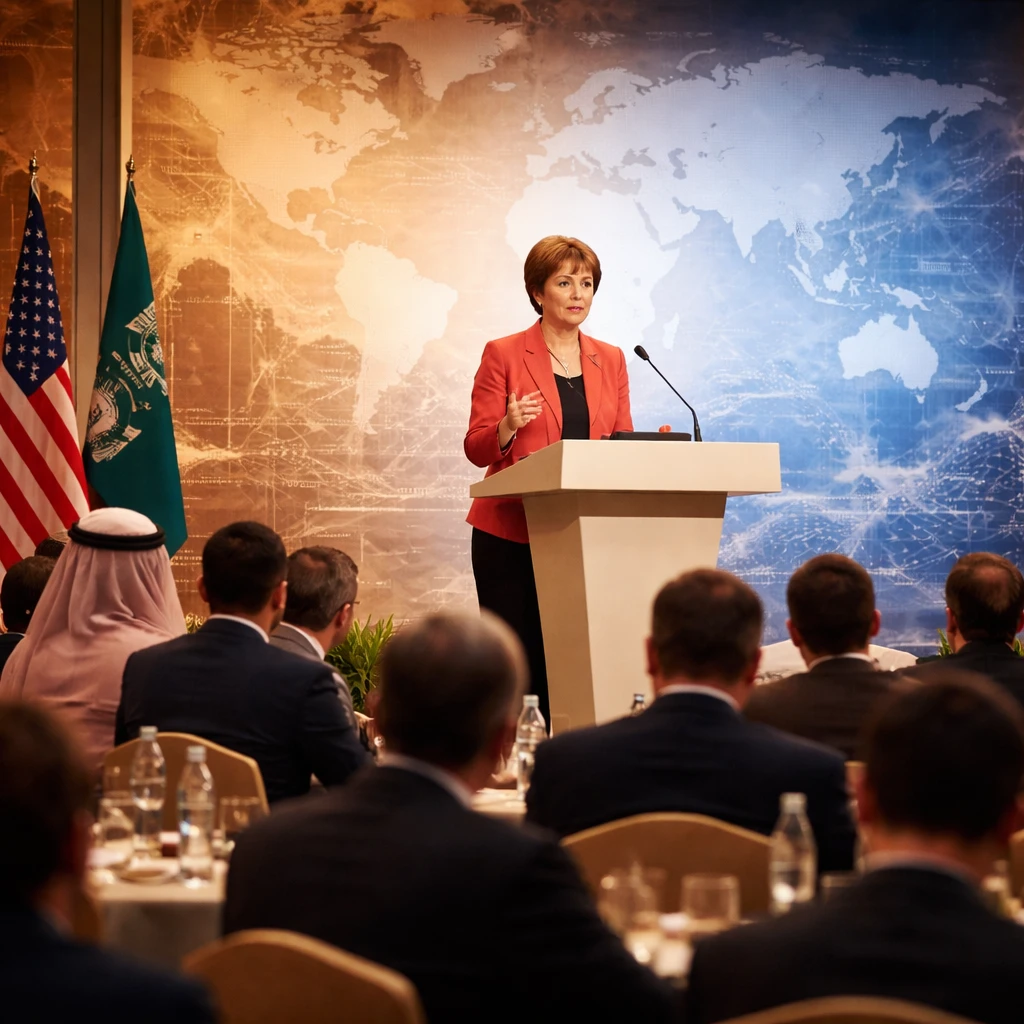
International Monetary Fund Managing Director Kristalina Georgieva said the U.S. dollar is expected to retain its leading role in the global financial system despite recent declines. Speaking at an IMF conference in Al-Ula, Saudi Arabia, she cited the depth and liquidity of U.S. capital markets, the economy's size and entrepreneurial dynamism as key supports. Georgieva also observed that a weaker dollar can ease foreign debt servicing for borrowers in emerging markets. Her remarks came alongside reporting that Chinese regulators have encouraged financial institutions to trim U.S. Treasury holdings amid concentration and volatility concerns.

Key Points

  • Kristalina Georgieva said the U.S. dollar is likely to maintain its dominant global role despite recent depreciation.
  • She cited the depth and liquidity of U.S. capital markets, the size of the U.S. economy, and entrepreneurial dynamism as underpinning factors.
  • Georgieva noted that a weaker dollar can reduce foreign-currency debt burdens for emerging-market borrowers and ease their interest payments.

International Monetary Fund Managing Director Kristalina Georgieva said the U.S. dollar is likely to remain the dominant currency in the global financial system, even after a recent period of depreciation.

"We should not get carried away by short term variations of the exchange rate," Georgieva said in an interview with Bloomberg Television. "I don't see a change in the role of the dollar anytime soon." She made the comments while attending an IMF conference focused on emerging markets in Al-Ula, Saudi Arabia.

Georgieva pointed to several structural features that, in her view, underpin the dollar's continued centrality. She highlighted "the depth and liquidity of capital markets in the United States, the size of the economy and the entrepreneurial spirit of the US" as factors that sustain the greenback's position in international finance.

At the same time, Georgieva noted that a softer dollar can carry benefits for many emerging-market economies by lowering the local currency cost of dollar-denominated liabilities. "Those that borrow in the greenback will pay less now," she said, adding that a weaker dollar "eases their interest payments on foreign debt."

Her comments coincided with a Bloomberg report that Chinese regulators have instructed financial institutions to reduce holdings of U.S. Treasuries because of concerns about concentration risks and market volatility.


Implications and context

Georgieva's assessment underscores the IMF's view that temporary exchange-rate movements do not necessarily signal a durable shift in the international monetary order. She emphasized the continuing role of U.S. capital markets and the broader economy as stabilizing forces for the dollar, while also acknowledging that currency depreciation can relieve debt-service burdens for borrowers with obligations denominated in dollars.

Her remarks arrive amid market attention to portfolio allocation among sovereign and institutional holders of U.S. debt, as reflected in the report about Chinese regulatory guidance on Treasury exposure.


Conference setting

Georgieva delivered these observations while participating in IMF events addressing emerging-market issues in Al-Ula, Saudi Arabia. The conference setting provided a platform for discussing currency dynamics and their effects on external indebtedness and market stability.

Risks

  • Exchange-rate volatility can create uncertainty for financial markets and sovereign borrowers that have dollar-denominated liabilities - impacting emerging markets and bondholders.
  • Concentration risks in holdings of U.S. Treasuries, highlighted by a report that Chinese regulators advised trimming such exposures, may amplify market volatility in sovereign debt markets.
  • Short-term currency movements could complicate debt-servicing plans for institutions and governments with significant dollar borrowing, especially in emerging markets.

More from Currencies

Dollar Climbs Toward Best Weekly Showing Since October as Safe-Haven Flows and Fed Tone Support the Greenback Feb 20, 2026 Asia FX Cautious Ahead of U.S. Inflation Print; Weak Japan CPI Clouds BOJ Hike Prospects Feb 20, 2026 Dollar Holds Most Gains After Fed Minutes; Euro Edges Lower Feb 19, 2026 Asia FX Slips as Dollar Strengthens; Aussie Stands Out on Firm Jobs Report Feb 19, 2026 UBS Lowers USD/ZAR Targets, Predicts Further Rand Gains through 2026 Feb 18, 2026