
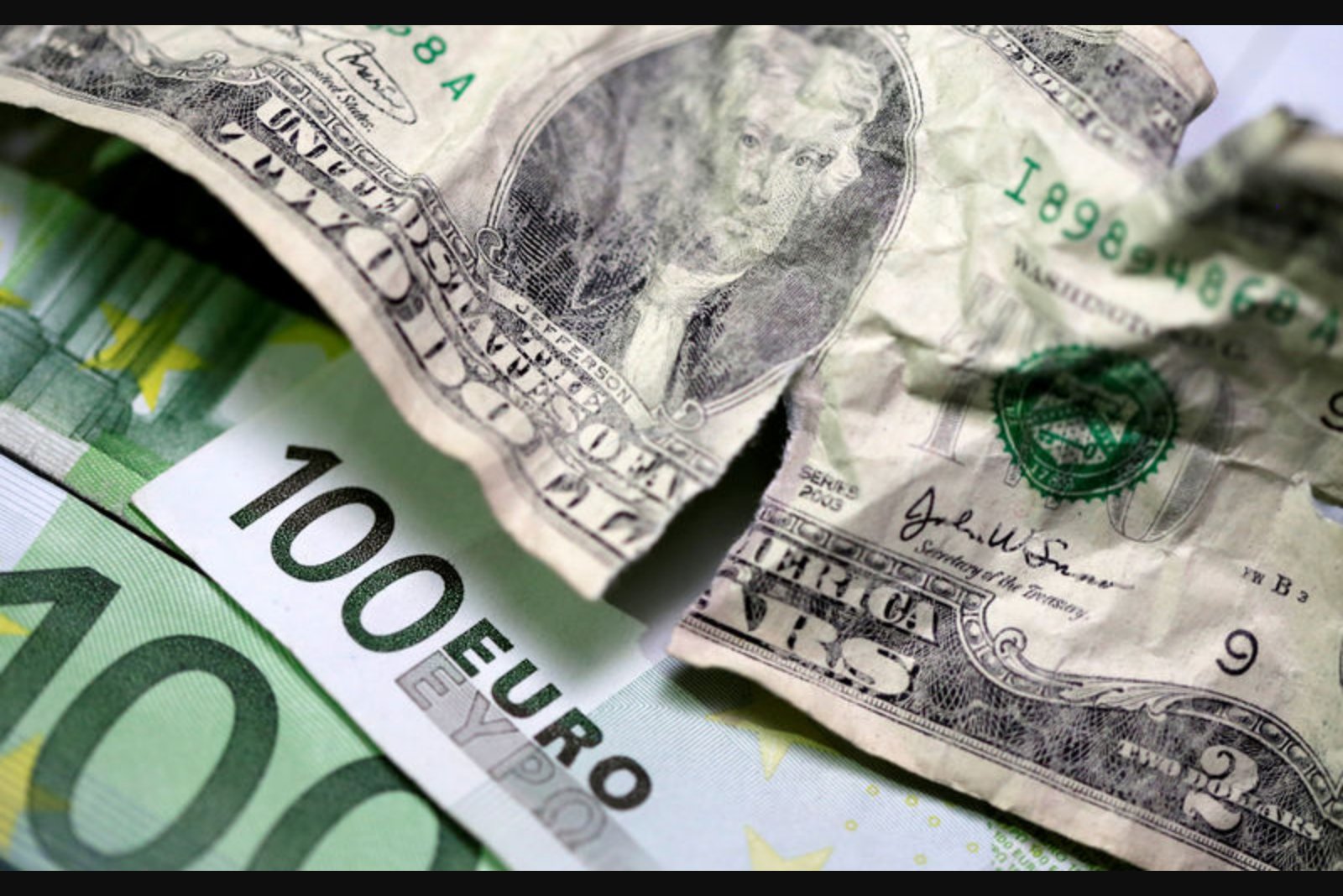
The U.S. dollar steadied on Friday, trading around levels not seen since the third week of January as it moved toward a notable weekly advance. At 05:10 ET (10:10 GMT) the Dollar Index - which measures the greenback against a basket of six currencies - was largely unchanged at 97.700 and was set to finish the week up by just under 1%.
Investors sought safety after a steep drop in global equities over the past week. The selloff, the largest for global shares since November, was driven in part by concern about the scale of corporate investment in artificial intelligence and the potential disruptions AI tools could bring to different sectors. That risk-off mood helped lift demand for the U.S. currency.
Analysts at ING noted the uncertain outlook for U.S. technology shares, observing that cyclically adjusted price-earnings ratios for the S&P 500 remain near multi-decade highs and that many investors appear fully invested. ING said that it is difficult to predict whether another significant leg lower in tech stocks will occur, a condition that underpins ongoing volatility and safe-haven flows into the dollar.
Supporting the dollar this week was last week’s nomination of Kevin Warsh as the next Federal Reserve chair. Warsh, a former Fed governor, is not widely viewed as being as dovish as several other names that had been suggested, a factor that contributed to dollar strength.
Market attention this session shifted to consumer sentiment data from the University of Michigan, which was the main economic release expected later in the session after the widely watched monthly U.S. jobs report was postponed until next week. ING highlighted that consumer sentiment readings were attempting to recover from a notable drop in April, and cautioned that any surprise deterioration could be mildly dollar negative by signaling household sensitivity to equity market performance.
European currencies inch higher after policy pauses
In Europe EUR/USD gained 0.1% to 1.1793 on Friday after the European Central Bank left interest rates unchanged as anticipated on Thursday. ING interpreted ECB President Christine Lagarde’s press conference as suggesting that the bank was not on the verge of cutting rates in response to the euro’s strength.
GBP/USD climbed 0.3% to 1.3380 on Friday, recouping a portion of Thursday’s near 1% drop following the Bank of England’s decision to hold rates. That BoE decision came in an unexpectedly narrow vote. Market pricing has shifted slightly to favour a first cut in March, but futures markets are more comfortable assigning the next move to the second quarter when clearer evidence of lower inflation is expected. ING added that it favours a March cut.
Asia: yen, yuan, and aussie movements
In Asian trading, USD/JPY was marginally lower at 157.04, though the pair had risen about 1.5% over the week. Market focus in Japan was on the lower house national election scheduled for Sunday, where polls indicated that Prime Minister Sanae Takaichi’s conservative party was poised to achieve a substantial victory. A larger lower-house majority would give Takaichi more latitude to pursue a fiscally expansionary agenda of broad tax cuts and additional government spending.
USD/CNY inched up slightly to 6.9392 on Friday after the Chinese yuan fell a touch. Over the week the yuan advanced toward what would be its longest weekly winning streak against the dollar in nearly 13 years, largely supported by a series of firm midpoint fixes set by the People’s Bank of China. For the week the pair was down roughly 0.2% against the dollar and was on track for an 11th consecutive week of declines.
AUD/USD rose 0.6% to 0.6972 after comments from Reserve Bank of Australia Governor Michele Bullock that leaned hawkish, which drove expectations that Australia’s central bank might deliver further rate increases. The RBA had raised rates by 25 basis points recently and also revised its growth and inflation forecasts upward for the year.
The dollar’s advances this week reflected a combination of equity market weakness, central bank positioning and political developments in Japan, with individual currency moves shaped by their own policy and macro dynamics. Key upcoming data and the delayed U.S. jobs report are likely to remain focal points for traders assessing whether the recent dollar strength will persist.