
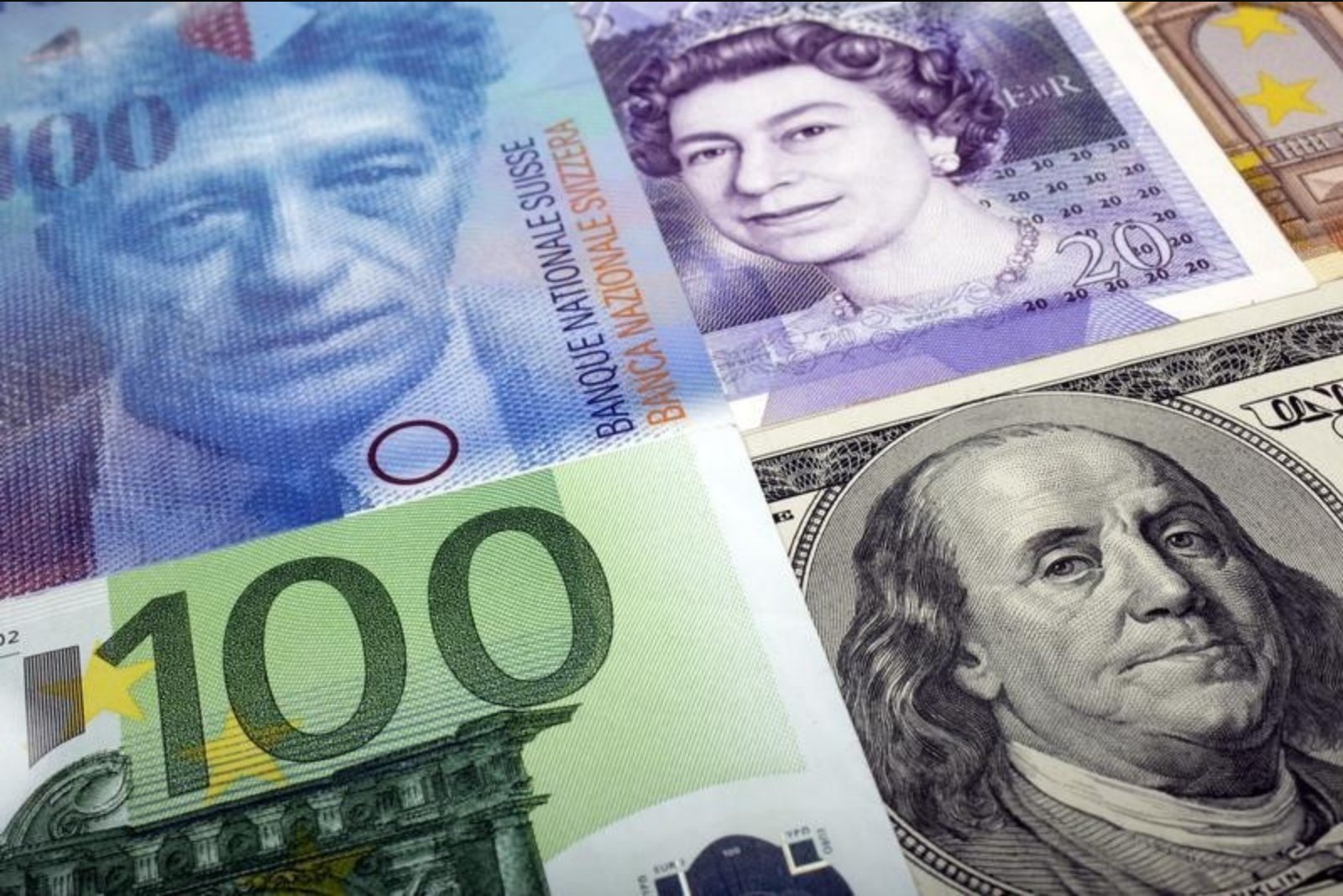
The U.S. dollar edged higher on Thursday, regaining a portion of this week's losses as turbulence in equity markets nudged investors toward safe-haven assets. At 13:43 ET (18:43 GMT), the Dollar Index - which measures the currency against a basket of six others - was about 0.2% firmer at 97.77, approaching a two-week high and extending a rebound from near four-year lows.
Volatility in equities has been a key underpinning for renewed dollar demand. Market participants cited worries that heavy spending on artificial intelligence could be inflating valuations in technology-related sectors, prompting a pullback that favours traditionally defensive positions in the greenback. Analysts at ING noted that a more challenging equity backdrop typically prompts a rotation out of procyclical currencies and into the dollar - a dynamic they see as contributing to the currency's modest support this week. ING also observed that the recent correction in U.S. tech names makes a fully invested buy side vulnerable to negative news.
The dollar also drew support from expectations around U.S. monetary policy following the nomination of Kevin Warsh to head the Federal Reserve. Markets have priced that his approach is likely to be less dovish than previously anticipated, which provided an additional tailwind for the currency.
Domestic U.S. labour data painted a mixed picture. Private payrolls signalled cooling in the jobs market, and several soft labour-market indicators were published on Thursday: job cuts in January rose to the highest level for that month since 2009, initial jobless claims were higher than expected, and December job openings came in below forecasts. The release of critical employment data scheduled for Friday will be delayed due to a recent brief government shutdown.
In Europe, the single currency came under pressure after the European Central Bank left interest rates unchanged, as widely expected. EUR/USD traded about 0.1% lower at 1.1799 following the ECB's decision. The ECB's Governing Council judged that inflation should stabilise around the 2% target over the medium term while noting the economy's resilience in a challenging global environment. Earlier in the week, eurozone consumer price inflation had eased to 1.7% year-on-year in January from 1.9% in December.
Deutsche Bank's Mark Wall commented that leaving policy rates unchanged feels appropriate given the trade-offs facing the central bank - external vulnerabilities on the one hand and domestic resilience, aided in part by increased defence and infrastructure spending in Germany, on the other.
GBP/USD moved lower, down about 0.9% to 1.3544, after the Bank of England also maintained its policy rate. The Monetary Policy Committee indicated it expects inflation to return to 2% by the spring. Sanjay Raja of Deutsche Bank described the decision as less about an imminent rate cut and more about positioning within the MPC, noting rising trade-offs across the economy and concern about how restrictive policy remains.
In Asia, USD/JPY traded roughly 0.1% higher to 156.84, with the yen pressured ahead of the lower house elections this weekend. Market anticipation that Prime Minister Sanae Takaichi's party will secure a larger majority has increased expectations for additional fiscal spending from Tokyo, a development that has weighed on the currency. Takaichi's comments downplaying yen weakness have added to the recent depreciation.
The Chinese yuan remained near its strongest levels in almost three years, with USD/CNY slightly lower at 6.9378. The currency's firming was supported by a series of relatively strong midpoint fixes set by the People's Bank of China, keeping the USDCNY pair comfortably below the 7-yuan mark - a psychological threshold for policymakers.
Elsewhere in the region, AUD/USD slipped about 0.4% to 0.6960, pulling back below the 0.70 level after two sessions of gains. The Australian dollar had strengthened earlier in the week following a hawkish Reserve Bank of Australia meeting, where policymakers raised rates by 25 basis points and revised up their growth and inflation forecasts for the year.
Across markets, the interplay between equity volatility, central bank guidance and domestic data continues to shape currency moves. Investors are parsing central bank communications and incoming economic indicators to assess policy trajectories and the balance of risks, with the dollar benefiting this session from a combination of risk-off flows and adjusted expectations for U.S. monetary policy.