
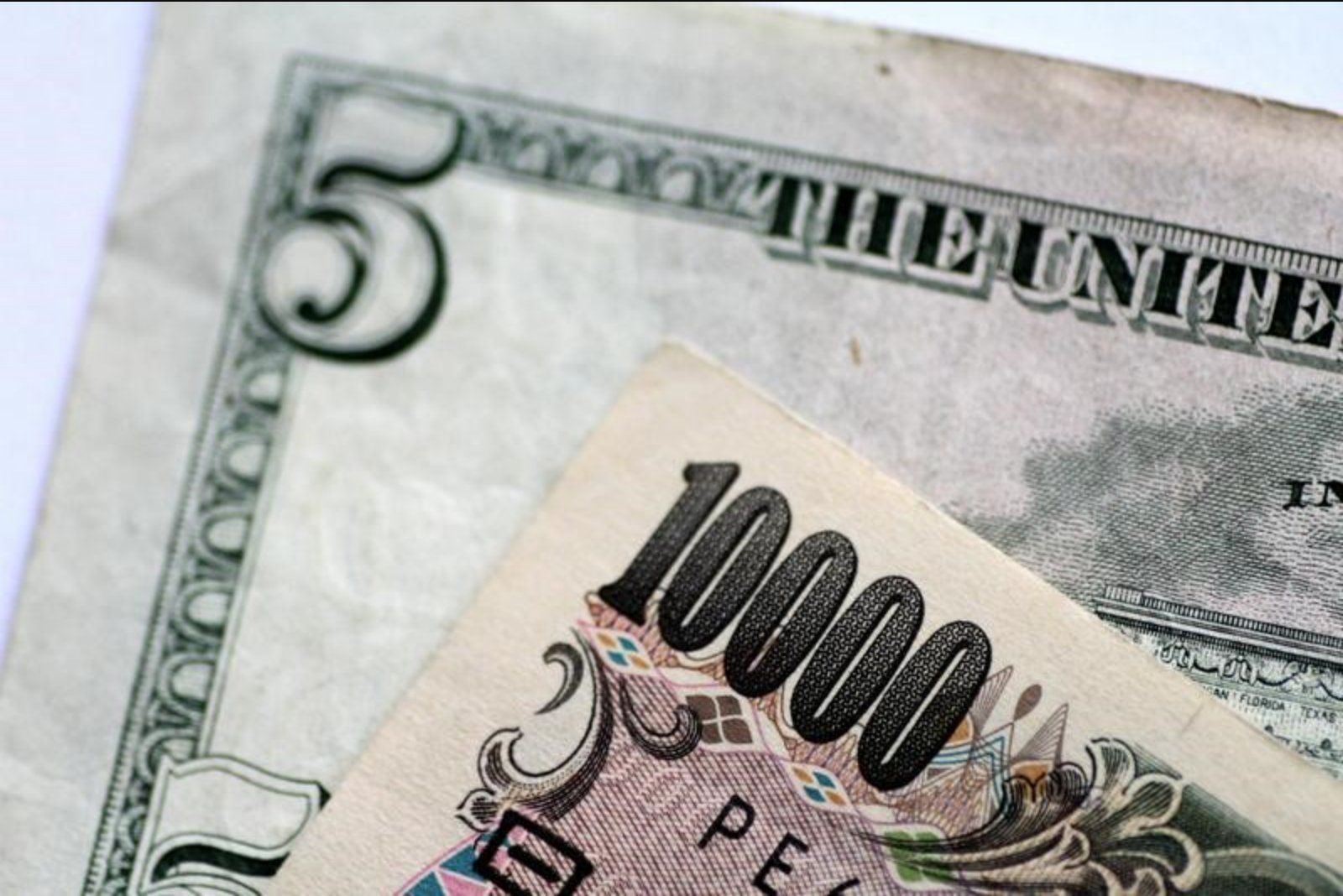
Asian foreign exchange markets were largely subdued on Monday, with most regional currencies confined to tight trading bands while the U.S. dollar firmed following President Donald Trump’s nomination of Kevin Warsh as his candidate to lead the Federal Reserve.
The greenback extended last week’s recovery from near a four-year low, with the dollar index and related futures up roughly 0.1% each in Asian trade. The move was driven in part by reaction to the Warsh nomination and fresh positioning ahead of several upcoming data points and central bank decisions that could provide clearer direction for markets.
Market participants are awaiting a packed economic calendar this week, including a Reserve Bank of Australia policy meeting and the U.S. payrolls report, which together are expected to supply more immediate cues for currency moves across the region.
Dollar reaction to Fed nominee
Kevin Warsh’s nomination to replace incumbent Fed chair Jerome Powell generated notable attention. Markets interpreted Warsh as broadly aligned with President Trump on advocating for lower rates, but he has also been viewed as critical of the Fed’s asset purchase programs. That combination has led some investors to reassess how quickly or how far U.S. policy might ease and how balance-sheet policy could evolve under a Warsh-led Fed.
Analysts at ANZ noted that they expect a Warsh-led Fed to prefer a smaller balance sheet, which they said would limit facilitation of large fiscal expansion. At the same time, the ANZ note pointed out that Warsh may emphasise labour market weakness as a principal risk to the Fed’s dual mandate of maximum employment and price stability, and could support additional rate cuts if he is confirmed in the months ahead.
Powell’s term ends in May. He had recently urged that his successor avoid being drawn into elected politics.
Japanese yen softens after Takaichi comments
The Japanese yen underperformed other Asian currencies on Monday. USD/JPY climbed as much as 0.5%, trading above the 155 level. The move followed comments by Prime Minister Sanae Takaichi, who during a campaign speech highlighted the potential benefits of a softer yen for exporters, comments that contrasted with prior signals from government officials warning against prolonged currency weakness.
Takaichi was later seen as tempering that stance, but her remarks came after a period in which a number of Japanese officials, including Takaichi herself, had cautioned markets against outsized moves in the yen. Those warnings had spurred speculation that government intervention in currency markets might be imminent, a factor that contributed to the yen’s sharp appreciation through January. Nevertheless, the currency has remained near levels that in the past have prompted intervention, and recent reports indicated that Japan and the United States were exploring a potential coordinated action to support the yen.
Other Asian FX: muted but watchful
Outside of the yen, moves across Asian currency markets were generally contained amid a lack of fresh, decisive signals. The Australian dollar’s AUD/USD pairing was noted in market commentary in the context of the RBA meeting scheduled for Tuesday, where the central bank is widely expected to raise interest rates by 25 basis points. Expectations for that move have been supported by data cited as showing a resurgence in Australian inflation through the second half of 2025.
In Korea, USD/KRW rose about 0.5%, with the won coming under pressure amid outsized equity outflows as investors sold major technology stocks on local markets. The Chinese yuan showed little net change, with USD/CNY remaining flat in the immediate aftermath of mixed purchasing managers index readings for January.
Elsewhere in the region, USD/SGD ticked down about 0.1%, while USD/TWD was essentially unchanged. The Indian rupee traded weaker against the dollar, with USD/INR up roughly 0.2% and remaining close to recent record highs; market reaction was reported to stem in part from investor disappointment with the government’s fiscal 2027 budget, which outlined additional fiscal spending aimed at bolstering manufacturing.
The combination of the Fed nomination, mixed policy signals from Tokyo, and a calendar of influential events this week left Asian FX markets in a watchful, range-bound state as traders awaited clearer direction from policy meetings and economic releases.