
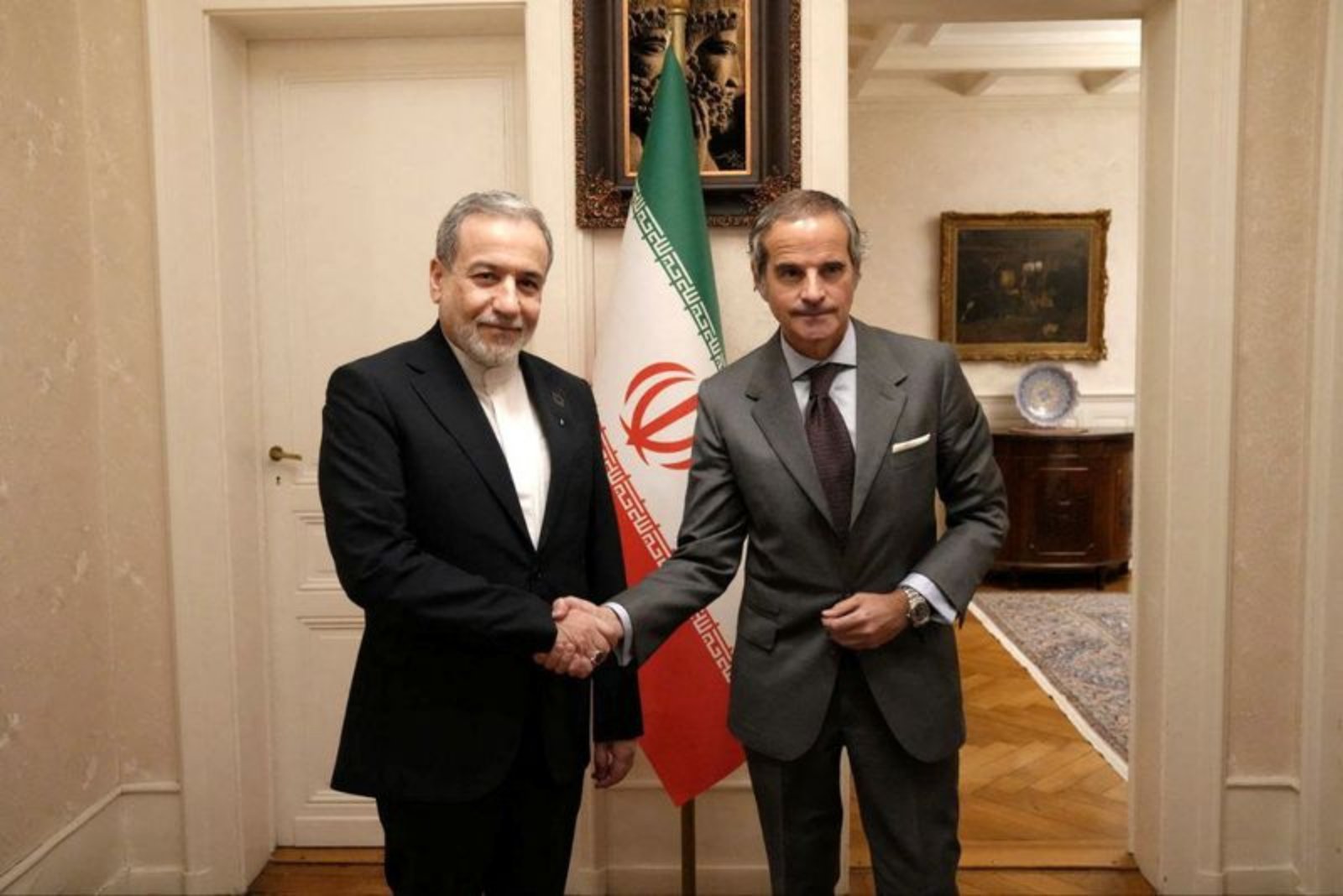
Geneva, Feb 17 - Indirect talks between the United States and Iran took place in Geneva on Tuesday as both sides sought to address a protracted dispute over Tehran's nuclear programme. The negotiations, mediated by Oman, saw U.S. envoys Steve Witkoff and Jared Kushner join discussions alongside Iranian Foreign Minister Abbas Araqchi.
The diplomatic effort opened with limited signs of compromise at hand and against a backdrop of heightened military preparations. U.S. forces are being readied for the possibility of sustained operations over a number of weeks if President Donald Trump were to order strikes, two U.S. officials said. At the same time, Iran initiated a military drill on Monday in the Strait of Hormuz, the strategic waterway that serves as an export route for Gulf Arab oil.
Officials and participants framed the Geneva sessions as an attempt to address the decades-long nuclear dispute between Tehran and Washington. Negotiations were renewed on February 6, and the current round in Geneva was designed to see whether arrangements could be reached to curb Iran's nuclear activities in exchange for relief from international sanctions.
Washington and its close ally Israel assert that Iran seeks a capability that could produce a nuclear weapon capable of threatening Israel's existence. Iran, for its part, maintains that its programme is peaceful. At the same time, Tehran has enriched uranium to levels that, according to observers participating in the diplomatic conversation, exceed what is needed for power generation and approach concentrations associated with weapons work.
The talks take place in the shadow of earlier tensions. A previous attempt to revive negotiations was under way in June last year when Israel launched a bombing campaign against Iran, and U.S. bombers subsequently struck nuclear targets. Iran has since said it halted enrichment activity.
Domestically, Iran's leadership faces pressure. Widespread street protests have eroded the standing of the Islamic rulers, and authorities have suppressed those demonstrations at a heavy human cost, with thousands reportedly killed. The unrest is tied in part to a cost-of-living crisis that officials and analysts link to international sanctions that have curtailed Iran's oil revenues.
There are sharp differences over the agenda for the Geneva talks. Washington has pressed to broaden discussions to include non-nuclear issues such as Iran's missile stockpile. Tehran has resisted expanding the agenda, saying it will discuss only constraints on its nuclear programme in return for sanctions relief - and that it will not give up uranium enrichment entirely or put its missile programme on the table.
On Monday, U.S. Secretary of State Marco Rubio told a news conference in Budapest that it was hard to do a deal with Iran, but that the U.S. was willing to try. Also on Monday, Abbas Araqchi met Rafael Grossi, head of the International Atomic Energy Agency, in Geneva to discuss cooperation with the IAEA and technical aspects of the impending talks with the United States.
Diplomatic activity extended beyond the bilateral Iran-U.S. discussions. On Tuesday afternoon, Witkoff and Kushner were scheduled to take part in three-way talks involving Russia and Ukraine as Washington sought to persuade both parties to reach an agreement to end what was characterized in diplomatic briefings as Moscow's four-year-old invasion of Ukraine, a source said.
For now, the Geneva meetings reflect a dual track: a push for diplomatic resolution of nuclear tensions paired with visible military preparations and regional manoeuvres that underscore how fragile the situation remains. The negotiating positions remain distant on core issues, and the presence of large military assets in the region, along with Iran's drills, adds a layer of strategic risk to the diplomatic effort.
Contextual note: The information in this article reflects statements and events conveyed by officials and participants in the unfolding diplomatic and military developments around the Geneva talks.