
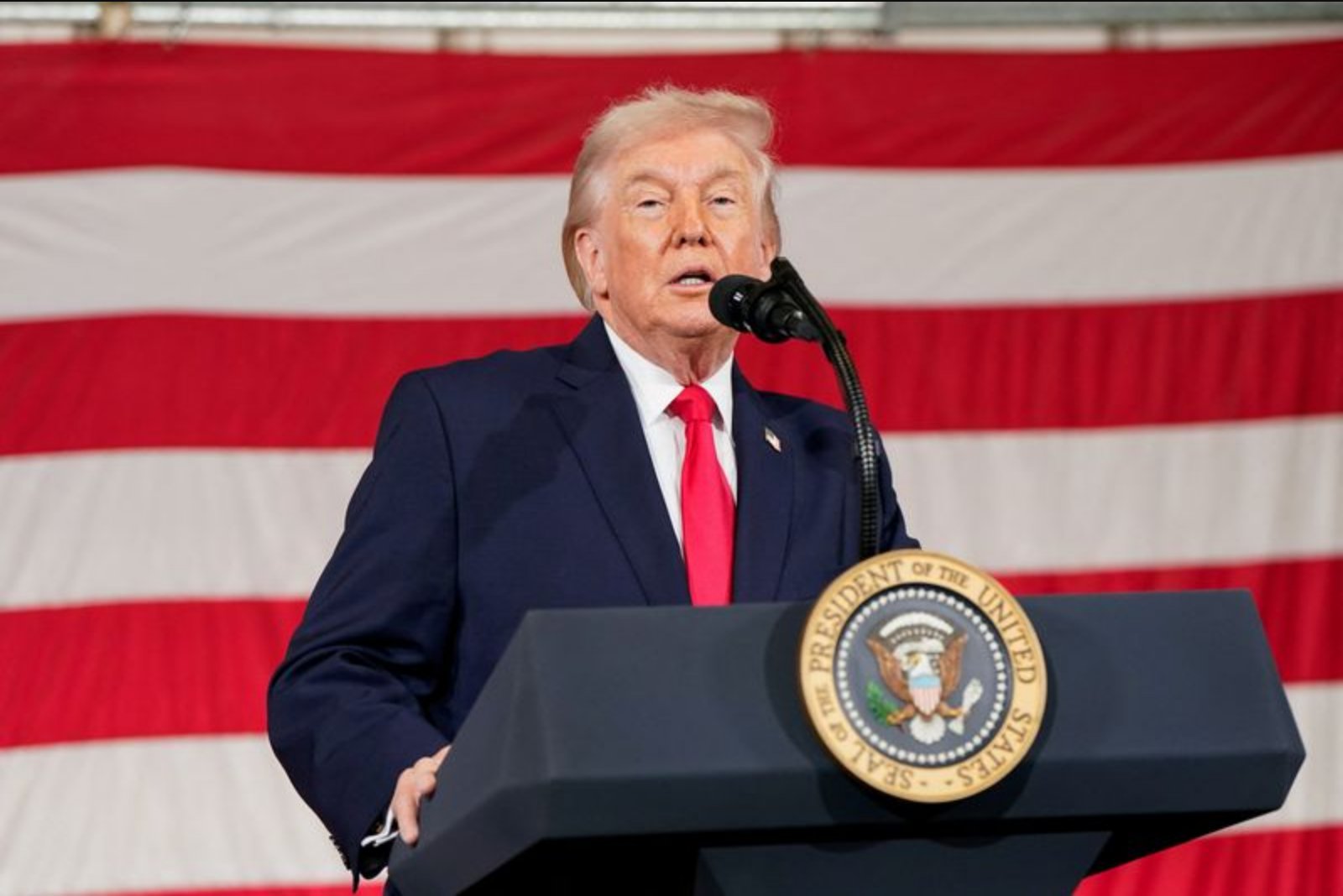
President Donald Trump told assembled U.S. soldiers at Fort Bragg on Friday that Iran had been "difficult to make a deal" in recent nuclear negotiations and suggested that creating fear in Tehran might be the only effective lever to bring about a peaceful resolution.
Speaking to active-duty troops at the North Carolina Army base, Trump said: "They've been difficult to make a deal. Sometimes you have to have fear. That's the only thing that really will get the situation taken care of." He also referenced a U.S. bombing of Iran's nuclear sites that took place last June.
The remarks came after U.S. officials announced the deployment of a second aircraft carrier to the Middle East. Earlier in his remarks the president described the movement of the world's largest aircraft carrier as being made so "we'll have it ready" in the event negotiations with Iran collapse.
Diplomatic activity between Washington and Tehran continued in recent days. Oman facilitated talks between Iran and the U.S. last week, a process that a spokesperson for Iran's foreign ministry said had given Tehran an opportunity to measure Washington's seriousness and showed enough consensus for diplomacy to carry on. The date and location for the next round of talks between the two sides have not been announced.
Trump's visit to Fort Bragg had an additional, separate focus: meeting members of special forces units involved in the January 3 operation that seized Venezuelan President Nicolas Maduro. The president used the stop to discuss that operation and related U.S. policy toward Venezuela.
Maduro faces narco-terrorism and drug trafficking charges in U.S. court, charges he rejects while maintaining he is the rightful leader of Venezuela. In the weeks following Maduro's capture, Trump has engaged with Maduro's interim successor, Delcy Rodriguez, and has sought broad control over Venezuela's oil industry.
Fort Bragg is home to roughly 50,000 active-duty soldiers and is located in a politically competitive state. North Carolina is expected to see tightly contested races for both the U.S. Senate and the House of Representatives in the November congressional elections. The state is also noted as a major prize in the 2028 presidential contest.
During the visit, the president departed from traditional presidential practice by delivering an openly political address to troops. He criticized political opponents and warned that a Democratic takeover of Congress would undermine the military. The speech came amid sliding public approval ratings for the president since his January 2025 inauguration, with voters mainly citing concerns about the high cost of living.
Aides to the president have indicated he will ultimately travel weekly to competitive states to speak directly with voters.
Key quotes from the president during the visit included: "They've been difficult to make a deal," "Sometimes you have to have fear. That's the only thing that really will get the situation taken care of," and "we'll have it ready."