
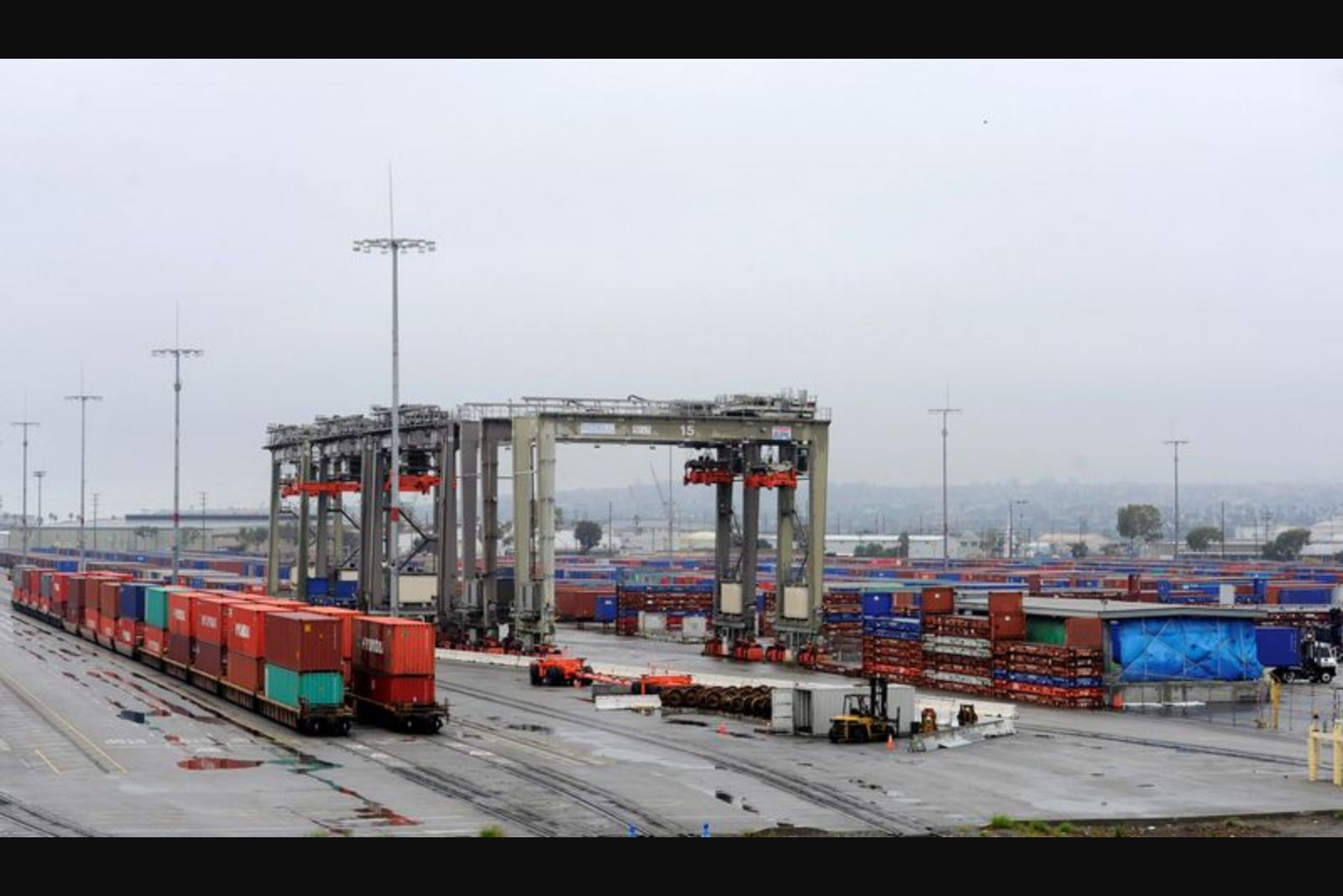
Export activity at the Port of Los Angeles, the busiest U.S. ocean gateway, weakened in January, with loaded export volumes falling 8% and reaching the lowest monthly total seen in nearly three years, Executive Director Gene Seroka said.
Seroka reported that the port handled 104,297 20-foot equivalent units (TEUs) of loaded export containers in January. "Exports to China look dismal," he said, describing the state of trade with that market.
Seroka pointed to the broader trade environment as a significant factor behind the decline. He said President Trump’s aggressive use of tariffs has disrupted global trade patterns, and that retaliatory duties imposed by China and other countries have hit U.S. exporters, particularly farmers, hard.
One dramatic example cited by Seroka was soybean shipments from the Port of Los Angeles bound for China, which he said fell 80% last year. He added that shipment levels did not show signs of recovery in November or December, even after representatives from the two countries spoke on the sidelines at the Asia-Pacific Economic Cooperation Summit.
Trade expert Chad Bown, a senior fellow at the Peterson Institute of Economics, echoed concerns about falling outbound shipments. "There’s not much that the United States is exporting to China these days," he said, and he added that outgoing U.S. shipments of a range of commodities - from beef and corn to crude oil and coal - also declined in 2025.
On the inbound side, imports to the Port of Los Angeles totaled 421,594 TEUs in January, a 13% drop from an unusually strong result in the same month a year earlier, Seroka said. He noted that, at present, import volumes in February appear relatively flat compared with a year earlier.
Looking ahead, Seroka expects total first-quarter volume at the port to fall by less than 10% versus the comparable quarter a year earlier, when U.S. importers accelerated shipments to beat threatened tariffs on imports from countries such as China. "I don’t see the economy or cargo volume dropping off a cliff after that," he said.
Seroka also discussed retail demand, linking port throughput to U.S. consumer spending. He referred to soft U.S. December retail sales that suggested potential weakness in consumer spending - a component that accounts for about 70% of the nation's economic activity - but stated, "even though holiday sales were softer than we would have liked, I don’t see a dire situation."
Seroka warned that imports will slow in March because China factories close for the Lunar New Year holiday, a seasonal disruption that typically affects cargo flows across major West Coast ports.
Outlook
Port officials expect continued pressure on export volumes in the near term due to reduced demand from China and the lingering effects of tariff-driven trade disruptions. Import volumes show signs of moderation after a strong prior-year comparison, and seasonal factors such as the Lunar New Year are expected to temporarily slow inbound flows in March.