
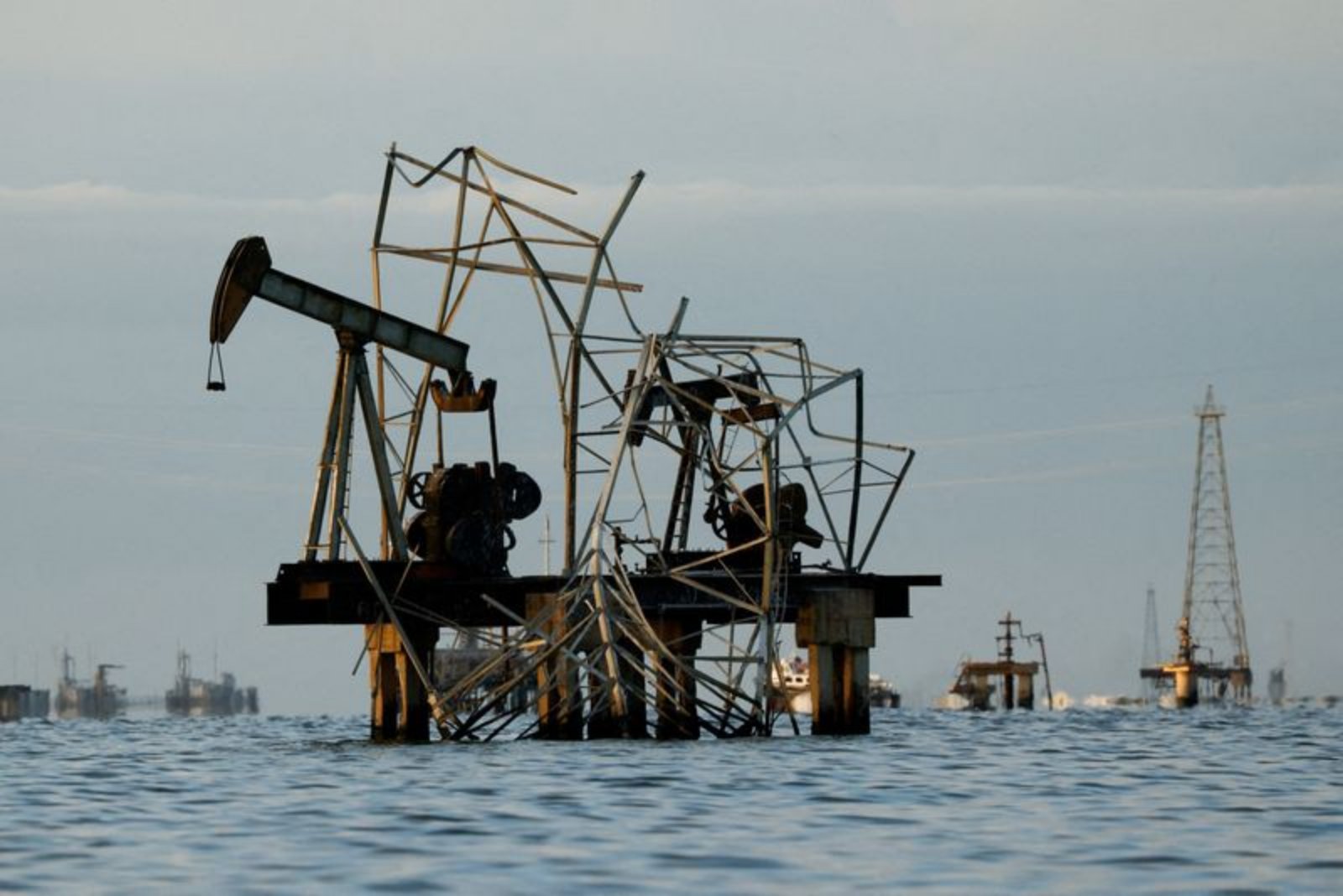
Venezuela’s national oil producer, PDVSA, has declined to complete sales with companies that do not hold explicit individual U.S. licenses over the past two weeks, four industry sources said, a practice that has constrained exports and left inventory tanks fuller for longer.
U.S. authorities issued a general license last month intended to broadly permit oil exports from Venezuela, while also granting separate individual licenses to major trading houses Trafigura and Vitol to move Venezuelan crude valued at billions of dollars. Those authorizations followed a limited U.S. license issued last year to Chevron to ship Venezuelan crude to the United States.
Venezuela relies heavily on revenue from oil exports to fund government operations. The newly issued general licenses aim to lift some restrictions on the nation’s oil industry - a policy that Washington has relaxed since capturing Venezuelan President Nicolas Maduro last month - but several buyers told sources the general license has not yet produced the level of trade activity needed to significantly lower stockpiles.
Sources participating in, or attempting to enter, Venezuela’s oil market described the general license as broad and open to interpretation, leaving important conditions unclear. Those market participants said PDVSA’s senior managers are seeking clearer, company-specific direction from U.S. authorities so the state company can track shipments and secure proceeds in a way that satisfies regulators and internal controls.
At the same time, a number of U.S. and international banks are hesitant to provide financing for Venezuelan crude transactions, three sources said, pointing to the licenses’ complexity and perceived legal risk. "Some banks may not want to risk processing under them, or may not feel the activity is authorized... banks may be doing more due diligence," one of the two sources said.
For the world’s largest trading houses, limited bank support may not be an immediate obstacle. These traders have amassed substantial profits and liquidity in recent years and can handle the financing demands of major cargo movements. But the sources cautioned that reduced bank appetite for Venezuela-related flows is likely to complicate participation by smaller companies that lack the capital or balance-sheet flexibility of the largest merchants.
White House officials told Reuters that the administration has been issuing several general licenses rapidly, responding to the strong interest from oil and gas companies seeking to operate and invest in Venezuela’s energy sector. "The President’s team is working around the clock to field requests from oil and gas companies," White House spokeswoman Taylor Rogers said.
The U.S. Energy and Treasury Departments, along with PDVSA, did not immediately reply to information requests. Separately, the Treasury Department’s Office of Foreign Assets Control issued two additional general licenses that allow oil and gas producers to expand activities in Venezuela. Those permissions will let Chevron, BP, Eni, Shell and Repsol - among others - broaden their operations and represent the most significant easing of production-related sanctions to date.
OFAC provided more operational detail in a frequently-asked-questions guidance released last week. The guidance states that oil sale transactions must be conducted on commercially reasonable terms, defined as those "consistent with prevailing market and industry standards." It also said that a financial institution may rely on a customer’s statements that a transaction complies with the terms of license 46 unless the institution has knowledge or reason to believe otherwise. The guidance did not expand on other interpretive questions.
Some potential buyers remain on the sidelines as they await internal compliance approvals and further clarification from legal teams and regulators. Those parties told sources they are monitoring Treasury communications and updating internal protocols before they engage in direct deals with PDVSA.
Another significant change in the current licensing framework is the absence of authorization for negotiating debt repayment with oil cargoes - an arrangement that earlier permissions had allowed. That restriction poses a practical challenge for many companies that have outstanding receivables from PDVSA and had planned to recover funds by taking oil in lieu of cash.
Export schedules from PDVSA updated this week show that Vitol, Trafigura and Chevron continue to lift the majority of Venezuela’s oil exports, despite PDVSA’s meetings with a range of other prospective buyers, including refiners in the United States and other countries, to discuss direct purchases.
Shipping data indicate Venezuelan oil exports rose to about 800,000 barrels per day in January from 498,000 barrels per day in December. Even so, shipments remain below last year’s average and have not resulted in a sharp drawdown of accumulated crude in storage.
Traders who buy Venezuelan crude are expected to resell much of it into Europe and Asia, rather than to the U.S. Gulf Coast refiners. U.S. Gulf refiners have struggled to absorb the rapid rise in Venezuelan small shipments after millions of barrels that had previously gone to China were diverted away over the past two months.
Should you be buying CVX right now? ProPicks AI evaluates CVX alongside thousands of other companies every month using more than 100 financial metrics. Using machine-generated analysis to generate stock ideas, the tool assesses fundamentals, momentum, and valuation without bias. The AI highlights stocks with favorable risk-reward profiles based on current data and cites notable past winners, then invites readers to check whether CVX appears in any active strategies or whether alternative opportunities in the sector exist.