
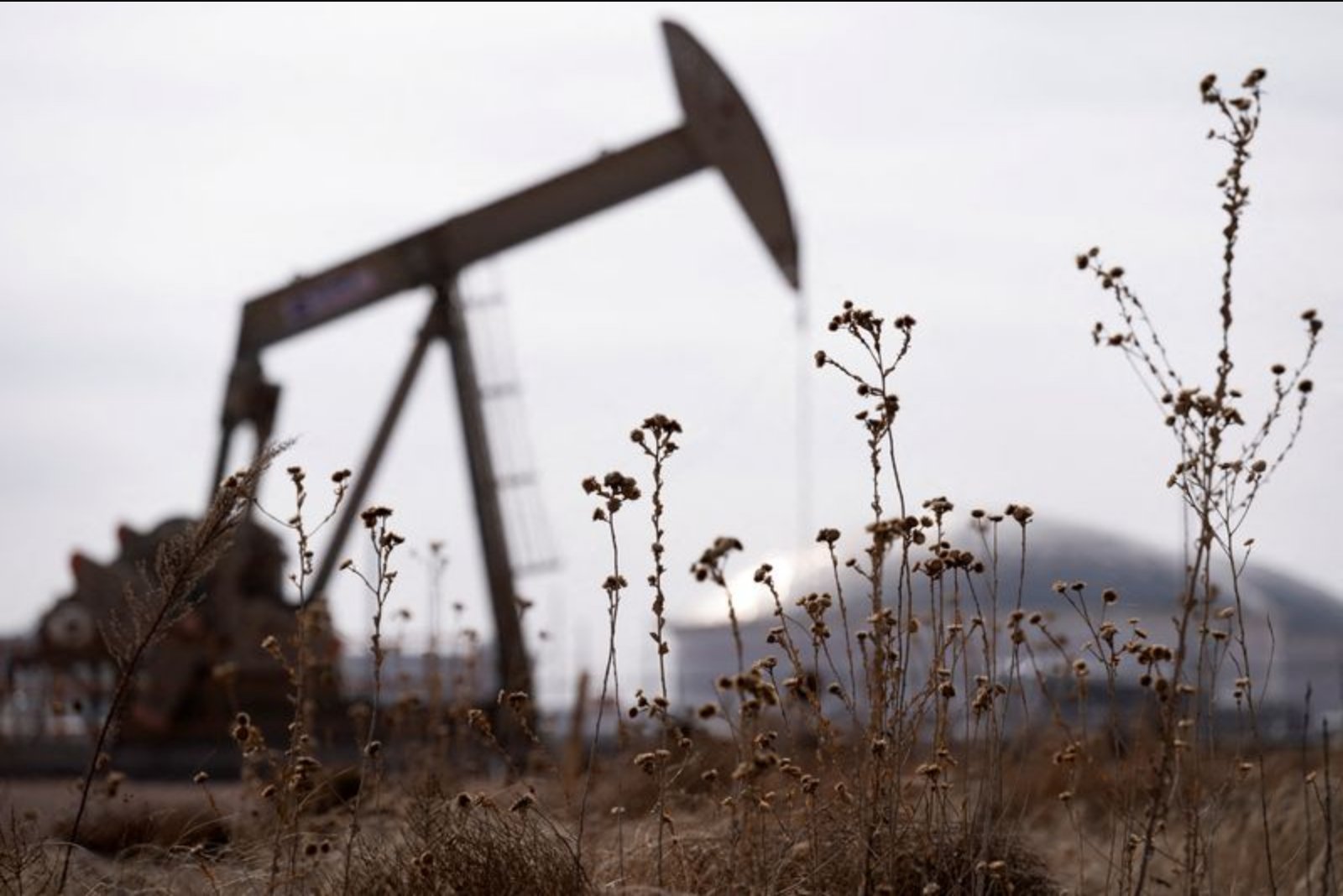
Oil prices were largely unchanged on Monday as market participants awaited a fresh round of talks between the United States and Iran, with continued concern about possible disruptions to oil flows helping to underpin prices. By 0156 GMT Brent crude futures were trading at $67.72 a barrel, down 3 cents from the prior session after having closed 23 cents higher on Friday. U.S. West Texas Intermediate crude was at $62.86 a barrel, also down 3 cents. There will be no WTI settlement on Monday because of a holiday.
Both benchmarks finished the previous week lower. Brent posted a weekly decline of about 0.5% while WTI fell about 1%. Price weakness late last week followed comments from U.S. President Donald Trump on Thursday that Washington could reach an agreement with Iran within the next month, a remark that weighed on markets.
The two governments renewed negotiations earlier this month to address their long-running dispute over Tehran's nuclear programme and to avert renewed military confrontation. Officials are due to meet for a second round of discussions in Geneva on Tuesday. An Iranian diplomat was reported as saying on Sunday that Iran is pursuing a nuclear agreement with the U.S. that would deliver economic benefits for both sides, listing energy and mining investments and aircraft purchases as subjects up for discussion.
Market sentiment remains cautious. IG market analyst Tony Sycamore commented that with both sides likely to stand firm on their core red lines, expectations for an immediate breakthrough are low and the current quiet may be the calm before any escalation.
At the same time, U.S. officials said Washington has dispatched a second aircraft carrier to the region and is preparing for the possibility of a sustained military campaign if talks fail. Iran's Islamic Revolutionary Guard Corps has warned that strikes on Iranian territory could prompt retaliation against any U.S. military base.
Geopolitical risk has provided price support. Sycamore noted that without that premium WTI would likely be trading below $60. This support has coincided with indications from the Organization of the Petroleum Exporting Countries and allied producers, together known as OPEC+, that they are inclined to resume output increases from April after a three-month pause, with the aim of meeting peak summer demand.
Finally, activity in global financial markets was expected to be muted on Monday as China, South Korea and Taiwan were closed for holidays. That reduced liquidity could limit near-term price moves ahead of the Geneva talks and OPEC+ supply decisions.
Key points
- Brent traded at $67.72 a barrel and WTI at $62.86, each down 3 cents early Monday; there will be no WTI settlement due to a holiday.
- U.S.-Iran negotiations are set to resume in Geneva, with Iran seeking economic benefits including energy and mining investments and aircraft purchases.
- OPEC+ is leaning toward restarting output increases from April after a three-month halt to address expected peak summer demand.
Sectors impacted: Energy producers and refiners, global shipping and logistics, aviation and defence-related markets.
Risks and uncertainties
- Diplomatic talks may fail to reach an agreement, raising the risk of renewed military escalation that could disrupt oil flows and lift prices - relevant to energy and shipping sectors.
- Escalatory military responses, including potential strikes and retaliatory actions, could increase regional risk premia and affect oil market stability - relevant to defence and insurance markets.
- Planned OPEC+ output increases beginning in April could add supply during the peak-demand season, which may cap upside in crude prices depending on geopolitical developments - relevant to energy and refining sectors.