
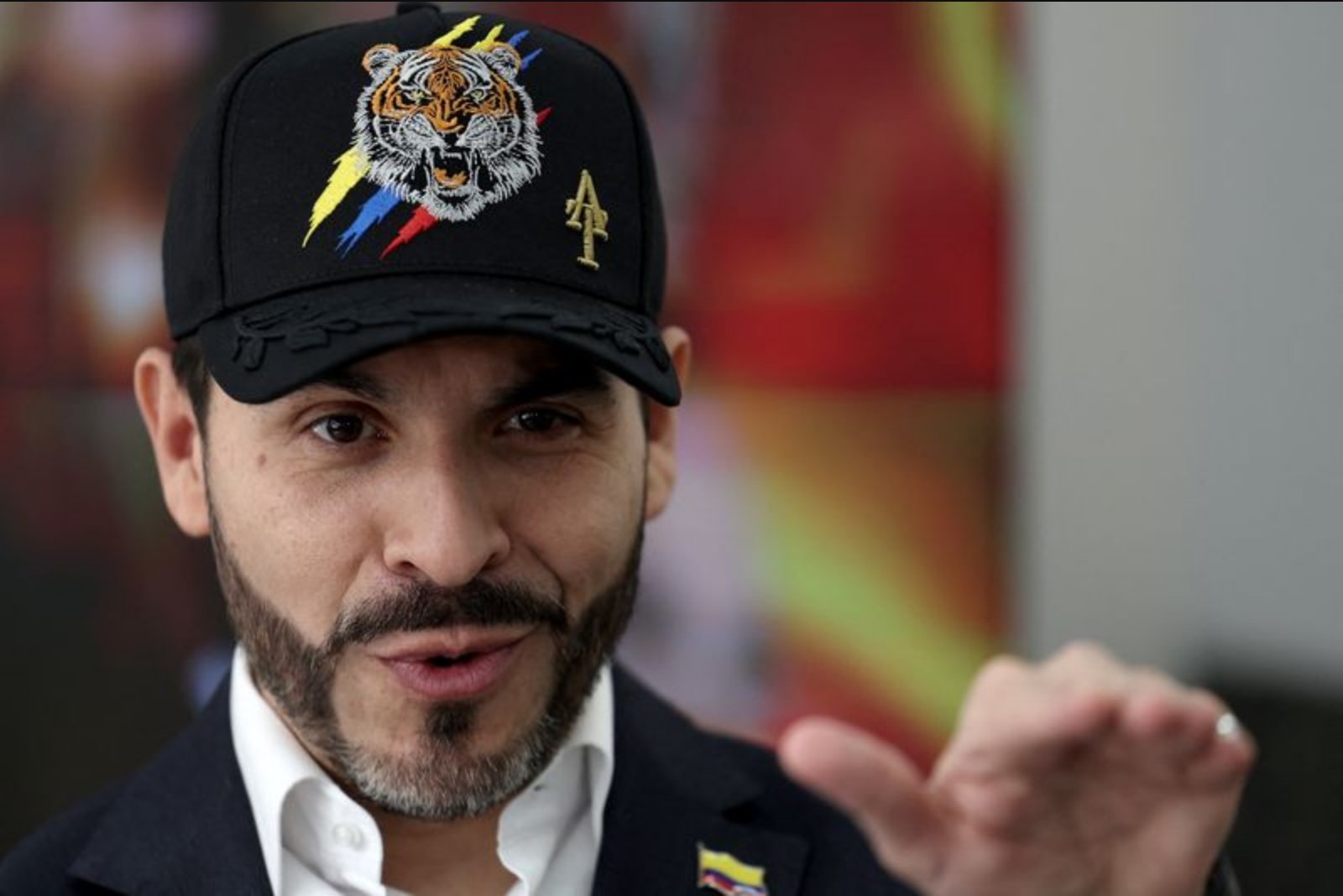
Abelardo De La Espriella, a 47-year-old lawyer and businessman who frames himself as an outsider to traditional politics, told Reuters he would mount a robust military campaign to re-establish security and spur economic recovery if elected president.
De La Espriella is viewed by analysts as a right-wing contender and is leading in some polls ahead of the May presidential election, in a close contest with left-wing senator Ivan Cepeda. Cepeda has signaled his intention to carry forward the policies of outgoing President Gustavo Petro, who launched a “total peace” policy to pause military operations in favor of talks and ceasefires. Those negotiations, however, have largely failed to achieve their objectives.
De La Espriella was explicit about his departure from that approach: "In my government, there will be no peace processes." He has critiqued Petro’s peace policy as having allowed guerrilla groups and criminal gangs to consolidate power through drug trafficking and illegal gold mining.
Speaking in Bogota during an interview conducted with a visible police and armed forces presence, De La Espriella laid out a security-first agenda. "Bandits who do not surrender will be taken down as the law dictates. And if they surrender, they will be imprisoned in a real jail," he said.
As an independent candidate running outside party structures, De La Espriella will not participate in March party primaries and will instead go directly to the election’s first round on May 31. His political movement, called Defenders of the Homeland, places security at the center of a plan he argues will restore investor confidence and thus catalyze economic investment.
Security measures he has pledged include resuming bombings of illegal armed groups to the extent permitted by current law and initiating aerial fumigation of coca leaf crops with herbicides. He also proposes agricultural substitution programs to encourage farmers to replace coca with cacao and African palm.
De La Espriella tied security to economic outcomes. Drug trafficking has long been a driver of Colombia’s conflict, which he noted has produced more than 450,000 deaths over six decades. He said renewed security would bring investors back, enabling increased private and social investment.
On the international front, he has pledged to renew strategic security partnerships with the United States and Israel to equip the military and police with advanced weaponry, and to expand the security budget and personnel levels.
His economic proposals extend beyond security. De La Espriella advocates shrinking the size of government by 40%, reactivating the hydrocarbons sector that he says has declined under policies favoring renewables, and cutting taxes to stimulate private investment. He expects these measures, combined with investment in infrastructure, construction, agriculture and tourism, could deliver annual growth of between 6% and 7%.
De La Espriella presents himself as a business-minded alternative to career politicians. Married and a father of four, he highlights his experience across sectors and stresses his independence from established political networks: "I am independent ... I do not belong to the political caste," he said, adding that "politics needs fewer politicians and more businessmen."
Colombia, a significant global exporter of oil, coal, coffee and flowers, sits at the center of the debate De La Espriella is framing - one that links security policy directly to the prospects for economic expansion and investor confidence.
Context note: The article reflects statements and policy positions presented by De La Espriella and referenced developments in Colombian politics, including the outgoing president's “total peace” initiative and the competing emphasis on dialogue by his main left-wing rival, Ivan Cepeda.