
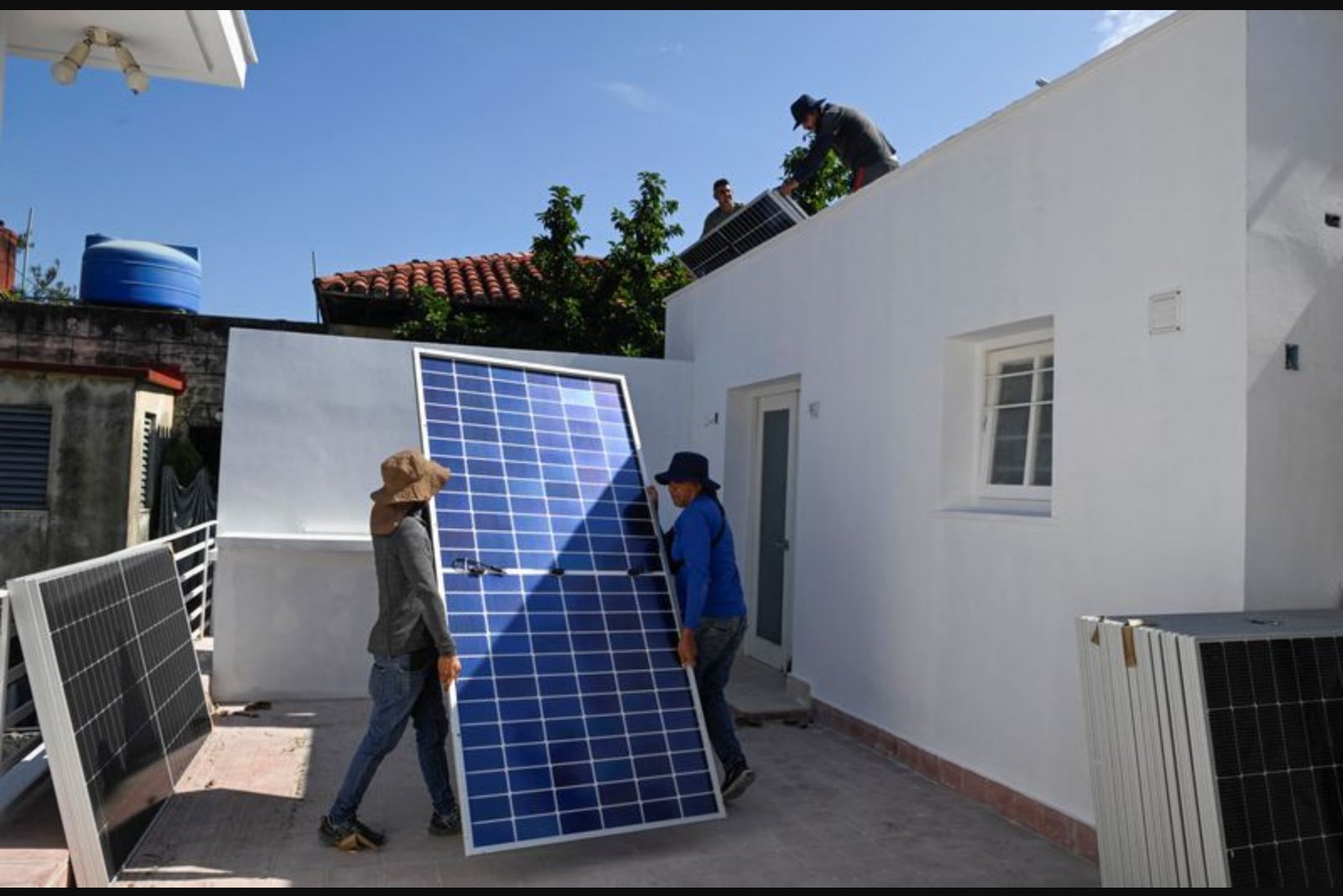
Havana, Feb 20 - Prolonged power cuts across Cuba have spurred a growing movement of residents, shop owners and transport operators to install solar panels on rooftops and vehicles as shortfalls in electricity generation deepen.
The island has for years struggled to secure sufficient fuel, a problem rooted in longstanding U.S. sanctions and a deep national economic crisis that limit the government's ability to purchase oil. More recently, a reduction in shipments from Venezuela and Mexico - attributed to U.S. tariff threats - has exacerbated those shortages, contributing to a surge in blackouts.
At the national level, Chinese financing and donations of equipment have supported a rapid expansion of solar capacity. Cuban authorities report having installed more than 1,000 megawatts of solar generation over the past year and say they intend to double that capacity in the coming years. Despite these public projects, many citizens have taken individual steps to secure basic power needs.
"Given the frequent outages, which pretty much stop you from doing anything, a friend offered to help me invest in panels and set everything up," said Havana resident Roberto Sarriga. With the system in place, Sarriga said he can access the internet, keep his phone charged so others can find him, and power a television so his elderly mother can watch her favorite soap operas. "The idea was to at least have the basics covered."
Solar panels in Cuba, however, are sold in dollars and are unaffordable for many households. Their cost effectively restricts ownership to a growing segment of private business operators and to families that receive remittances from relatives abroad.
To encourage private investment in renewables, the government late on Thursday announced new measures that would waive personal taxes for up to eight years for business people who undertake renewable energy projects.
Installer Raydel Cano, who fits panels in homes and private establishments across Havana, said demand has picked up sharply as fuel supplies have dwindled in recent weeks. Owners of diesel or gasoline generators have found themselves increasingly unable to procure fuel, he said, leading many private businesses to turn to solar.
"Private businesses see themselves obligated to install panels," Cano said, noting that alternatives to fully renewable power have largely become impractical as the public grid becomes less reliable.
Havana cafe manager Dariem Soto-Navarro, who has invested in panels for his business, said the upfront cost is higher but that solar nonetheless offers advantages given the current difficulty of buying diesel. "In addition to being clean, green energy, it optimises operating costs," he said. "It is without a doubt one of the best solutions for entrepreneurs and private businesses."
Solar adoption is not limited to stationary uses. Alejandro Arritola, who operates a tricycle-taxi, had panels mounted to the vehicle's roof to extend his range when gasoline runs out. "It extends my range and I don’t have to use any gasoline," he told reporters, saying his family continues to travel without disruption despite shortages. "If there’s no public transportation, it doesn’t matter."
The U.S. government frames its measures as instruments to increase pressure for political change in Cuba. White House press secretary Karoline Leavitt said it was in Cuba's "best interest to make very dramatic changes very soon."
International agencies have warned of the humanitarian implications of prolonged energy shortfalls. The United Nations has cautioned that failing to meet Cuba's energy needs could precipitate a humanitarian crisis. The island is already facing severe shortages of food, fuel and medicine and has implemented rationing measures intended to protect essential services.
Amid these tensions, reporting has indicated that Russia is preparing to send crude to Cuba in the near future, though no specific delivery date has been provided.
As outages become a part of daily life, solar installations - from household rooftop arrays to panels on small commercial premises and converted vehicles - are emerging as practical, although unevenly accessible, responses to a national supply shock. Public projects backed by foreign financing aim to expand capacity, while tax incentives seek to encourage private investment, but key uncertainties remain about long-term fuel supplies and the pace at which renewable infrastructure can be scaled to meet broad-based needs.