
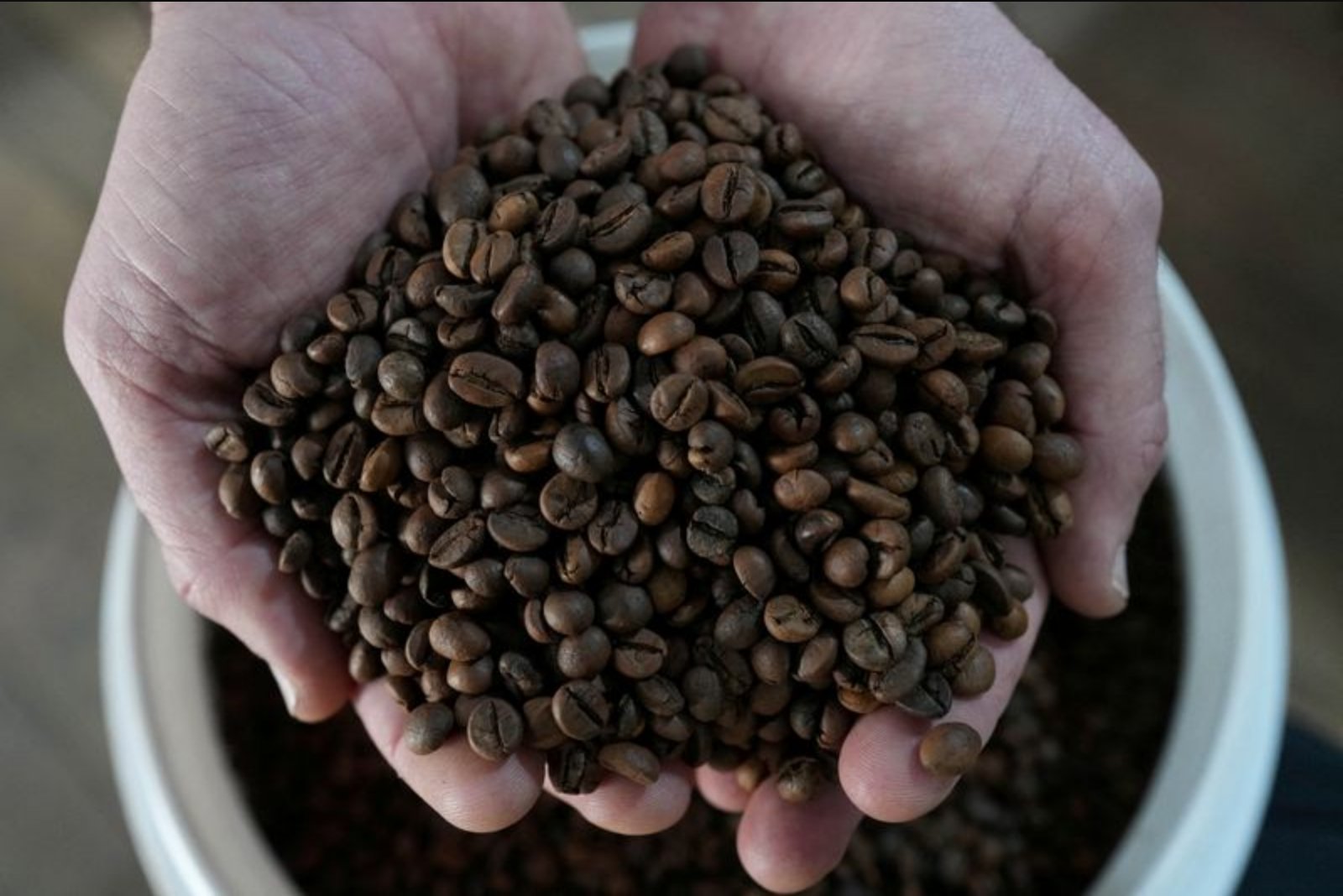
Producers across Brazil are extending cultivation of canephora coffee varieties - notably conilon and robusta - into states that previously had little or no production of these beans, industry representatives, researchers and officials said. The movement has been driven by elevated prices that have made growing canephoras more attractive outside the sector's traditional stronghold.
Brazil is still the world leader in arabica, the milder-tasting coffee favored by many specialty and high-street coffee shops. Arabica's higher prices have historically offset its lower yields compared with canephora. But Brazil has also become the world’s second-largest producer of canephora coffees and is narrowing the gap with Vietnam, the largest producer of canephora.
Espirito Santo remains the dominant producer of Brazil’s canephora output, supplying the overwhelming majority of the country’s conilon. Yet Conab - Brazil’s food supply and statistics agency - shows that since 2020 several states, including Mato Grosso and Minas Gerais, have sharply increased canephora production.
Ricardo Schneider, president of the coffee chamber of commerce of Minas Gerais, said the primary engine behind the geographic expansion is price. "The scenario is favorable for this movement to keep happening," he said, pointing to rising demand for canephoras and the availability of land suitable for planting.
Analysts have also noted improvements in canephora quality, which has helped sustain demand. A year ago, canephora prices, traded as robusta, reached a record $5,849 per metric ton. While prices have since eased from that peak, they remain high relative to historical levels. Arabica similarly hit record prices last year before retreating.
Conab projects substantial growth in canephora output in several emerging producing states. In Minas Gerais - the country’s principal arabica region - Conab forecasts canephora production to reach 602,200 60-kilogram (132.3 lb) bags in 2026. That would represent a 94% increase compared with 2020 figures.
Mato Grosso, a state better known for large-scale soybean and corn cultivation, is seeking to replicate the successes of neighboring Rondonia, which produces robusta at comparatively high yields. Dalilhia Nazare dos Santos, an agronomist at the Mato Grosso State Company for Rural Research, Assistance and Extension (Empaer-MT), noted the productivity gap: "On average, our productivity is 23 bags per hectare; production in Rondonia is 50 bags per hectare. Our objective is for our average to hit that point." Conab forecasts canephora production in Mato Grosso to reach 298,700 bags this year, up from 158,400 bags in 2020.
Conab's latest crop data groups Ceara together with Acre and Para under an "others" category. Their combined canephora output is expected to total 118,700 bags in 2026, nearly three times the roughly 40,000 bags produced by that category in 2020. Ceara is examining potential to cultivate both conilon and robusta Amazonica - the variety commonly grown in Rondonia - according to Silvio Carlos Ribeiro Vieira Lima, executive secretary for agribusiness at Ceara's department of economic development.
Geography and logistics may favor Ceara's ambitions. Located in northern Brazil, Ceara is close to modern ports and transport infrastructure, positioning it well to become a significant coffee export region, Lima said. "We hope that (in 2026) we will have about a thousand hectares planted with conilon coffee," he added, noting the planted area could expand to as much as 5,000 hectares. "This is a positive moment for coffee and coffee cultivation."
Context and implications
The expansion of canephora cultivation into states such as Mato Grosso, Minas Gerais and Ceara reflects a response to market signals and capacity. Higher canephora prices and reported quality improvements are encouraging both established growers and agricultural newcomers to invest in conilon and robusta plantings. Conab's production projections underscore the scale of the shift in Brazil's internal production geography over a multi-year horizon.
Key stakeholders in this transition include local agronomists and state development agencies that are promoting cultivation practices and production targets, as well as commodity traders and exporters who monitor price trajectories and logistical readiness. The concentration of historical production in Espirito Santo remains a baseline fact, even as newer producing states increase their share of national output.
Data sources cited
Production figures and forecasts cited in this report are drawn from Conab data and statements from industry and state agricultural officials quoted above.