
Commodities February 12, 2026

Argentina Senate Approves Milei Labor Reform, Sending Measure to Lower House Amid Protests

Senators back flagship overhaul 42-30 after extended debate; bill eases hiring rules, alters workday and strike limits while removing proposed income tax cut

By Caleb Monroe
Argentina Senate Approves Milei Labor Reform, Sending Measure to Lower House Amid Protests

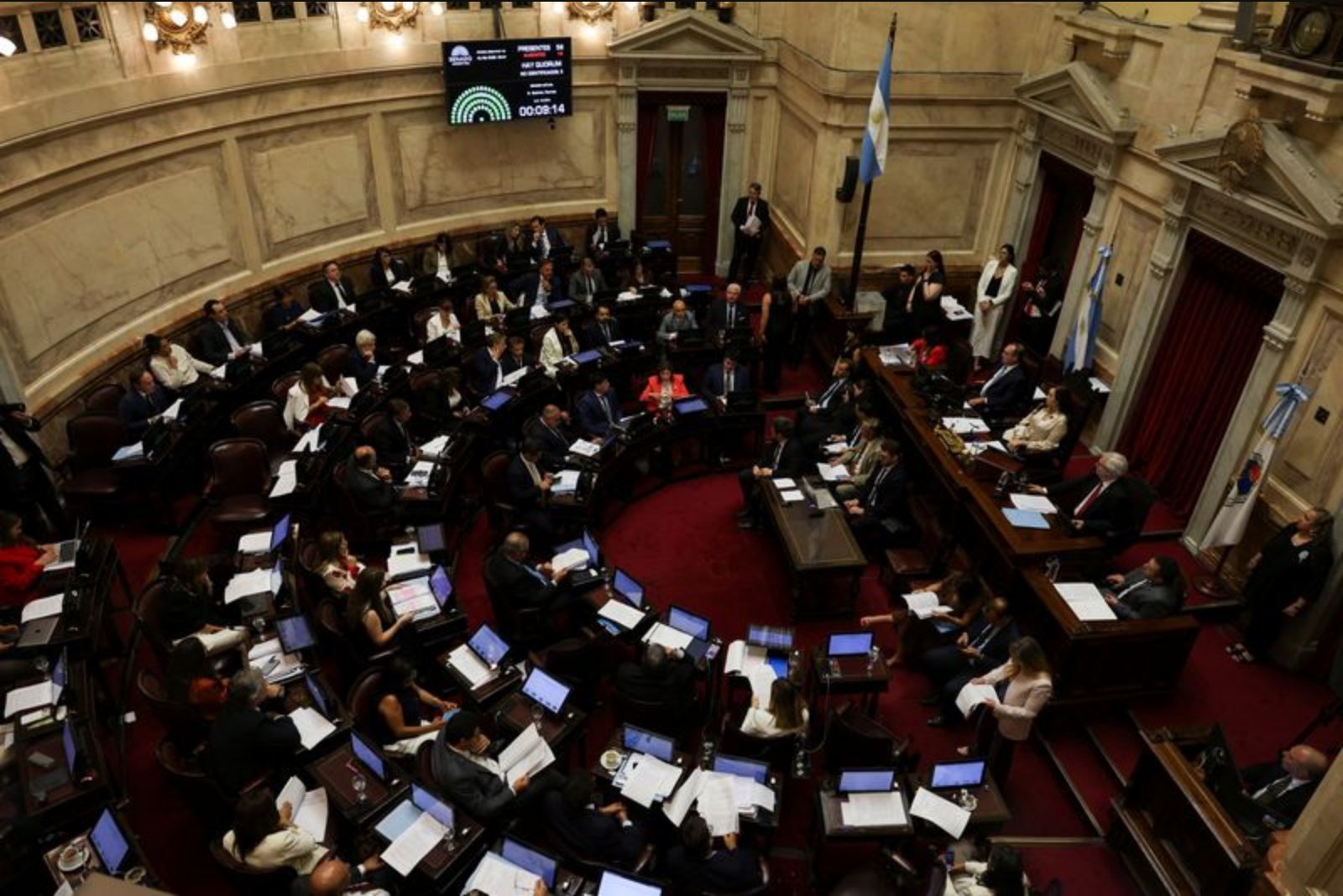
Argentina's Senate voted early Thursday to approve President Javier Milei's major labor reform, passing the measure 42 to 30 after more than 13 hours of debate. The bill, which now moves to the lower house for further consideration, introduces changes to hiring rules, vacation entitlements, the standard workday and limits on strikes. Lawmakers removed a proposed income tax cut and added concessions to unions before passage, while protests outside Congress turned violent.

Key Points

  • Senate approved the labor reform 42 to 30 after more than 13 hours of debate; the bill now moves to the lower house for further consideration - impacts the legislative and political process.
  • The reform eases hiring rules, changes the vacation time system, permits extending the standard workday from eight to 12 hours, and introduces new limits on the right to strike - directly affecting labor relations and employers.
  • Lawmakers removed a proposed income tax cut from 35% to 31% and added concessions to major labor unions during the legislative process - relevant to fiscal policy discussions and union influence.

Argentina's Senate approved President Javier Milei's central labor reform early Thursday, advancing a cornerstone of the president's economic program that supporters say will modernize the country's labor framework. After more than 13 hours of deliberation, senators voted 42 to 30 to pass the measure and send it to the lower house for debate.

In a statement after the vote, Milei described the legislation in strong terms: "This law represents a turning point in Argentine labor history," and called it a "profound transformation" he said would reduce bureaucracy and update regulations he labeled outdated in the face of economic and technological change.

The reform package was adjusted during the parliamentary process. Lawmakers removed a provision that would have reduced income tax rates from 35% to 31% - a change that had been sought by provincial governors - and incorporated new concessions to powerful labor unions.

The approved measures make several substantive changes to labor rules. Among the revisions are eased hiring regulations, alterations to the vacation time system, provisions that allow extending the standard workday from eight to 12 hours, and new limits on the right to strike.

Opposition Peronist senators contested the package, arguing that it threatens long-standing worker protections. The measure nevertheless obtained majority support in the Senate and now awaits debate in the lower chamber.

The law's passage occurred against a backdrop of unrest outside the legislature. The session unfolded as protesters hurled Molotov cocktails and clashed with police outside Congress, creating a tense environment around the deliberations.


What happens next

With Senate approval, the bill will be taken up by the lower house for further discussion and voting. The removal of the income tax cut and the addition of concessions to unions were among the changes made to secure sufficient support for passage in the upper chamber.

Implications highlighted in the debate

  • The administration framed the overhaul as a way to reduce red tape and align regulations with current economic and technological conditions.
  • Opponents emphasized risks to worker protections under the new rules, including limitations on the right to strike and changes to working hours and vacation provisions.
  • Public unrest surrounded the legislative session, with clashes between protesters and police reported outside the congressional complex.

The Senate vote marks a significant procedural step for President Milei's agenda, but the legislation's final form and legal standing will depend on forthcoming deliberations in the lower house.

Risks

  • Opposition lawmakers argue the package threatens long-standing worker protections, creating uncertainty for workers and unionized sectors - relevant to labor-intensive industries and employee relations.
  • Street unrest accompanied the session, with protesters hurling Molotov cocktails and clashing with police outside Congress, indicating potential for heightened social conflict during the bill's advancement - relevant to public order and investment sentiment.
  • The legislation must still be debated in the lower house, so the final outcome and legal implementation remain uncertain until that chamber completes its process - relevant to employers, unions, and markets monitoring policy risk.

More from Commodities

Cuba Turns to Solar as Fuel Supplies and Power Grid Strain Under U.S. Measures Feb 20, 2026 Citigroup Maps Out Oil Price Paths as U.S.-Iran Tensions Mount Feb 20, 2026 Oil Rises, Tech and Credit Nervous as Geopolitics and AI Spending Reshape Markets Feb 20, 2026 EPA to Roll Back Mercury and Air Toxics Limits on Coal Plants, Citing Grid Reliability Feb 20, 2026 Raymond James: U.S. Military Action in Iran 'Likely at This Stage' as Tensions Rise Feb 20, 2026