
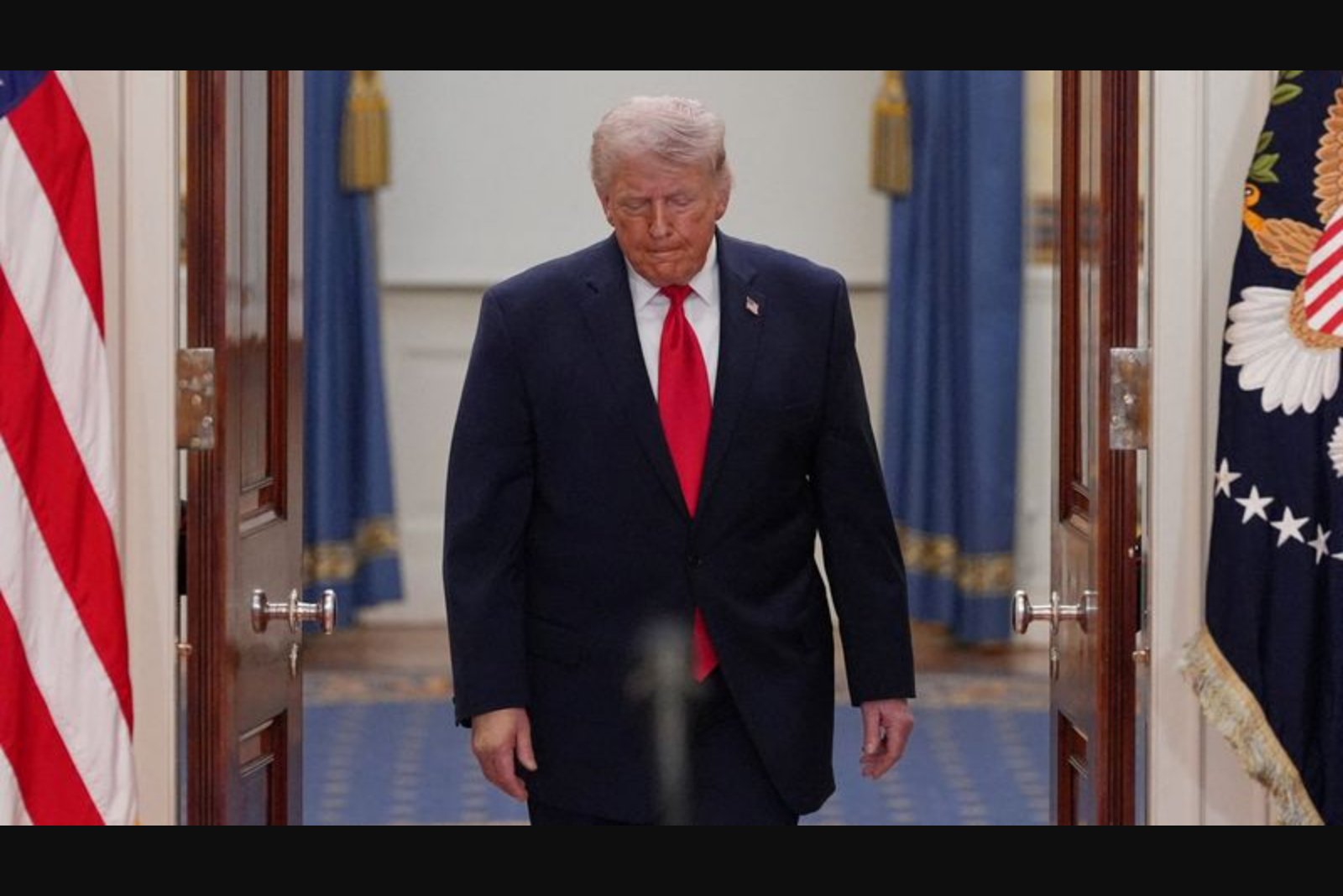
Senior White House aides briefly considered having President Donald Trump make a prime-time televised address to the nation to announce a ceasefire agreement with Iran, but they abandoned the idea as details of the arrangement remained unsettled, three U.S. officials told Reuters. The officials, who spoke on the condition of anonymity to discuss internal deliberations, said some aides privately worried that a high-profile speech might oversell the deal.
According to those officials, the administration attempted to strike a balance between projecting confidence in the nascent truce - presented as a way to pause fighting and open the Strait of Hormuz - and acknowledging the fragility of the arrangement. Discussions over whether the president should speak to the nation have not previously been reported.
Those close to the deliberations said Mr. Trump was persuaded not to deliver the address. The White House, however, issued a statement denying that talks had reached the president's level, calling the suggestion "fake news" and saying "This was never even discussed with the president."
Rather than a live televised address, Trump announced the ceasefire in a social media post just hours before a Tuesday evening deadline he had set, a deadline that had been accompanied by a threat to "destroy Iran's entire civilization" if his demands were not met. The decision to post the announcement on social media, and to reverse course so abruptly, was described by one official as among the most sudden wartime U-turns by an American president.
Advisers flagged lack of clarity
One of the officials described the president as "adamant" about delivering an address. Still, senior advisers pushed back, saying they did not have enough certainty about the exact provisions of the ceasefire to support a formal national statement. They were reportedly still working through the details of what had been agreed and judged the terms too shaky for a prime-time presentation.
Just the week before, on April 1, Trump had given a 19-minute prime-time address in which he defended his conduct in the war and outlined plans for aggressive strikes on Iran over the next two to three weeks. A second address would have provided a forum for explaining the rapid change in course, but advisers said they lacked sufficient clarity to move forward.
A senior White House official acknowledged there had been internal discussion about a potential Tuesday night address, saying, "There was chatter about it, but obviously it didn’t come to fruition, and we didn’t alert the networks or anything; it didn’t get that far." The official did not directly confirm whether the president was ultimately talked out of giving an address.
Ceasefire has mixed effects on the ground
The truce has halted U.S. and Israeli airstrikes on Iran, but it has not resolved other critical elements of the conflict. The blockade of the Strait of Hormuz remained in effect on Friday, a disruption that the article describes as the biggest-ever interruption to global energy supplies. In parallel, Israel continued exchanges of fire with Hezbollah in Lebanon, a separate conflict that both the United States and Iran cited as violations of the ceasefire agreement on the eve of their first scheduled peace talks.
President Trump publicly expressed frustration, posting that Iran was dishonoring the deal and asserting on Friday that, "The only reason they are alive today is to negotiate!" Even with those complaints, both the United States and Iran planned to send senior delegations to Islamabad for talks beginning on Saturday.
The U.S. delegation will be led by Vice President JD Vance, who stated on Friday that the United States was prepared to negotiate in good faith. Vance warned, "If they’re going to try to play us, then they’re going to find the negotiating team is not that receptive."
Trust deficit and long-term implications
Analysts and officials caution that mutual distrust between the two sides remains deep and could complicate diplomacy. The article notes that a warning Trump issued on Tuesday - that "a whole civilization will die tonight" if his demands were not met - may have exacerbated that distrust.
Justin Logan, director of defense and foreign policy studies at the Cato Institute, summarized the problem succinctly: "So there’s a baked-in lack of trust that is going to confound any diplomacy going forward."
The Pentagon has said U.S. and Israeli operations have delivered a generational blow to Iran's military capability. Still, analysts cited in the reporting argue Tehran is likely to remain a strategic challenge for Washington. They portray Iran as a weakened adversary that now may be governed by a more hardline leadership and that retains a hidden stockpile of highly enriched uranium. Observers also point to Iran's demonstrated capacity to close the Strait of Hormuz, a lever that can affect global energy markets and pose ongoing problems for Gulf rivals.
With both sides agreeing to send high-level negotiators to Islamabad, the immediate next steps hinge on whether the ceasefire can be translated into a negotiated settlement. The officials' accounts of internal White House discussions highlight how concerns over clarity and the fragility of initial understandings shaped the administration's public posture in the hours before the scheduled talks.