
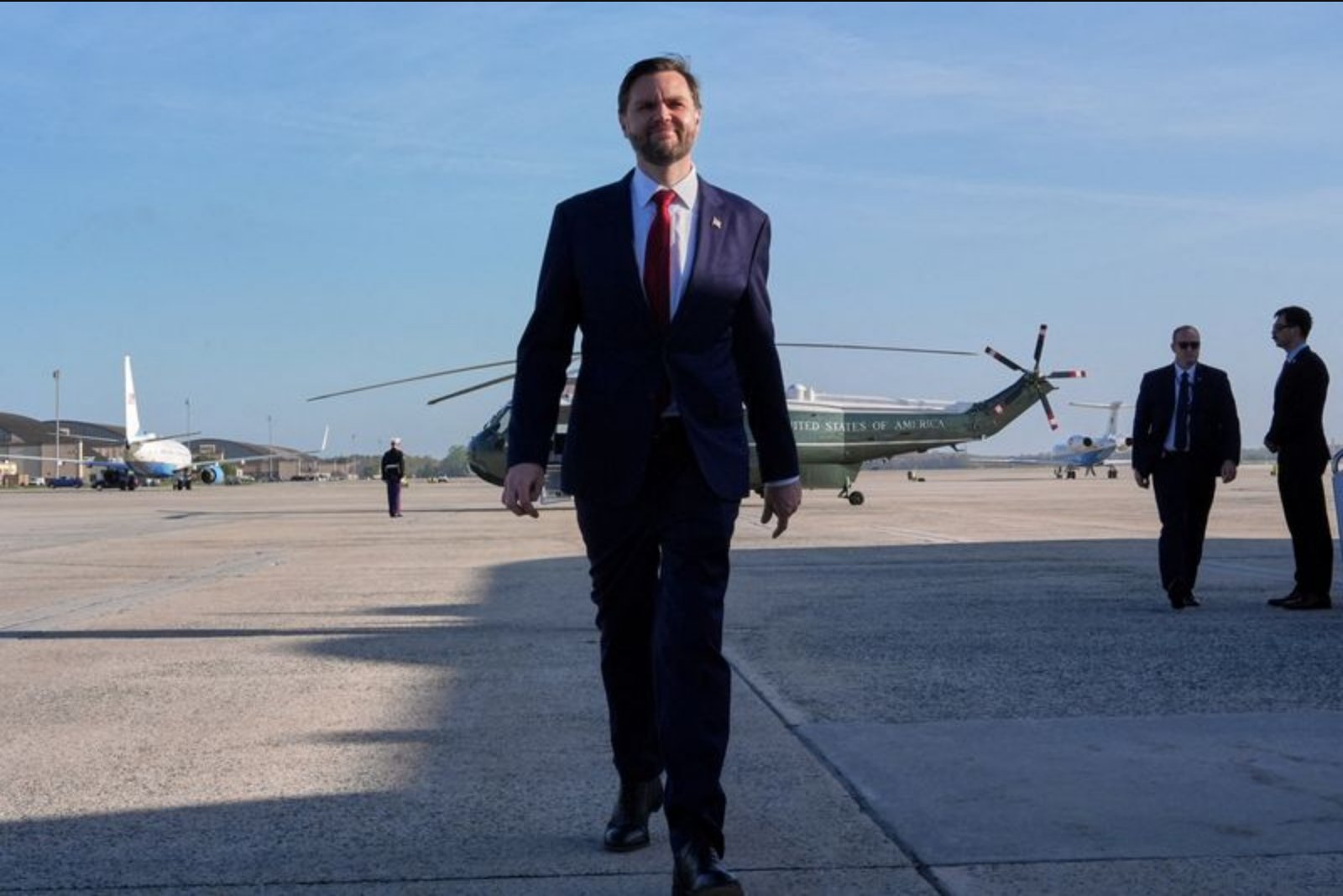
WASHINGTON, April 10 - When Vice President JD Vance arrives in Islamabad on Saturday for face-to-face discussions with Iranian representatives, it will align with a preference reportedly held by some of the Islamic Republic’s remaining leaders. Multiple people familiar with the matter and a regional official said Tehran sees Vance as among the most anti-war actors in President Donald Trump’s inner circle, a reputation that has long been central to his political identity.
That perception has prompted some in Tehran to believe Vance is the best-placed envoy among Trump’s close aides to pursue a negotiated settlement in earnest, according to sources who spoke on condition of anonymity because of the sensitivity of diplomatic deliberations. There is, however, no evidence that Vance will take a more conciliatory stance than any other envoy dispatched by the president - who has publicly warned he would resume bombardment should talks fail.
A White House official said the decision to send Vance to Pakistan was the president’s alone and that Trump will make the ultimate determination about any acceptable agreement. Still, whether Vance’s presence and Tehran’s assessment of him are correct will be a factor in determining whether the first in-person negotiations since the fighting began on February 28 can make headway.
The talks carry high stakes for both Iran and the Trump administration. With U.S. officials seeking an exit from a war that has become politically unpopular months ahead of competitive midterm elections in November, success could offer a domestic political reprieve. Failure could also deepen political costs for U.S. figures involved.
Political upside and downside for Vance
For Vance, who has been discussed as an early frontrunner for the 2028 Republican presidential nomination, the diplomatic mission offers potential political gains if negotiations produce a popular peace. At the same time, observers say he faces the risk of being further identified with a conflict that has led to significant civilian casualties and contributed to higher energy prices and inflation should talks falter or prolong hostilities.
"If this peace negotiation goes well and the result is one that’s popular, it could help Vance’s image," said Stephen Wertheim, a historian and senior fellow at the Carnegie Endowment. "But I think there’s also some danger for Vance that he becomes more the face of the war."
Vance will travel with two other senior U.S. figures: Jared Kushner and U.S. special envoy Steve Witkoff. Iranian officials reportedly remain wary of those two, given that previous meetings on two occasions with them were followed by U.S. strikes, sources said.
Responding to queries, a second White House official rejected the notion that Iran preferred negotiating with Vance and accused media coverage of amplifying what that official described as a coordinated propaganda effort. "It’s laughable for the mainstream media to buy the clearly coordinated propaganda campaign that Iran wants to negotiate with the vice president," the official said. A different White House official told reporters that Tehran had in fact indicated a preference for Vance’s involvement, though no explanation was provided by the Iranians for that preference.
Departing for Pakistan on Friday morning, Vance said he would engage in talks in good faith only if Iran did the same. "We’re certainly willing to extend the open hand," he said. Vance has otherwise been cautious in describing his role. Speaking while travelling in Hungary, he said: "I mean, you know, my key role was I sat on the phone a lot. I answered a lot of phone calls. I made a lot of phone calls." Asked whether Iran explicitly requested his involvement, Vance replied: "I don’t know that. I would be surprised if that was true."
Iran’s interlocutors and their perceived pragmatism
According to a senior regional diplomat, one of the pro-Vance voices inside Iran was parliamentary Speaker Mohammed Bager Qalibaf, who will represent Tehran in Islamabad together with Foreign Minister Abbas Araqchi. Some White House officials had, in recent weeks, identified Qalibaf as a potentially constructive counterpart because they saw pragmatic tendencies in the former Tehran mayor, two sources familiar with internal administration discussions said.
From Tehran’s perspective, the regional diplomat said, Vance carries greater political stature as an elected top-ranking official than Witkoff or Kushner, and that contrast has informed Iranian calculations about the negotiations.
Both sides are meeting with interlocutors of their choosing. Yet analysts say that may be one of the few grounds for optimism ahead of Saturday’s session, because the two governments continue to present widely divergent public positions.
For example, the United States has publicly declared additional uranium enrichment by Iran to be unacceptable, while Iran has not publicly signalled any willingness to abandon its nuclear program. Those opposing positions underscore the scale of the diplomatic challenge facing negotiators.
White House skepticism and regional chokepoints
The mood inside the White House has been described by a senior official as sceptical. Recent discussions suggest President Trump has accepted that the Strait of Hormuz - a vital artery for global commerce that remains effectively closed despite a fragile ceasefire - is unlikely to fully reopen in the near term, according to that official. The president posted on social media that oil would be flowing again quickly, but did not provide details or an explanation.
That disconnect between the two capitals leaves open the question of whether assigning Vance to this diplomatic role is an opportunity or a fraught responsibility. Senior White House officials have pushed a narrative that positions Vance as a central figure in the U.S. approach to the talks. White House press secretary Karoline Leavitt said at a press conference on Wednesday: "Vice President Vance has played a very significant and a key role in this since the very beginning. He’s been involved in all of these discussions."
Vance’s own remarks were more measured as he boarded his flight to Pakistan, indicating both a willingness to negotiate and a desire for reciprocal commitment to good faith on Iran’s part. How Tehran perceives him and whether the parties can bridge the many substantive differences will shape whether the encounter in Islamabad can move the sides toward a durable de-escalation.
Key points
- Tehran has reportedly expressed a preference for Vice President JD Vance to be involved in talks, viewing him as a leading anti-war figure in President Trump’s circle.
- The U.S. delegation includes Jared Kushner and special envoy Steve Witkoff; Iranian representatives in Islamabad will include parliamentary Speaker Mohammed Bager Qalibaf and Foreign Minister Abbas Araqchi.
- Major substantive differences remain, notably over uranium enrichment, and the talks occur amid a fragile ceasefire that has left the Strait of Hormuz effectively closed.
Risks and uncertainties
- Negotiations may fail to bridge core policy gaps, particularly on Iran’s nuclear activities - a risk that affects energy markets and regional stability.
- Political exposure for U.S. participants - especially Vance - could rise if talks falter, potentially influencing domestic political dynamics ahead of midterm elections.
- Continued disruption of maritime commerce through the Strait of Hormuz could prolong upward pressure on oil prices and inflation if the fragile ceasefire collapses.