
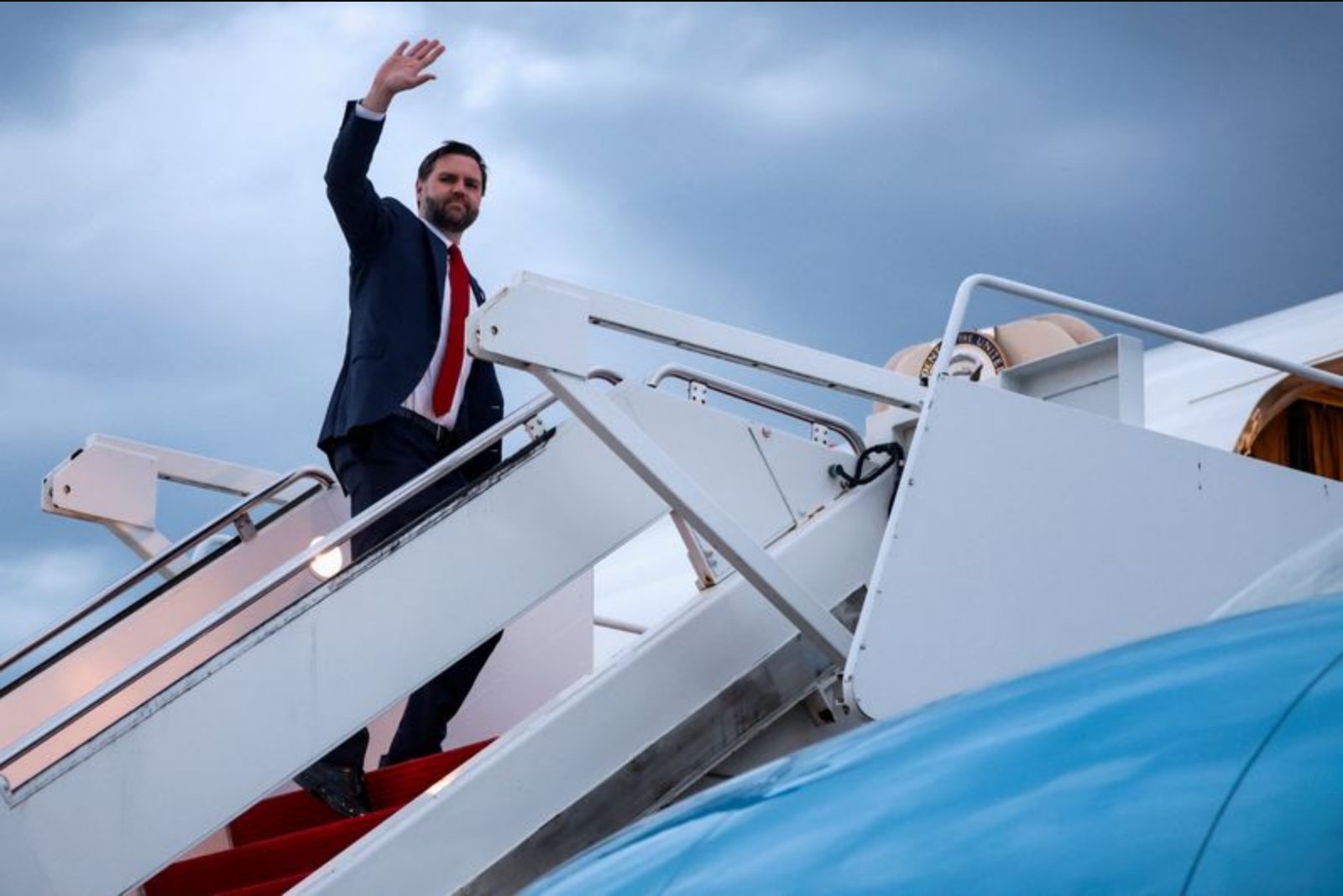
U.S. Vice President JD Vance will undertake a two-day trip to Hungary beginning Tuesday to lend visible support to Prime Minister Viktor Orban as the country heads into a closely contested parliamentary election on April 12, Hungarian government sources said. During the visit, Vance is scheduled to meet with Orban and to appear alongside him at a campaign rally, a rare show of public backing by a senior U.S. official for the nationalist leader.
Speaking to reporters before departing Washington, Vance said he looked forward to seeing "my good friend Viktor," and that the pair would discuss "any number of things related to the US-Hungary relationship." He added that relations with Europe and Ukraine would be on the agenda.
The trip comes amid an explicit effort by President Donald Trump’s administration to support ideologically aligned right-wing leaders abroad. Officials and analysts describe the Vance visit as part of a broader pattern of outreach from the White House to like-minded figures in different regions, and the in-person nature of the visit underscores the administration’s interest in Orban’s political fortunes.
Opinion polling cited by analysts indicates Orban and his Fidesz party face their most difficult re-election contest since returning to power in 2010. Most independent surveys place Fidesz behind the center-right Tisza party, led by Peter Magyar, intensifying the stakes for the incumbent government in the run-up to the April vote. President Trump has publicly praised Orban, calling him "a truly strong and powerful leader," and has previously endorsed him.
Orban’s governing philosophy - which he has called an "illiberal democracy" - shares several themes with Trump-era politics in the United States, including strict immigration policies, skepticism toward liberal institutions, and adversarial stances toward media, universities and nonprofit organizations. These alignments have helped cement an affinity between the two leaders on policy and rhetoric.
"JD Vance’s visit is not routine diplomacy but a clear endorsement of Viktor Orban ahead of the toughest election of his life," said Asli Aydintasbas, a visiting fellow at The Brookings Institution. "For the Trump administration, Orban is not just a fellow conservative but a central figure in efforts to establish an illiberal bloc inside Europe. If Orban falls, the movement would suffer," she added.
Orban’s government has for years been in frequent conflict with European Union institutions over multiple policy areas, including matters related to Ukraine. He has maintained cordial relations with Moscow, declined to send weapons to Ukraine, and has asserted that Kyiv should never be allowed to join the EU. Those positions have amplified tensions between Budapest and Brussels.
During a separate trip to Hungary in February, U.S. Secretary of State Marco Rubio indicated that the Trump administration was focused on Orban’s electoral success and tied the continuation of robust bilateral ties to his re-election. Rubio also signaled the United States could provide financial assistance, though he did not offer details.
Despite shared policy positions on issues like immigration and climate change, relations between Europe’s far-right and the Trump administration have shown strains. Some populist and far-right leaders have publicly pushed back against elements of Trump’s conduct on the global stage, including his past comments about Greenland and his inconsistent tariff approach, prompting a degree of disillusionment among some of his erstwhile allies in Europe.
Political analysts caution that U.S. endorsement and high-profile visits may not be decisive in Hungary’s contest, as domestic issues such as the cost of living are prominent concerns for many voters. Stephen Wertheim, a historian and senior fellow at the Carnegie Endowment for International Peace, questioned whether Vance’s presence would help Orban’s prospects.
"One wonders whether Vance’s visit will boost or set back Orban’s chances," Wertheim said. "Orban positions himself as a bastion of geopolitical stability. Back in Washington, however, Vance’s administration is waging a war on Iran that has predictably destabilized the Middle East and damaged European economies. More and more, 'America First' isn’t playing well with European nationalism."
The trip takes Vance briefly out of Washington amid ongoing U.S. efforts to manage a conflict with Iran that has entered its sixth week, with no clear exit strategy in sight. That confrontation has been associated with higher gas prices, declining approval ratings for President Trump, and increased Republican concern ahead of the November midterm elections.
Vance, who is widely described as an isolationist and has argued against deep U.S. involvement in foreign wars, has been engaged in indirect communications aimed at ending the conflict with Iran. He was among a small group of Trump aides who initially urged caution on the matter.
Summary
U.S. Vice President JD Vance will visit Hungary for two days to meet Prime Minister Viktor Orban and join a campaign rally ahead of the April 12 parliamentary elections. The visit is being interpreted as an explicit endorsement by senior U.S. officials and fits within broader White House efforts to support like-minded right-wing leaders internationally. Observers are divided on whether high-level U.S. engagement will influence an election dominated by domestic economic concerns and strained relations between Budapest and Brussels.
Key points
- Vance will meet Orban and attend a campaign rally during a two-day trip to Hungary just before the April 12 vote.
- Orban and Fidesz face strong electoral challenges in most independent polls, where they trail the center-right Tisza party led by Peter Magyar.
- Policy and economic implications touch on energy markets and European economies, given tensions over Ukraine and the broader geopolitical backdrop, including the conflict with Iran.
Risks and uncertainties
- U.S. public backing may not sway Hungarian voters focused on domestic economic pressures such as the cost of living - affecting consumer sentiment and retail spending patterns.
- Continued tensions between Budapest and the EU over Ukraine and other issues could complicate trade and financial relations with European partners, with potential knock-on effects for markets.
- The ongoing conflict with Iran has contributed to higher gas prices and economic strain in Europe, introducing policy and market uncertainty that could influence electoral dynamics in Hungary and broader regional stability.