
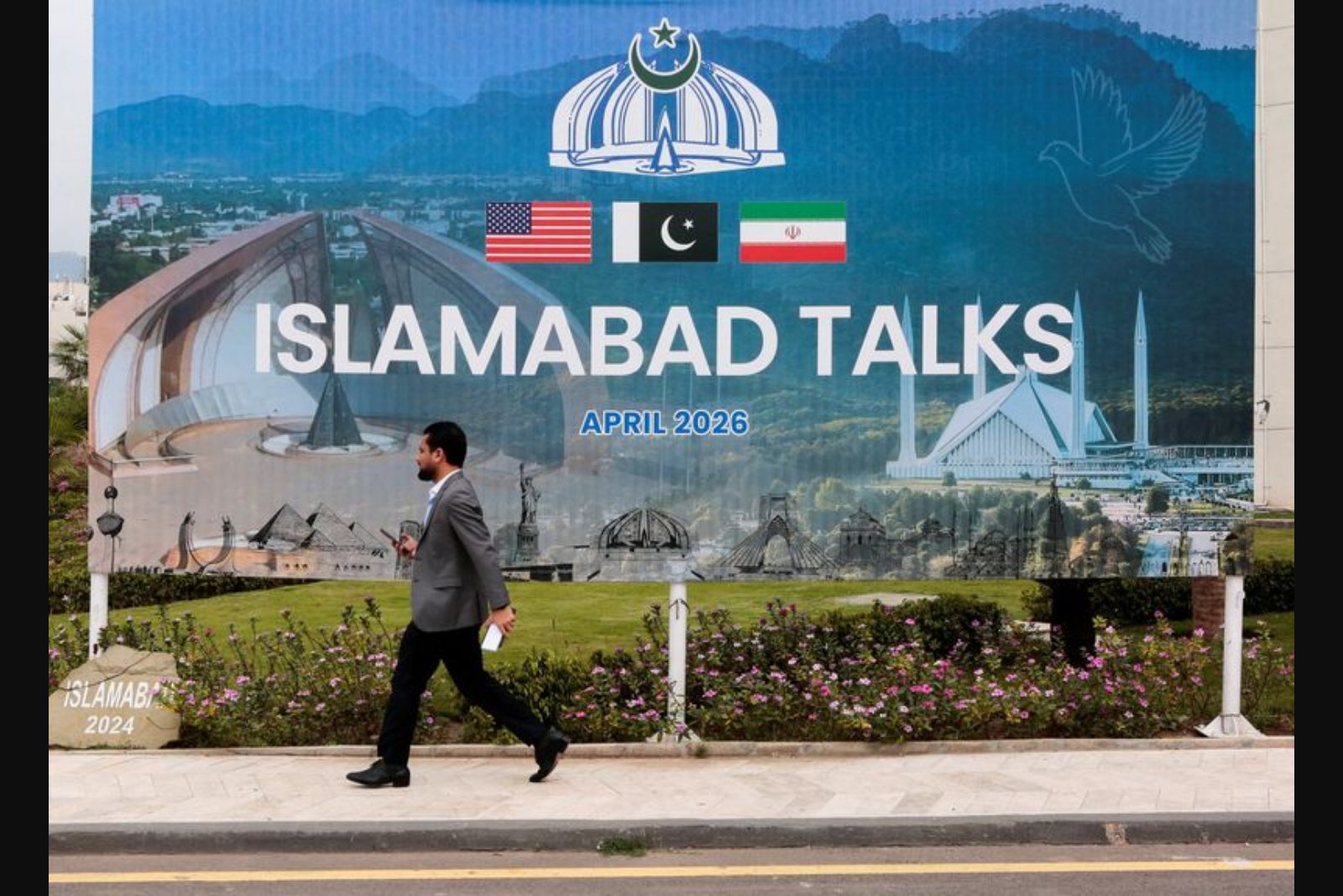
Negotiations held in Pakistan between senior U.S. and Iranian officials have concluded for now, Iran's government reported early on Sunday, after a prolonged session aimed at ending the six-week war between Washington and Tehran. The meetings in Islamabad were the first direct U.S.-Iranian talks in more than a decade and the highest-level bilateral discussions since 1979.
According to Iran's government, the two sides met for 14 hours and agreed that technical teams would exchange documents as a next step. The statement added that "negotiations will continue despite some remaining differences," but provided no timetable for when substantive talks will resume. Iran's state television later reported that negotiations were expected to continue on Sunday.
Delegations included a U.S. team led by Vice President JD Vance, special envoy Steve Witkoff and Jared Kushner, who met Iran's Parliamentary Speaker Mohammad Baqer Qalibaf and Foreign Minister Abbas Araqchi for roughly two hours before a break, according to a Pakistani source involved in mediation. The U.S. administration had not immediately commented on whether the talks had formally concluded or on the outstanding differences.
The context of the talks was unmistakably tense and symbolic. Iran's delegation arrived in Islamabad wearing black in mourning for the late Supreme Leader Ayatollah Ali Khamenei and others killed in the conflict. Iranian officials said delegates carried shoes and bags belonging to some students killed in a strike on a school adjacent to a military compound. The Pentagon has said the strike is under investigation, and military investigators believe the U.S. was likely responsible, according to reporting. Participants described the atmosphere inside the meeting as volatile at times, with "mood swings" and temperature rising and falling during the first round of discussions.
Islamabad itself was tightly secured while talks took place, with thousands of paramilitary personnel and army troops deployed across the city. Pakistan's role as mediator represents a notable diplomatic turnaround for a country that was widely isolated a year earlier, according to observers.
At the heart of the negotiations is the Strait of Hormuz, a strategic sea lane that handles about 20% of global energy shipments and that Iran has blocked since the war began. The future of a two-week ceasefire and the reopening of the strait are closely tied to the outcome of these talks.
The U.S. military said it was "setting the conditions" to begin clearing the strait, reporting that two of its warships had transited the area and that preparations were underway to remove mines. Iran's state media, however, denied that any U.S. ships had passed through the waterway.
Negotiating positions remain starkly at odds on several core issues. Iranian officials are pressing for the release of frozen assets held in Qatar and other foreign banks; a senior Iranian source said prior to the talks that the United States had agreed to such releases, a claim a U.S. official denied. Beyond the release of assets, Tehran has demanded control over the Strait of Hormuz, payment of war reparations, an expanded ceasefire across the region including Lebanon, and the ability to collect transit fees from shipping through the strait, according to Iranian state media and officials.
From the U.S. perspective, President Donald Trump has described minimum objectives that include ensuring free passage for global shipping through the Strait of Hormuz and crippling Iran's nuclear enrichment program to ensure it cannot produce an atomic weapon. Those aims remain central to the U.S. negotiating stance.
The regional security backdrop complicates matters. U.S. ally Israel, which joined attacks on Iran on February 28 that helped to trigger the wider conflict, has continued strikes on Tehran-backed Hezbollah militants in Lebanon. Israel has said that the fighting in Lebanon is not part of any Iran-U.S. ceasefire arrangement. High levels of mutual distrust between the parties remain a persistent barrier to reaching a comprehensive settlement.
With the immediate round of face-to-face diplomacy paused, exchanges between technical teams will be watched closely for signs of progress on the procedural issues that could pave the way for more substantive political agreements. For now, the ceasefire remains fragile, the Strait of Hormuz is a focal point of contention and the broader regional dynamics continue to pose risks for energy markets and maritime trade.