
The United States' most senior diplomat in Taiwan has urged China to abandon coercive tactics against the island and to keep communication channels open with Taiwan's political actors, arguing that such steps would reduce misunderstandings and help stabilise cross-strait relations.
Raymond Greene, who leads the American Institute in Taiwan - the U.S. entity that manages relations with the island in the absence of formal diplomatic ties - made the remarks while appearing on a Taiwanese political talk show on Saturday. He repeated that U.S. policy consistently supports exchanges across the Taiwan Strait.
"However, we also expect China - Beijing - to maintain open communication channels with all of Taiwan's political parties, especially the leaders elected by the Taiwanese people, in order to avoid misunderstandings and to stabilise cross-strait relations," Greene said in Mandarin. He added: "We further expect China to abandon threats against Taiwan or military pressure. I believe this would help ease cross-strait tensions."
Officials at China's Taiwan Affairs Office did not immediately respond to a request for comment.
Greene's comments came amid a series of high-profile contacts and persistent military activity in the region. China regards Taiwan as its own territory and has not renounced the use of force to bring the island under its control, a position Taiwan's government rejects. Beijing does not engage directly with President Lai Ching-te, whom it labels a "separatist."
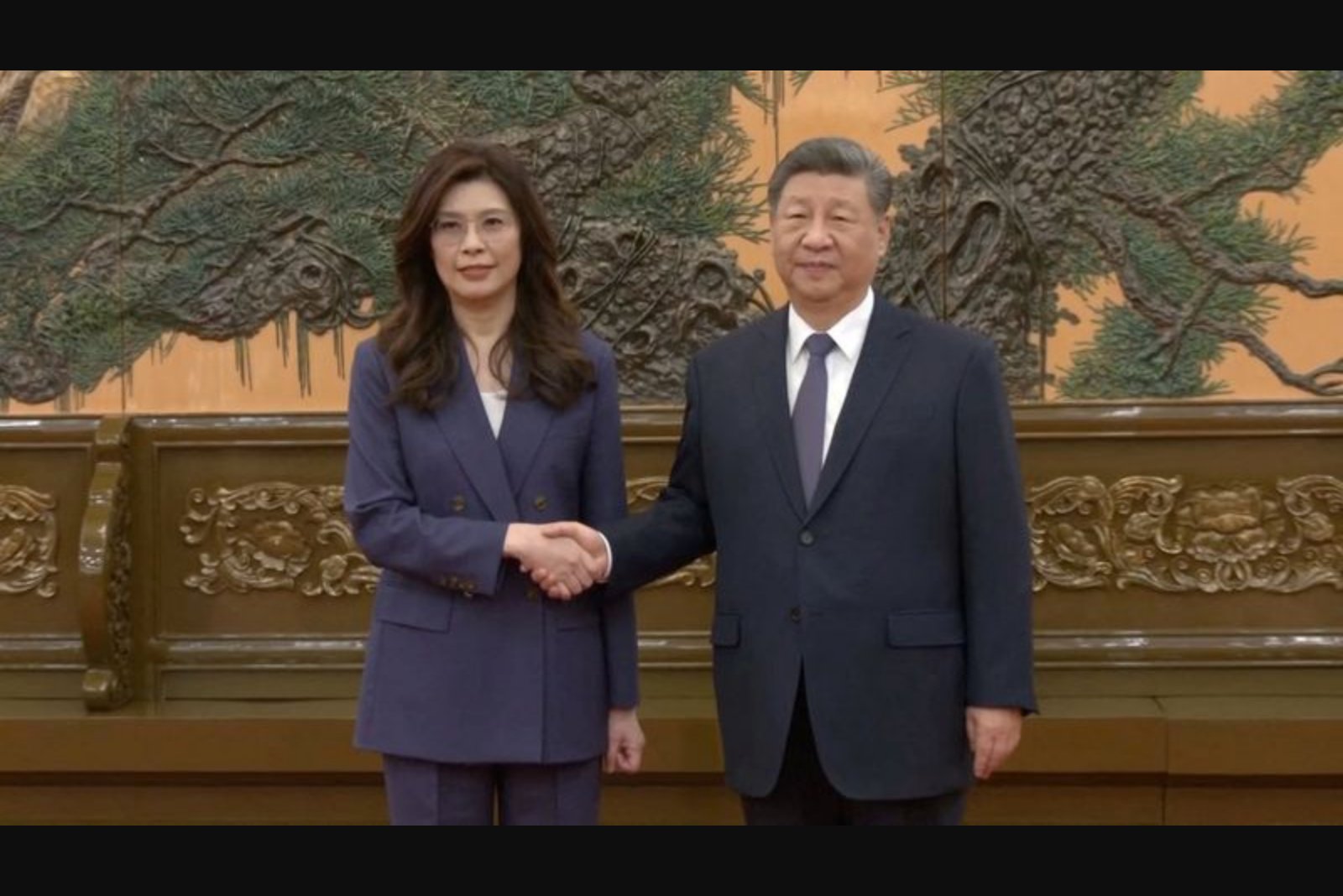
On Friday, Chinese President Xi Jinping met Cheng Li-wun, the chairwoman of Taiwan's largest opposition party, the Kuomintang, during what Cheng described as a mission of peace to China. Meanwhile, the Chinese military continues to operate daily around Taiwan, including during Cheng's visit.
Domestically, Taiwan's opposition, which holds a parliamentary majority, has delayed government proposals to increase military spending. That includes a contested extra $40 billion special defence budget that contains provisions to acquire U.S. weaponry, a plan that has received backing from Washington. Despite lacking formal diplomatic ties, the United States remains Taiwan's most important arms supplier and international backer.
While endorsing dialogue as a primary route to address differences, Greene emphasised that diplomacy cannot substitute for deterrence. "I don't think there is a conflict here, because if there is sufficient deterrence capability, it will lead to a more equal dialogue," he said. He outlined three ways to resolve cross-strait differences: "the first is dialogue, the second is coercion and the third is war. So if Taiwan can have sufficient deterrence capability, it can take the option of war off the table."
Context and implications: Greene framed open communication and the reduction of military pressure as complementary to deterrence. His remarks tie directly into ongoing debates in Taipei over defence spending and procurement, and they underscore Washington's role as a principal security partner for Taiwan.