
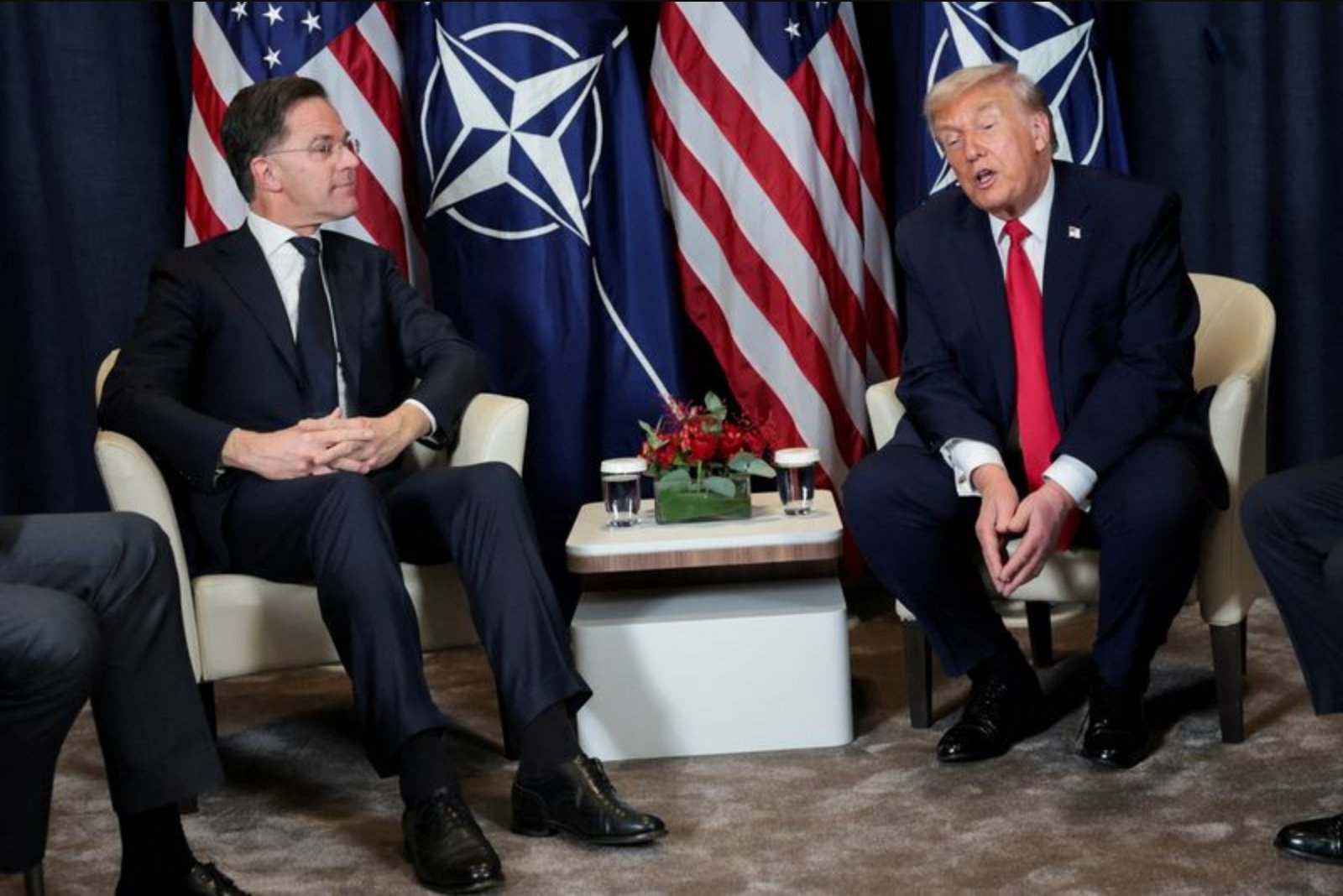
President Donald Trump is set to receive NATO chief Mark Rutte at the White House on Wednesday amid mounting friction between Washington and other NATO members caused by the war with Iran. The conflict has brought U.S. ties with European allies to what officials and analysts describe as a crisis point, driven in part by disagreements over support for the U.S.-Israeli bombing campaign in Iran and a series of public criticisms by the U.S. president.
The Republican president has warned that he might withdraw from the 32-member transatlantic alliance and in recent weeks publicly denounced European partners for what he said was insufficient backing for the campaign in Iran. Trump said on Tuesday that the attacks would be paused after the two sides agreed to a two-week ceasefire.
In addition to criticizing NATO partners, Trump has urged countries that rely on Gulf oil to take action to break what he described as Iran's chokehold on the Strait of Hormuz. Two European diplomats told reporters that European governments are unlikely to join mine-clearing or other operations to reopen navigation while hostilities continue. Iran, for its part, has pledged to impede traffic through the crucial waterway with mines until the war ends.
A dangerous juncture for the alliance
Observers call the moment a fraught one for the transatlantic partnership. Oana Lungescu, a former NATO spokesperson now at the Royal United Services Institute in London, said: "This is a dangerous point for the transatlantic alliance." The war with Iran has exacerbated existing anxieties across a range of issues - from the handling of the Ukraine conflict to disagreements over Greenland and defense spending.
Mark Rutte has maintained a notably cordial relationship with President Trump despite the strains, earning a reputation in Europe as a "Trump whisperer." He referred to Trump last year using the term "daddy" in describing the president's handling of the clash between Israel and Iran. Another European diplomat described Rutte's manner with Trump as deferential but effective.
When Rutte meets with Trump, diplomats say he is likely to emphasize a common interest in restoring normal maritime trade after hostilities drove a global spike in energy prices. Two European diplomats who briefed reporters said Rutte will also attempt to dissuade the U.S. leader from publicly assailing the alliance while highlighting measures European countries are taking to raise defense spending.
A NATO official indicated Rutte will press for deeper defense-industry cooperation and will discuss both the wars in Iran and Ukraine. Yet NATO's mandate as a defensive alliance focused on North America and Europe makes it unclear how extensively the organization would engage in Middle Eastern operations.
European diplomats conveyed that Rutte has not been charged by fellow European leaders with committing to an operation in the Strait of Hormuz ahead of his White House visit. One senior European diplomat said he expects Rutte to sustain dialogue on Ukraine and on burden-sharing within NATO, and noted that Rutte has urged alliance members that they "should lean into opening Hormuz" after a ceasefire.
White House Oval Office meetings with foreign leaders have in recent years often become public spectacles, with praise and grievances aired before television cameras. The White House has not clarified whether the meeting between Trump and Rutte will be open to the press.
Trump and NATO - public criticism and strategic unease
NATO, which brings together European nations, the United States and Canada, was created in 1949 to counter the risk of Soviet attack and since then has been the cornerstone of Western security. In recent weeks, President Trump has repeatedly described NATO as a "paper tiger" and questioned its usefulness in moments of crisis.
When a Reuters reporter asked the president earlier this month whether he would withdraw from NATO, Trump replied: "Wouldn't you if you were me?"
Analysts and officials say the president's intense focus on the Middle East also risks diverting U.S. weapons intended for Ukraine, the defense of which remains a priority for most European NATO members. Allies have expressed alarm at Trump's public criticism of Ukraine, his outreach to Russia and previous comments about taking over Greenland from Denmark.
White House spokeswoman Anna Kelly defended the administration's actions, saying: "He has been disappointed by NATO and other allies' unwillingness to be helpful throughout Operation Epic Fury, even though his effort to destroy the threat posed by Iran is to their benefit. As he said, the United States will remember."
The coming discussions in the White House thus center on whether personal rapport and promises of deeper cooperation can bridge sharp disagreements over alliance priorities, the limits of NATO's involvement beyond its traditional theater, and the consequences of public criticism from the U.S. president toward his partners.
End of article