
On April 10, senior White House officials confirmed that President Donald Trump has discussed with advisers the option of removing some U.S. troops from Europe. Those internal discussions follow the president's public expressions of dissatisfaction with what he regards as allied inaction to help secure the Strait of Hormuz and with the unsuccessful attempt to purchase Greenland from Denmark.
Officials who met the president said the conversations are part of a domestic review of U.S. force posture and alliance relationships. NATO Secretary-General Mark Rutte, who met with the president in the White House on the preceding Wednesday, acknowledged that allied responses had initially been "a bit slow" but said allies were now providing significant support on basing and logistics.
How many U.S. troops are based in Europe?
Data from the U.S. Defense Manpower Data Center (DMDC) indicates that, as of December 2025, approximately 68,064 active-duty U.S. military personnel were permanently assigned to overseas bases in Europe. These figures explicitly exclude forces that are temporarily deployed on rotations for exercises and operations.
Beyond the tally of permanent personnel, congressional reporting shows the U.S. military maintains its presence across 31 permanent bases in Europe and also has access to 19 additional military sites as of March 2024. Rotational deployments and exercises add further, temporary, manpower not captured in the permanent-assignment totals.
What components make up U.S. forces in Europe?
U.S. European Command - commonly referred to as USEUCOM - is responsible for overseeing American military operations across the European theater and coordinates closely with NATO partners. USEUCOM organizes its mission through six component commands that represent the Army, Navy, Air Force, Marine Corps, Special Operations Forces and the recently established Space Force. Those component headquarters are located in Germany and Italy and concentrate on crisis response and security cooperation throughout Europe and into Africa.
Where are U.S. troops deployed across Europe?
Permanent and rotational U.S. forces are stationed in more than a dozen European countries. Germany, Italy and the United Kingdom account for the largest concentrations of permanently assigned personnel. The following list highlights some of the largest contingents and bases as reported by DMDC and congressional sources.
- Germany - Germany hosts the largest U.S. presence in Europe. The air base near Ramstein, in operation since 1952, is the most significant hub. As of December 2025, DMDC data shows 36,436 active service members were stationed in Germany, distributed among five garrisons.
- United Kingdom - The U.K. accounted for 10,156 U.S. service members at the end of December 2025, assigned to three garrisons and primarily comprising Air Force personnel.
- Italy - U.S. forces have maintained a presence in Italy since the end of World War Two, with Army, Navy and Air Force components deployed across multiple sites. DMDC data lists 12,662 permanently assigned personnel in Italy as of December 2025, with bases in Vicenza, Aviano, Naples and Sicily.
- Spain - Spain hosts U.S. Navy and Air Force facilities positioned near the Strait of Gibraltar. DMDC reported 3,814 permanently assigned personnel in Spain as of December 2025.
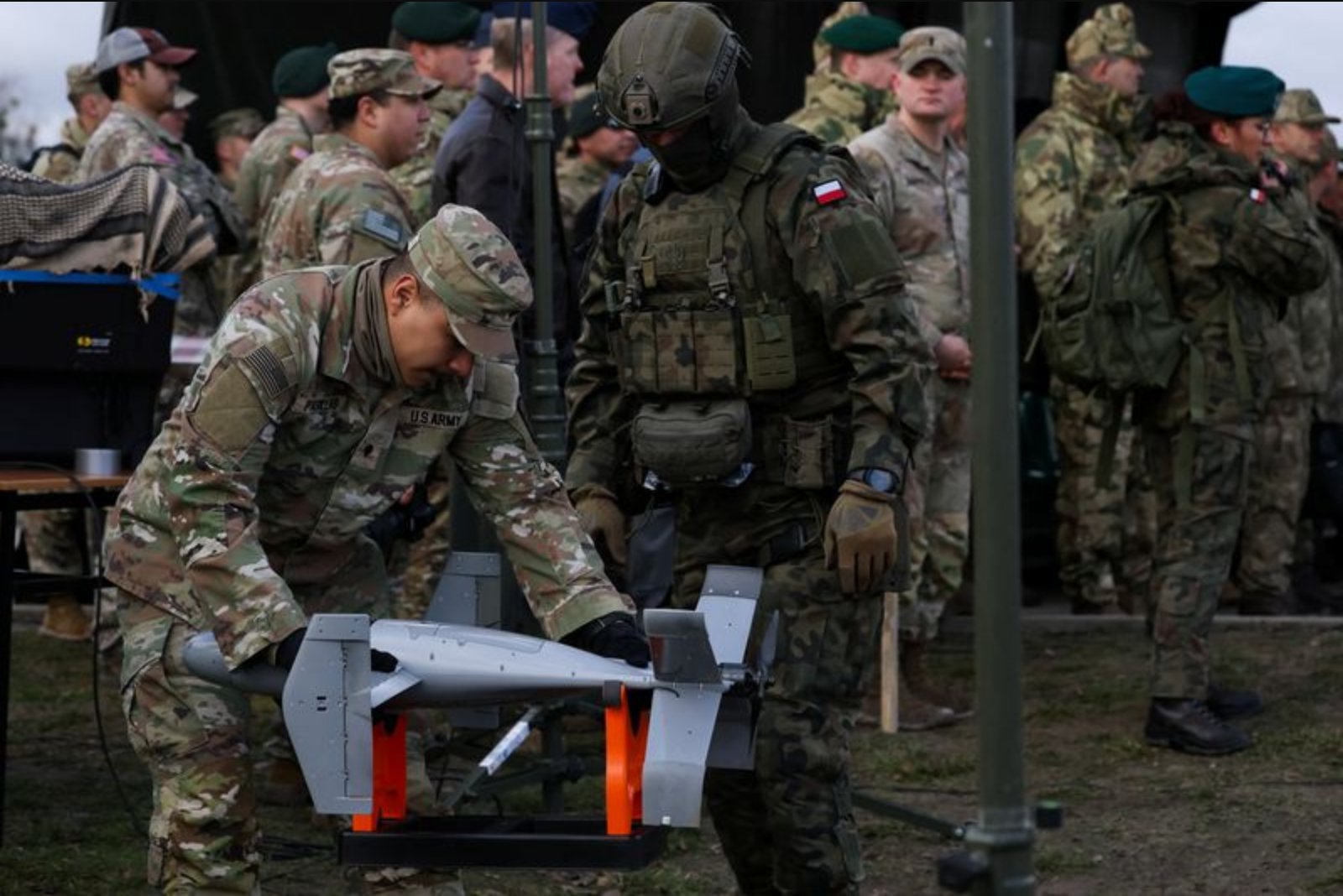
- Poland - Poland had 369 permanently assigned active-duty U.S. service members as of December 2025. In addition, approximately 10,000 personnel constitute a large rotational force funded through the European Deterrence Initiative, according to DMDC and the Congressional Research Service. Those personnel operate across four bases where the United States has temporary access.
- Romania - Romania hosts both a small permanent U.S. presence and rotational forces. DMDC and congressional reporting indicate 153 permanently assigned service members and additional rotational deployments. Bases to which the U.S. has access include Mihail Kogalniceanu Air Base, Camp Turzii, and Deveselu.
- Hungary - The U.S. conducts rotational deployments and exercises in Hungary in addition to a limited permanent presence. DMDC data from December reports 77 permanently assigned service members stationed at two bases, Kecskemét and Pápa Air Base.
What is known and what remains uncertain?
The administration's internal review has raised questions about the future disposition of U.S. forces in Europe, but public reporting to date describes discussion rather than final decisions. Officials have presented allied support on basing and logistics as increasing after an initial period of slow response. The permanence and scale of any potential troop reductions, the timeline for implementing changes, and the operational effects on rotational deployments and U.S. commitments remain unspecified in the information released so far.
As deliberations continue inside the administration, the U.S. defense footprint in Europe - including the combination of permanently assigned personnel, rotational units and access to host-nation facilities - will be the central subject of any policy adjustments.