
President Donald Trump moved quickly to reframe a moment of acute political danger into a forceful display of leadership after U.S. forces recovered an airman who had been shot down and stranded deep in enemy-held territory. Speaking to reporters on Monday, the president emphasized the dramatic elements of the rescue and presented it as a validation of U.S. military capability and resolve in a conflict now five weeks old and broadly unpopular with American voters.
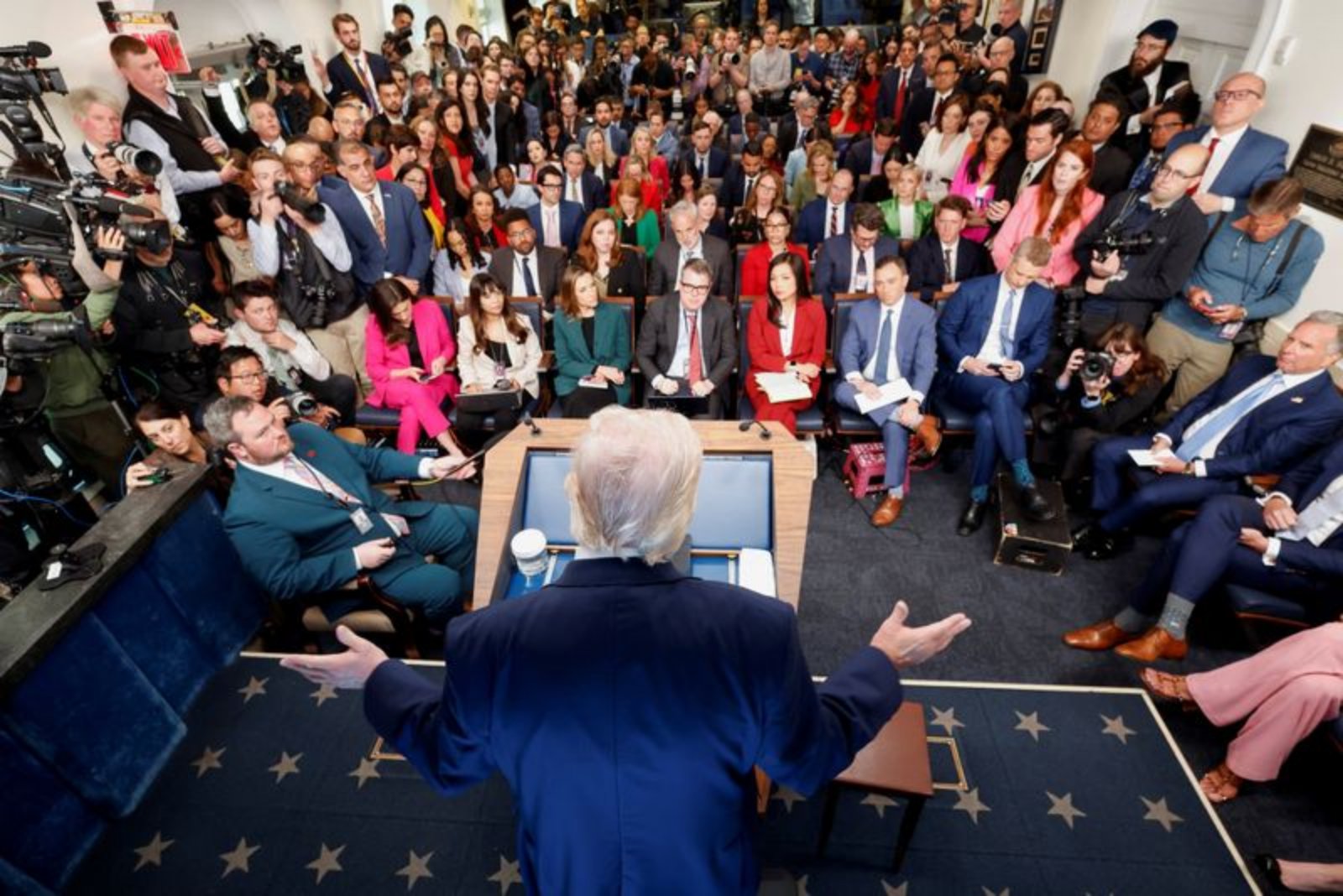
At the White House, Trump described the operation in vivid terms, invoking providential language and spotlighting what he portrayed as the military's audacity and skill. "We have incredibly talented people, and if the time comes, we move heaven and earth to bring them home safely," he told reporters in the James S. Brady Press Briefing Room. "God was watching us."
The rescue offered the president a fresh focal point to control the public story around the limited but contentious bombing campaign. He has faced challenges explaining the aims and strategy behind the attacks, including during a prime-time address last week that did not settle questions about his rationale. Over the Easter weekend, his unabashedly profane social media outburst drew additional scrutiny and led reporters to raise questions about his fitness for office. The White House appearance on Monday was the second time in under a week that Trump scheduled a direct public address on Iran.
Operation recounted; officials disclose operational color
In a briefing that leaned heavily on operational narrative, Trump and administration officials painted a picture of an intricate and dangerous search-and-rescue effort that the president himself acknowledged had been aided by luck. Over the weekend, administration officials cooperated with reporters to craft accounts of the mission, offering granular detail that is not typically shared by those in charge of national security communications.
Trump relayed scenes of a wounded officer eluding capture inside Iran for two days, teams navigating mountainous terrain, attempts to lift aircraft out of wet sand and, ultimately, the destruction of equipment that could otherwise have been seized by enemy forces. He warned of the potential for large-scale loss of life had the operation gone differently. "Hundreds of people could have been killed," Trump said, noting that some military advisers had counseled against attempting the rescue.
When the president asked the chairman of the Joint Chiefs of Staff, General Dan Caine, how many personnel were involved, Caine declined to provide a precise figure. "I’d love to keep that a secret," Caine said. "I’ll keep it a secret, but it was hundreds and hundreds of these people," Trump added.
Press room dynamics and a presidential threat
The briefing room was packed, reporters jostling for position in a scene that underscored the intense media interest. Trump dwelt on operational accomplishments and even suggested, during a separate White House appearance earlier in the day, that the rescue could be the subject of a future film. At the same time, he issued a public threat toward an unnamed journalist at an unnamed outlet who first reported that one airman had been rescued before the second missing airman was located, saying the reporter could face jail.
Diplomatic frustrations and unresolved strategy
Beyond military praise, Trump expressed clear frustration with the pace of diplomatic efforts to bring the conflict to an end and with allies who have been reluctant to assist. He also voiced exasperation with the continued blockade of the Strait of Hormuz, a strategic maritime passage that is central to global energy shipments.
When asked about his mental fitness, Trump dismissed such concerns bluntly: "I don’t care about critics." On whether he planned to escalate the conflict or bring it to a close, the president offered no firm commitment. "I can’t tell you," he said. "I don’t know."
Closing message: victory declared
As the briefing concluded after more than an hour, Trump sought to cast the outcome as unequivocal. "We won, OK?" he said. "They are militarily defeated." The remark capped an appearance designed to reassert control over the public narrative and to present the rescue operation as a galvanizing success for the administration.
The event underscored a pattern in which the president seizes high-profile developments to shape public perception and to contend with criticism of his handling of an ongoing conflict that remains politically sensitive at home.