
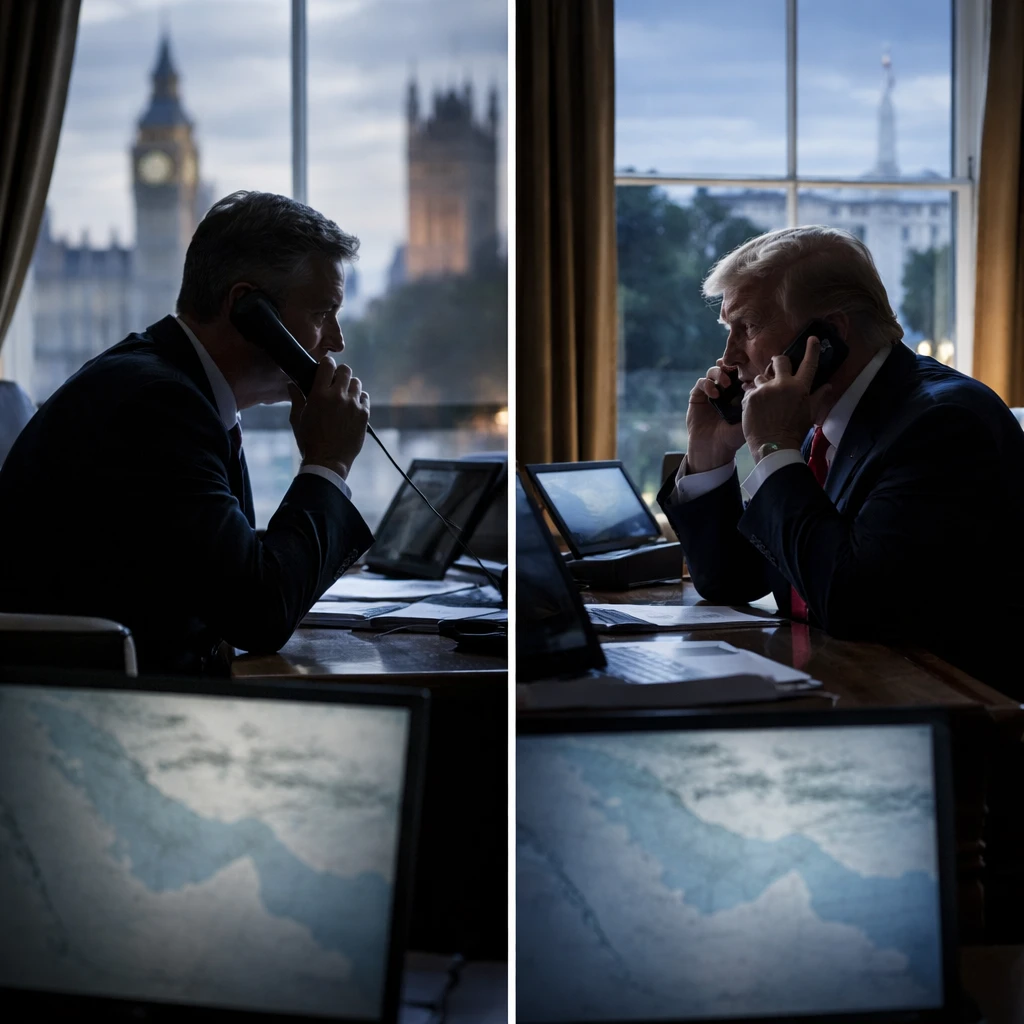
On April 9, British Prime Minister Keir Starmer spoke by telephone with U.S. President Donald Trump to discuss next steps for restoring maritime traffic through the Strait of Hormuz, Downing Street said.
The call followed what Downing Street described as a U.S. ceasefire with Iran. In the discussion, Starmer outlined the UK's work to bring partners together to agree on what the statement called a "viable plan" to re-establish freedom of navigation in the strategic waterway.
"They agreed that now there is a ceasefire in place and agreement to open the Strait, we are at the next stage of finding a resolution," the Downing Street statement said. The leaders also covered the need for a "practical plan to get shipping moving again as quickly as possible," according to the release. Downing Street added that Mr. Trump and Mr. Starmer would speak again soon.
The conversation, as described by the UK government, focused on coordination among partners and on moving from a ceasefire and agreement in principle to an executable approach for restoring transit. The language in the statement emphasizes international collaboration and practical planning as the immediate priorities following the ceasefire described in the release.
Downing Street's account frames the current moment as a transition - from cessation of hostilities and an agreement to reopen the Strait to the operational phase of delivering a functioning pathway for commercial shipping. The statement stresses urgency in resuming maritime movement while seeking agreement among partners on a viable set of actions.
Officials conveyed that additional talks between the two leaders are expected in the near term as they pursue the next steps outlined in the discussion.
Key points
- Starmer and Trump held a phone call focused on restoring shipping through the Strait of Hormuz following a U.S. ceasefire with Iran.
- The UK is working to convene international partners to agree a "viable plan" for reopening the waterway and restoring freedom of navigation.
- Both leaders emphasized the need for a practical plan to resume shipping "as quickly as possible," and agreed to speak again soon.
Risks and uncertainties
- Pacing and execution risk - the statement highlights the need to move from agreement in principle to an operational plan, leaving timing and implementation uncertain; this affects shipping and related markets.
- Coordination risk - convening partners to agree on a single viable approach may be complex, creating uncertainty for maritime, energy, and insurance sectors.