
World April 5, 2026

Russia Calls on U.S. to Drop ‘Language of Ultimatums’ and Return to Negotiations Over Iran

Moscow backs de-escalation after a Lavrov-Araqchi conversation and warns against moves in the U.N. Security Council that could reduce diplomatic options

By Avery Klein
Russia Calls on U.S. to Drop ‘Language of Ultimatums’ and Return to Negotiations Over Iran

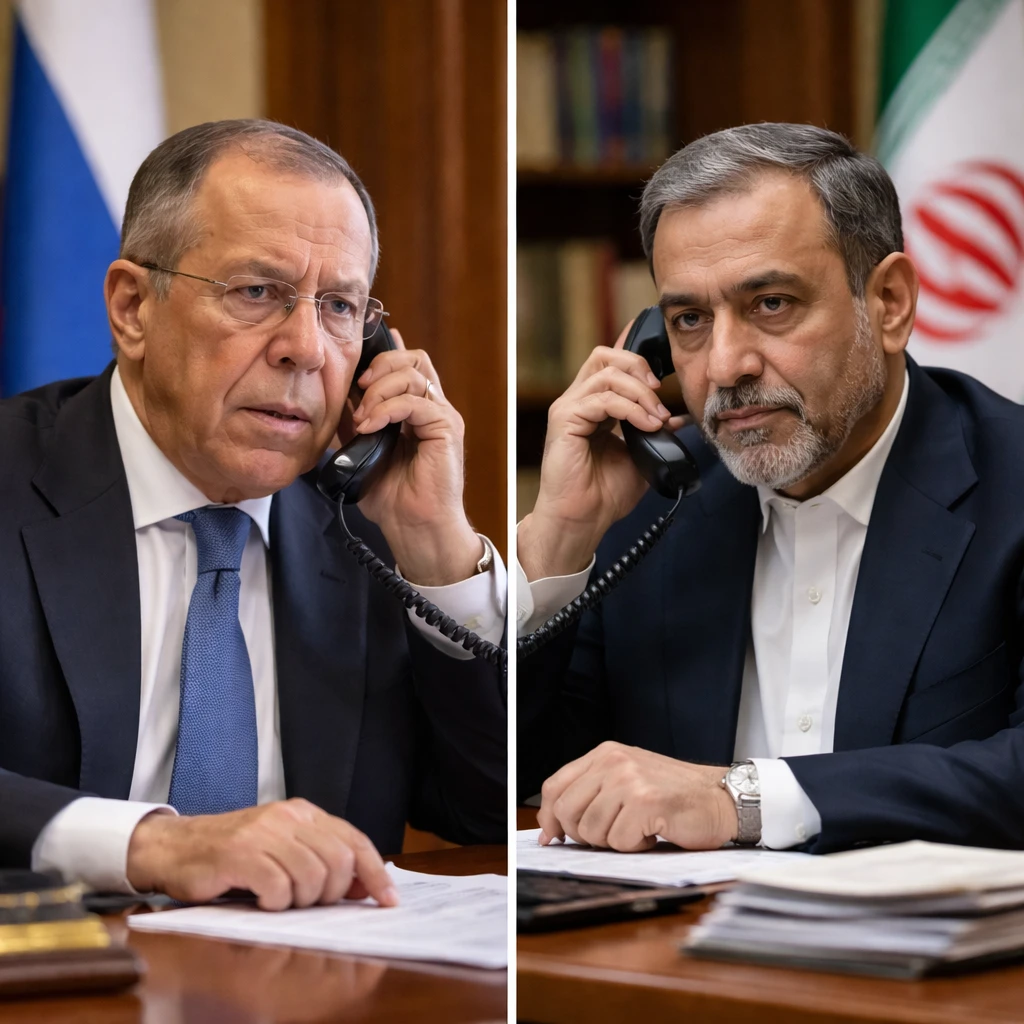
Following a telephone discussion between Russian Foreign Minister Sergei Lavrov and Iranian Foreign Minister Abbas Araqchi, the Russian Foreign Ministry said Moscow hopes de-escalation efforts will succeed and urged the United States to abandon the "language of ultimatums and returning the situation to a negotiating track." The statement also warned against actions, including in the U.N. Security Council, that could undermine remaining chances for political and diplomatic resolution and said Russia supports de-escalation for long-term normalisation in the Middle East.

Key Points

  • Russia issued a statement after a Lavrov-Araqchi call expressing hope that de-escalation efforts regarding Iran would be successful.
  • The Russian Foreign Ministry called on the United States to "abandon the language of ultimatums and returning the situation to a negotiating track."
  • Both foreign ministers "called for efforts to avoid actions, including in the U.N. Security Council, that could undermine the remaining chances for advancing political and diplomatic efforts to resolve the crisis." - Potentially relevant sectors to monitor include energy and defence due to the geopolitical focus on the Middle East.

Russia expressed hope that diplomatic efforts to reduce tensions around Iran would be effective and said on Sunday that the United States could help by "abandoning the language of ultimatums and returning the situation to a negotiating track."

The remarks came in a statement from the Russian Foreign Ministry issued after a phone call between Russian Foreign Minister Sergei Lavrov and Iranian Foreign Minister Abbas Araqchi. The statement said the two ministers "called for efforts to avoid actions, including in the U.N. Security Council, that could undermine the remaining chances for advancing political and diplomatic efforts to resolve the crisis."

In the same statement, Russia indicated it supported steps to de-escalate tensions, framing such measures as serving "the interests of long-term and sustainable normalisation of the situation in the Middle East." The ministry reiterated that those aims, it said, "would be facilitated by the United States abandoning the language of ultimatums and returning the situation to a negotiating track."

The Foreign Ministry statement tied together three elements: a bilateral ministerial conversation, an appeal to avoid actions that might reduce diplomatic options in international fora such as the U.N. Security Council, and an explicit call for the United States to change its tone and push the situation back toward negotiations.

Russia characterised de-escalation as a prerequisite for long-term, sustainable normalisation in the region and presented a U.S. shift in rhetoric as a facilitating step toward that outcome. The ministry emphasised the need to protect the remaining possibilities for political and diplomatic measures to resolve the crisis, warning that certain actions could undercut those chances.

Beyond restating Moscow's preference for a negotiating track, the statement highlights the parties' shared concern about moves in international institutions that could narrow diplomatic avenues. The call to avoid such actions included a specific reference to the U.N. Security Council.

As presented in the Foreign Ministry release, the conversation between Lavrov and Araqchi served as the immediate context for Moscow's appeal for de-escalation and for urging Washington to alter its approach.

Risks

  • Actions in international forums, including the U.N. Security Council, could "undermine the remaining chances for advancing political and diplomatic efforts to resolve the crisis," creating uncertainty for diplomatic resolution.
  • It is unclear whether the United States will change its rhetoric; the statement suggests that without a shift to a negotiating track, de-escalation and long-term normalisation may be harder to achieve.
  • The outcome of diplomatic efforts is uncertain; Russia expressed hope that de-escalation "would bear fruit," indicating that success is not guaranteed.

More from World

King Charles and Queen Camilla Attend Windsor Easter Service as Some Family Members Stay Away Apr 5, 2026 Keiko Fujimori Leads Peru’s Presidential Race as Voter Field Remains Fragmented Apr 5, 2026 Cuellar Backs Mexico to Overcome 'Fifth-Game' Barrier, Raises Concerns Over Tickets and U.S. Immigration Rules Apr 5, 2026 Easter Strikes in Lebanon Kill at Least 11 as Conflict Intensifies Apr 5, 2026 Airstrike in Gaza City Kills Four as Fragile Ceasefire Faces New Strains Apr 5, 2026