
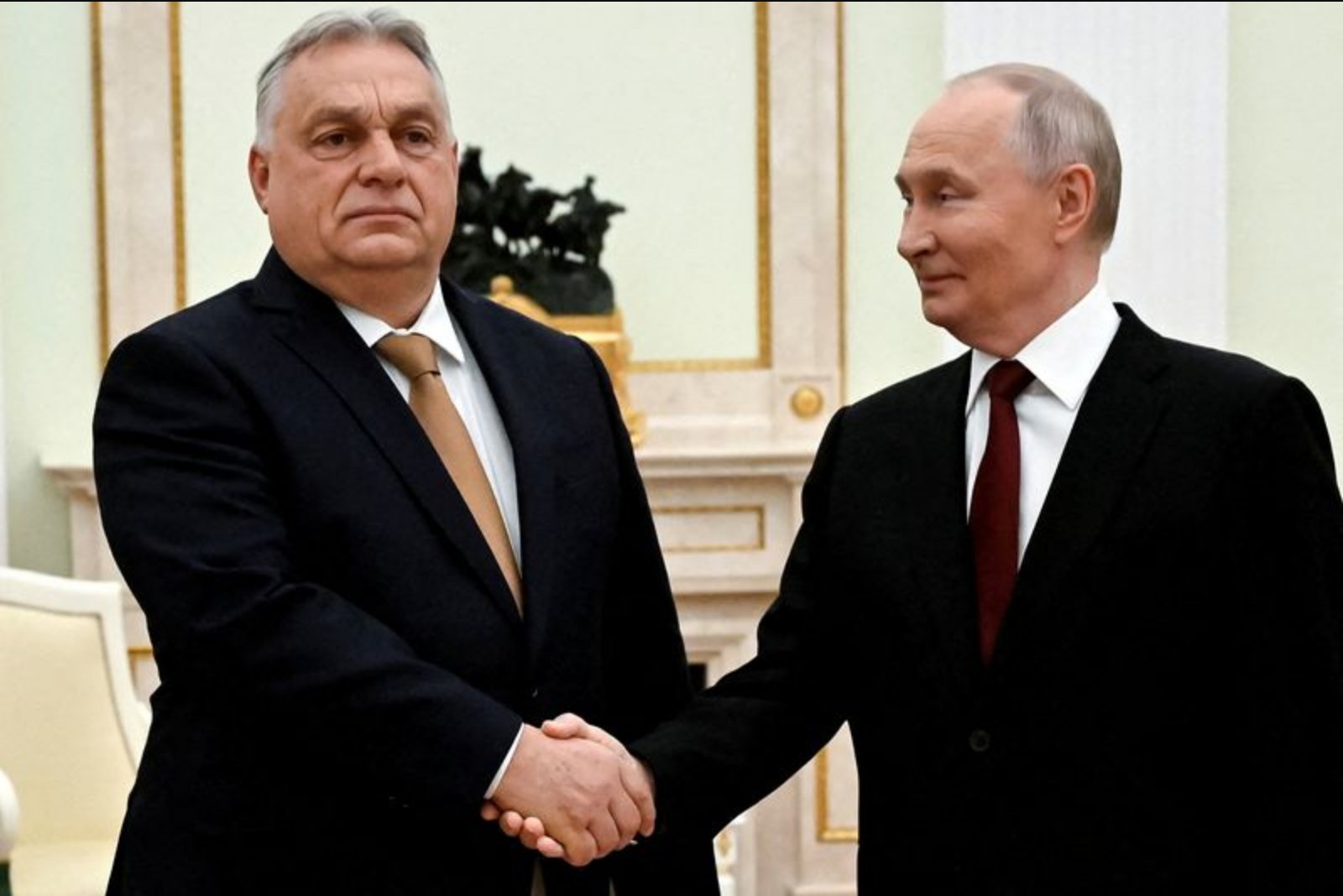
MOSCOW, April 13 - Hungary’s ruling era under Viktor Orban ended when he was defeated by Peter Magyar, an upstart centre-right rival, after 16 years in power. The result has prompted contrasting responses within Russia: hardline commentators warned the outcome would remove a key obstacle to EU support for Ukraine, while the Kremlin signalled readiness to engage pragmatically with Magyar’s incoming administration.
Orban was a familiar interlocutor in Moscow. He had been a frequent visitor and interlocutor to the Kremlin, holding talks with President Vladimir Putin as recently as last November. Throughout his tenure, Orban maintained a distinct approach to Russia compared with many of his EU peers - ensuring Hungary continued purchases of Russian oil and gas despite the conflict in Ukraine, permitting Russia to begin work on a new nuclear power plant south of Budapest, and publicly resisting sanctions and Kyiv’s ambitions to join the European Union.
One concrete demonstration of that stance was Orban’s blocking of a 90-billion-euro EU loan to Ukraine after he accused Kyiv of delaying repairs to a damaged pipeline and, in his view, thereby hampering Russian oil deliveries to Hungary. Kyiv denied those accusations.
Magyar, by contrast, is less familiar in Moscow. He has offered pro-EU and pro-NATO rhetoric while publicly acknowledging the practical need to engage with Russia and continue buying oil and gas for the time being. That position includes talk of diversifying supplies and reviewing existing contracts, even as he recognises current energy dependencies.
The Kremlin made clear it was willing to move on to a working relationship with the new Hungarian leadership. Without naming Orban, a Kremlin representative said Moscow respected the choice made by the Hungarian people and was prepared to do business with Magyar. Kremlin spokesman Dmitry Peskov told reporters: "We look forward to continuing our highly pragmatic engagement with Hungary’s new leadership. We noted Magyar’s statement regarding his willingness to engage in dialogue. Naturally, this will be beneficial for both Moscow and Budapest."
Peskov later told state television that the stance of the new leadership was not yet fully clear, and noted that the Kremlin would not be issuing formal congratulations to Magyar because Hungary is formally designated as an "unfriendly country."
Hardline Response: Immediate Concerns in Pro-war Commentary
Inside Russia, the response among hardliners and influential war bloggers was largely negative. They framed Orban’s loss as a strategic setback that would remove a barrier to EU assistance for Ukraine and thereby enable Kyiv to sustain military operations.
Andrei Medvedev, a widely followed blogger and journalist, described the electoral outcome as having "one consequence for us here in Russia. But it is a very significant one." He said: "Now ... Ukraine will receive EU funds, and with them, the resources to wage war for at least a year. It goes without saying that the Ukrainian armed forces and numerous contractors will focus on further developing their drone systems and missile capabilities."
Another prominent commentator, known as Ramzai, conveyed similar concerns: "It is clear that Hungary will soon cease to block the adoption of anti-Russian sanctions and the EU’s multi-billion-euro support for Ukraine. Russia’s contracts for the completion of the Paks (II) nuclear power plant and for the supply of gas and oil will also be called into question," he said.
Analysts See a Shift Toward Pragmatism Rather Than Instant Rupture
Outside the chorus of alarm from hardliner circles, analysts said the relationship between Hungary and Russia was likely to become slimmer and more transactional rather than abruptly ending. Oleg Ignatov, a senior analyst at the International Crisis Group, argued Hungary’s ties with Moscow were unlikely to disappear overnight but could be narrowed to strictly pragmatic dealings.
Ignatov highlighted energy supplies as a key determinant of future relations. He said the direction of ties would depend largely on how Magyar addresses the issue of Russian oil and gas, which the European Union is seeking to phase out as a bloc. "If Hungary works with the rest of the EU to enable this (a phase-out) to happen, then Hungary’s role as a more Moscow-friendly outpost within the EU will indeed be over," Ignatov said. "If it does not, things stand to be rather more complicated."
Regional Reverberations: Slovakia and Prime Minister Robert Fico
Orban’s defeat is also seen as a setback for allies in the region who have pursued friendly ties with Moscow, notably Slovakia’s Prime Minister Robert Fico. Fico has cultivated warm relations with Russia, advocated for purchases of Russian oil and gas, and warned that Bratislava might block the EU’s 90-billion-euro loan to Kyiv if Budapest removed its own objections.
But diplomats, opposition politicians and analysts suggest Fico may struggle to take on the same disruptive role within the EU that Orban played. Those observers point to Slovakia’s greater dependency on EU funding and its smaller size relative to Hungary as constraints on Bratislava’s influence.
Miroslav Wlachovsky, a former Slovak foreign minister, said he believed Fico would not push Slovakia further eastward now and would seek to avoid complete isolation in Brussels. An EU diplomat interviewed on the condition of anonymity for sensitivity reasons said: "I believe Fico will not shift further east now. He will be looking for someone not to be completely isolated in Brussels."
Tomas Strazay, director of the Slovak Foreign Policy Association, said he expected Fico to continue employing pro-Russian rhetoric and criticism of EU policy because that is what his domestic supporters want to hear. He also suggested that, given Fico’s internal positioning, Russia’s interest in Slovakia could increase.
What Remains Uncertain
Key uncertainties persist. It is not yet clear how quickly or how substantially Hungary’s policies toward EU sanctions, energy contracts and the stalled EU loan to Ukraine will change under Magyar. The Kremlin has signalled a willingness to engage pragmatically but is holding back formal diplomatic congratulations because of Hungary’s current designation as an "unfriendly country." Hardline voices in Russia expect the shift to remove an important check on EU support for Ukraine, while analysts caution any realignment is likely to be gradual and driven by practical energy considerations.
(Currency conversion: $1 = 0.8559 euros)