
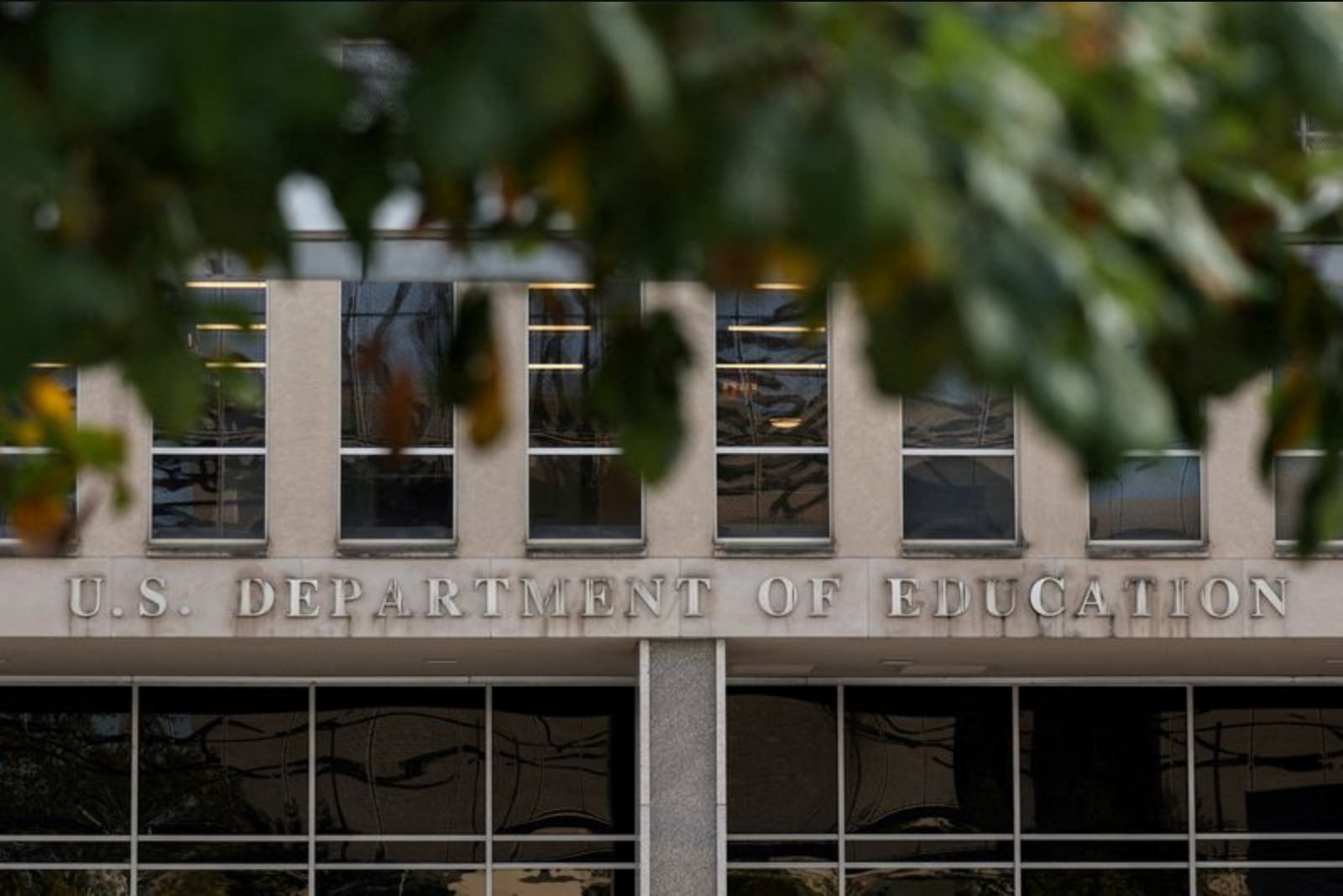
A federal judge in Boston has temporarily blocked the U.S. Department of Education from requiring public universities in 17 states to produce sweeping admissions records that the department sought to assess whether race continues to play a role in college admissions.
U.S. District Judge F. Dennis Saylor IV issued a preliminary injunction on Friday at the behest of Democratic attorneys general for the 17 states, who filed suit against a new data-reporting requirement the department added to a survey used to collect information from colleges. The states, which include California and Massachusetts, argued the department's abrupt rollout exposed universities to the risk of inadvertent errors that could trigger penalties or probes into their admissions practices.
The Education Department had requested seven years of admissions data detailing the race and sex of students. Officials framed the request as a means to monitor compliance with the Supreme Court's 2023 ruling that ended affirmative action in higher education.
New York Attorney General Letitia James reacted positively to the ruling, saying in a statement that "schools should not have to scramble to produce years of sensitive information to satisfy an arbitrary and unlawful demand." The Education Department did not respond to a request for comment.
The contested information was sought through an Integrated Postsecondary Education Data System survey the department created at the direction of President Donald Trump. In an August memorandum, the president said there was insufficient data to determine whether race remained a factor in admissions given what he described as the "rampant use" by universities of "hidden racial proxies."
Judge Saylor concluded that while the Education Department possessed statutory authority to seek the data, the way it adopted the new reporting requirements was flawed. He said the changes had been implemented in a "rushed and chaotic manner," leaving the department short of adequate engagement with colleges about foreseeable problems.
Saylor further highlighted that the department's own internal changes had compounded implementation challenges. He said efforts to dismantle parts of the Education Department had left few staff in its National Center for Education Statistics to manage the surveys after job cuts, complicating the administration of the new requirements.
After the states filed their lawsuit, Saylor, who was appointed by Republican President George W. Bush, issued temporary restraining orders extending the deadline for the affected public universities to complete the survey through Monday as he considered the case. On Tuesday he entered an order similarly extending the deadline for dozens of other public and private institutions while he determines whether they too should receive injunctive relief.
Procedural status
The litigation remains pending. The injunction preserves the status quo while the court evaluates whether the Education Department's survey process and timeline were lawful and properly managed.