
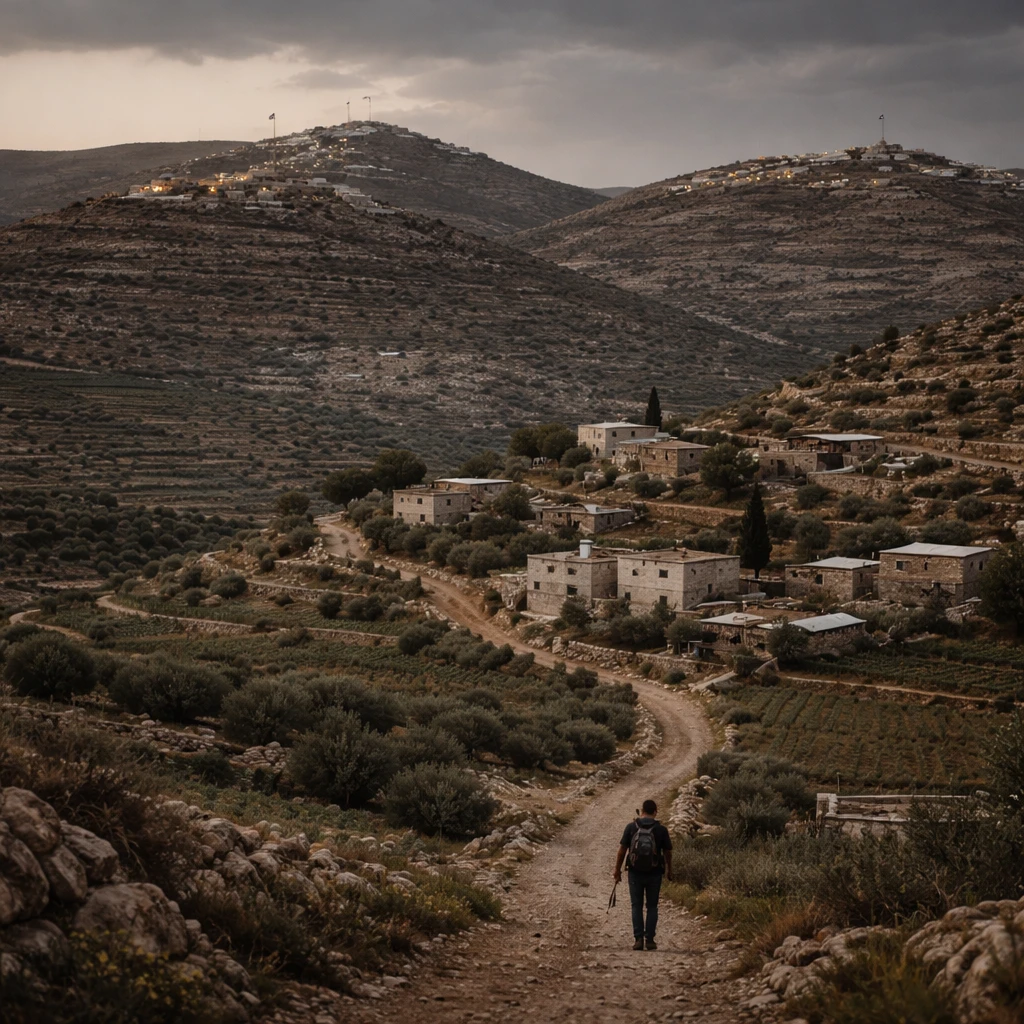
An Israeli watchdog group has said the Israeli cabinet approved the establishment of 34 new Jewish settlements in the West Bank on April 1, a step reported by Israeli media and flagged on Thursday as coinciding with a marked rise in settler violence against Palestinians.
The Peace Now group said the new sites include many outposts in remote mountainous zones of the territory. The cabinet decision has not been formally announced by Prime Minister Benjamin Netanyahu’s government, according to the watchdog. Israeli media widely reported the decision on Thursday after Israel’s military censor cleared it for publication.
Official responses and positions
The Palestinian Presidency’s office condemned the plan as a "flagrant violation of international law". Netanyahu’s office did not immediately respond to requests for comment. The Yesha Council, which represents West Bank settlers, also did not immediately reply to requests for comment.
The Israeli government maintains a position that territories captured in the 1967 war are disputed rather than occupied, a stance rejected by most of the international community. The United Nations top court last year said Israel’s settlements on occupied West Bank land are illegal under international law and should be withdrawn as soon as possible.
Context of settler expansion and violence
The reported cabinet decision comes amid what rights groups and residents describe as a historic push in settlement construction under Netanyahu’s government. The nation’s far-right Finance Minister Bezalel Smotrich has publicly framed settlement expansion as a political objective, saying it is aimed at "burying the idea of Palestinian statehood in the West Bank."
At the same time, rights groups and residents say there has been a sharp uptick in settler violence. Some 500,000 Israeli settlers now live in the West Bank, which is also home to roughly 3 million Palestinians, and rights groups say that attacks - including arson, beatings and vandalism - have increased since late February.
Fatal attack near Tayasir
On Wednesday a 28-year-old Palestinian was killed in a settler attack in the village of Tayasir, near Tubas in the northern West Bank. The Israeli military said an off-duty soldier fired towards a Palestinian during a stone-throwing incident near Tayasir, but it did not immediately clarify whether the soldier was also a settler involved in the attack.
Residents said settlers began attacking Tayasir villagers after establishing outposts near the community about a month ago. Hussam Abdel Latif Wahdan, 65, a local farmer, described a late-night assault by around 12 settlers. "They don’t want to leave any place for us," he said. "If I had not managed to escape they would have killed me." Wahdan said he has four children and relies on his farm for a living but fears it has become a target.
Rights groups report that settlers have killed at least six Palestinians in the West Bank since the start of this year. They also note an overall rise in violent incidents since the outbreak of the Iran war on February 28, including attacks that have prompted community displacement.
Displacement and human-rights assessments
The United Nations has reported that settler violence caused the displacement of at least 700 Palestinians from the start of 2025 through February 2026. Sarit Michaeli of the Israeli rights group B’Tselem said: "Israeli settlers are attacking Palestinians throughout the West Bank with impunity, and so viciously that this has led to entire communities being displaced." B’Tselem and other groups assert that settlers have increasingly sought to establish footholds in areas under Palestinian civil management.
Kerem Navot, an Israeli organization that monitors settlements, says the push by settlers has expanded into areas previously considered under stronger Palestinian administrative control. "Since October 7, settlers have deliberately targeted Area B - and now even Area A," said Dror Etkes of Kerem Navot.
Administrative divisions and alleged shifts in targeting
Under accords from the 1990s, the West Bank was divided into Areas A, B and C. Area A is under full Palestinian Authority jurisdiction; Area B has Palestinian civil authority but Israeli security control; and Area C is under full Israeli civil and security control. Peace Now said the cabinet decision on April 1 did not include plans to establish settlements in Areas A or B.
However, rights groups and residents describe a pattern of settlers operating in isolated Palestinian villages in Areas B and C, which are often distant from major population centers and therefore more exposed to attacks. The organizations warn that continued expansion or formalization of outposts could exacerbate insecurity and displacement for Palestinians living in these remote communities.
What remains unclear
The government has not publicly confirmed the 34 new settlements, and officials contacted for comment did not respond immediately. The precise legal and administrative steps that will follow the cabinet’s reported decision were not detailed by Peace Now or the media accounts that reported it. The Israeli military’s account of the killing near Tayasir left unanswered whether the off-duty soldier who fired was acting as a settler in the incident.
These gaps leave open questions about how and when the new sites might be formalized and what measures, if any, will be taken to address the growing wave of settler attacks and the resulting displacement of Palestinian residents.
Reporting note
Peace Now issued the initial statement attributing the decision to the cabinet meeting on April 1. Media reports said the military censor approved publication of the decision on Thursday.