
Overview
On the eve of a deadline set by U.S. President Donald Trump, Iran declined to accept a proposal for an immediate ceasefire and the reopening of the Strait of Hormuz, maintaining its pressure on a strategic oil and gas chokepoint. The plan, which was reportedly brokered by Pakistan and presented by the United States, called for a halt to hostilities and lifting of the strait blockade followed by broader negotiations within 15 to 20 days. Tehran responded with a 10-clause reply outlining conditions that included an end to regional conflicts, an agreed protocol for safe passage through the strait, lifting of sanctions, and reconstruction, according to Iran’s IRNA news agency.
Deadline and Washington’s Threats
President Trump set a hard deadline for Iran to accept the terms or face severe strikes on the country’s infrastructure, saying the entire country could be “taken out in one night.” He warned that without agreement by midnight EDT (0400 GMT) on Wednesday, U.S. forces would target bridges and power plants across Iran, predicting they would be rendered unusable. Trump characterized the potential action in stark terms, promising destruction of Iranian power plants and infrastructure if Tehran did not comply.
Military Exchanges Continue
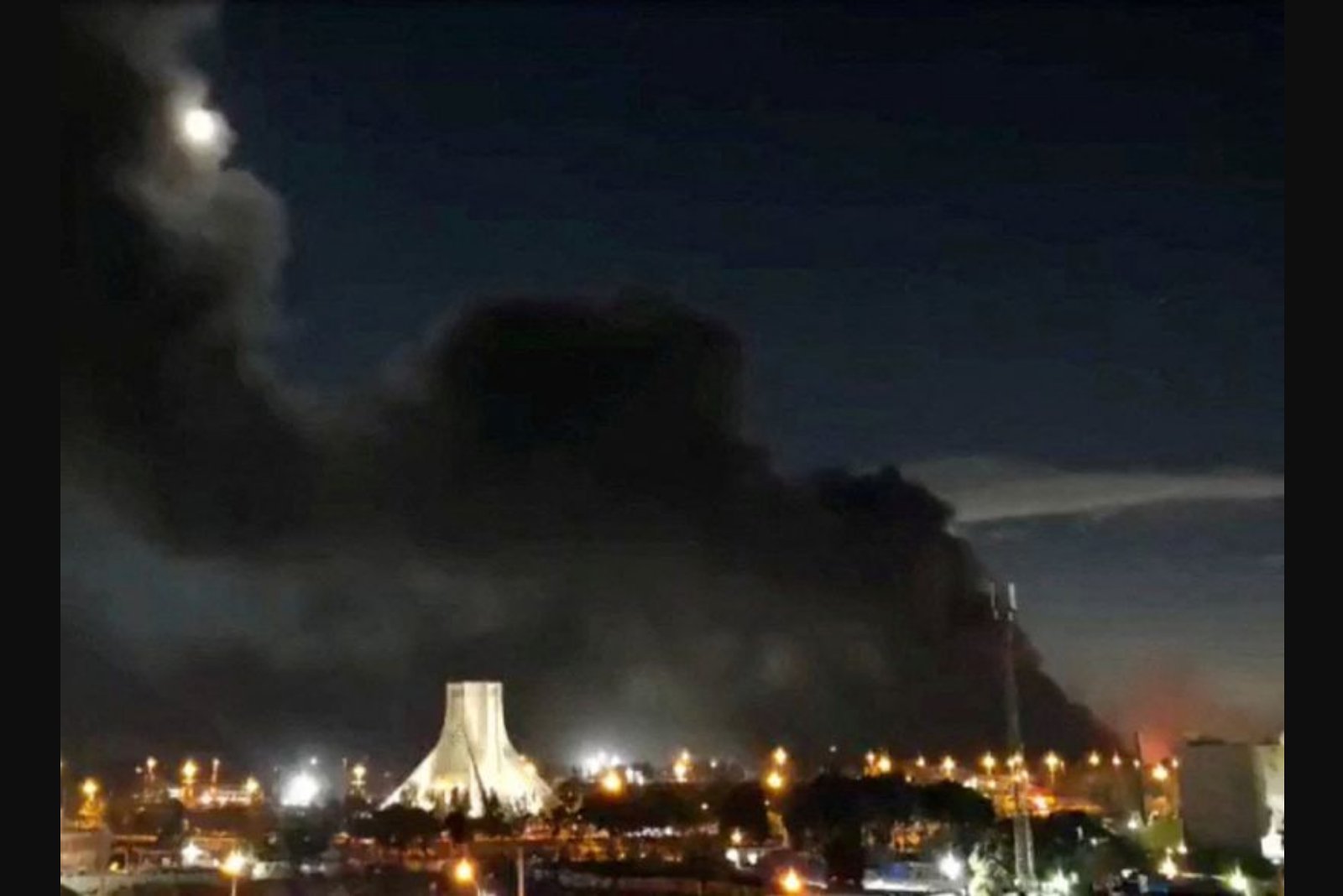
Fighting between Iran and Israel persisted as both sides reported operations. Early on Tuesday, the Israeli military announced it had carried out airstrikes against Iranian government infrastructure in Tehran and other locations, and said it was employing air defence systems to intercept missiles launched from Iran. Tehran and Israel exchanged attacks as the deadline approached.
Meanwhile, Saudi Arabia reported intercepting ballistic missiles headed toward its eastern region, with debris falling near energy facilities. The Saudi defence ministry did not specify the origin of the projectile launches. Saudi authorities have said the kingdom has faced hundreds of Iranian missile and drone attacks since the U.S. and Israel initiated strikes on Iran on February 28, with the majority intercepted.
Public safety alerts were issued on Tuesday by Saudi Arabia, the United Arab Emirates and Bahrain as regional tensions remained high.
Civilian Targets and Domestic Reactions
The conflict’s impacts extended to civilian sites. Reports from Iran indicated a synagogue in central Tehran was heavily damaged by a U.S.-Israeli projectile, according to the semi-official Mehr news agency. Domestically, Iranian officials and public figures responded to Trump’s threats. Iran’s envoy to the United Nations described the president’s statements as “direct incitement to terrorism” and evidence of intent to commit war crimes under international law. Iran’s deputy sports minister, Alireza Rahimi, called for artists and athletes to form human chains at power plants on Tuesday, and top military officials in Tehran labeled Trump’s remarks delusional.
Energy Markets and the Strait of Hormuz
Oil markets reacted to the standoff. With the strait effectively closed by Iran - a passage that handles about a fifth of the world’s oil and natural gas - traders pushed prices higher amid continued uncertainty over global supply. Brent crude futures were reported at $110.19 a barrel, while U.S. West Texas Intermediate crude futures were at $113.31. Analysts and market participants cited the lack of any clear path to reopening Hormuz as a primary driver of elevated prices and inflation concerns.
Iran’s control of the strait has been a significant bargaining instrument in the conflict, and Tehran showed little appetite for relinquishing that leverage as negotiations were proposed.
U.S. Military and Political Pressure
The conflict has imposed political strains on the United States. Since the outset of the confrontation, 13 U.S. service members have been killed, and U.S. forces suffered the loss of an F-15E fighter jet on Friday, leaving one airman stranded inside Iranian territory. A U.S. commando rescue operation to extract the stranded weapons specialist succeeded, averting what U.S. officials described as a potentially disastrous escalation for the administration.
Human Cost
The human toll across the Middle East is severe. Citing U.S.-based rights group HRANA, reports indicated thousands of fatalities in the war, including 3,546 in Iran and nearly 1,500 in Lebanon, where Israel has focused attacks on the Iran-backed Hezbollah militia.
What Remains Unclear
While the brokered offer called for a rapid ceasefire and a short timeline for broader negotiations, Iran’s 10-clause response and its continued control of the Strait of Hormuz mean there is no immediate resolution in sight. With the U.S. deadline imminent and military exchanges ongoing, the near-term trajectory of the conflict and the status of vital energy transit routes remain uncertain.
Implications for Markets and Policy
The standoff sustains upward pressure on oil prices and keeps risk elevated for energy, shipping, and regional economic activity. The prospect of direct strikes on Iran’s infrastructure, as threatened by President Trump, adds further uncertainty for electricity systems and industrial outputs in Iran, and for global energy market stability.