
Wrapped in bloodied bandages, seven-year-old Aline Saeed survived a strike on her family home in the village of Srifa in south Lebanon last week, but did not escape the losses that followed. She had returned to the village for a funeral on the first day of a U.S.-Iran ceasefire that many Lebanese hoped would bring calm. Instead, a new strike killed her infant sister and additional relatives, leaving the family with more bodies to bury.
Members of the Saeed family described the attack as sudden and overwhelming. "They said it was a ceasefire. Like all these people, we went up to the village. We went to the casket to read the prayers and walk home... suddenly we felt like a storm was landing right on us," said 64-year-old Nasser Saeed, Aline’s grandfather, who also survived the strike.
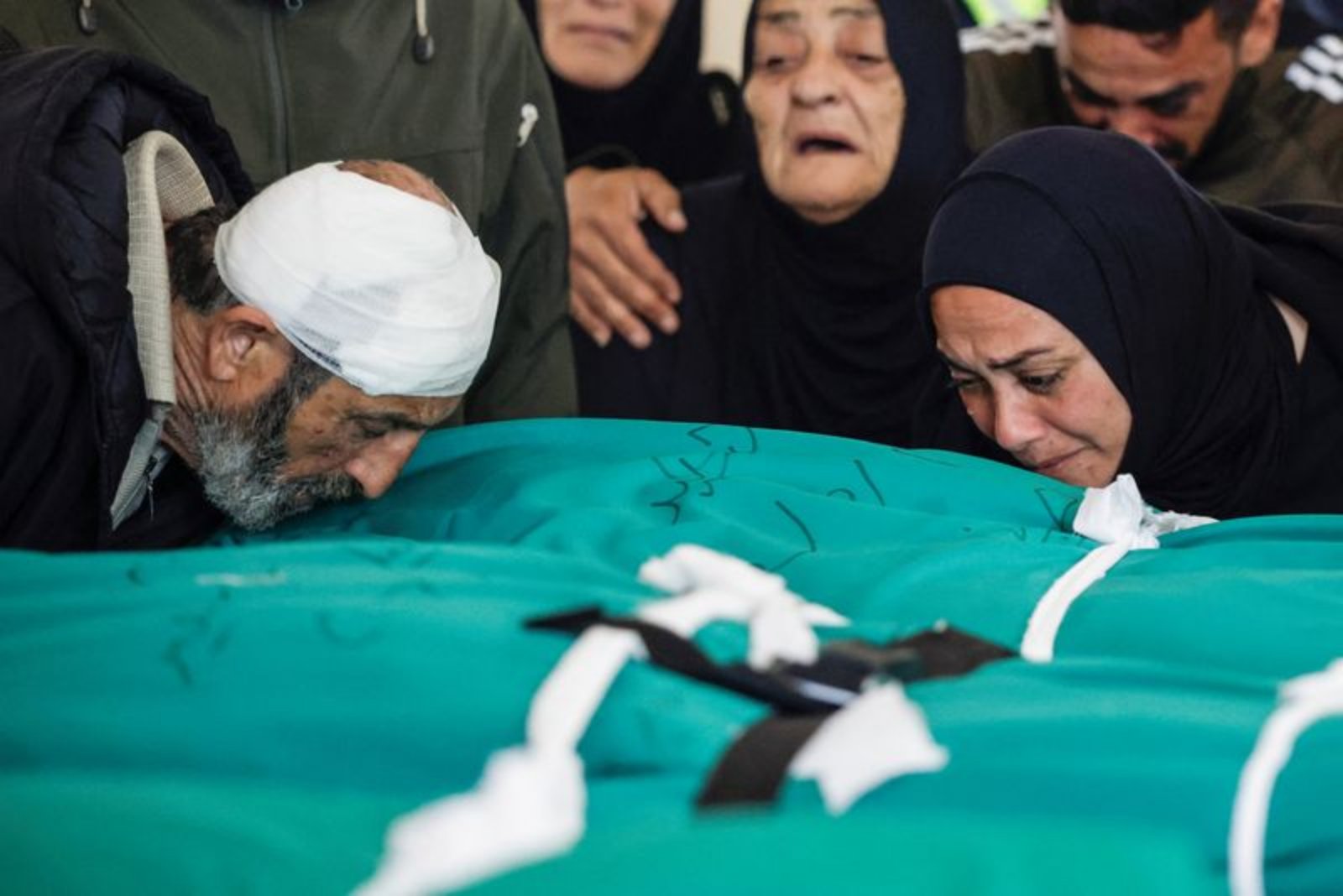
On Sunday, relatives went to the southern port city of Tyre to retrieve the bodies. At the hospital they collected several shrouds, one of which contained the tiny body of Taleen, Aline’s sister, wrapped in green cloth. Taleen had not yet reached her second birthday.
With bandages to his head and right hand and scratches on his face, Nasser Saeed stood in quiet mourning as women around him looked skyward and screamed in grief. Ghinwa, Aline’s mother, was still receiving treatment at the hospital.
"This isn’t humanity. This is a war crime," Nasser Saeed said at the hospital. "Where are the human rights? If a child - a child! - is wounded in Israel, the whole world jumps up. Are we not people? Are we not humans? We’re like them!"
Asked about the Srifa incident, the Israeli military said it was looking into the report of the strike.
Taleen was born in 2024 during an earlier round of intense fighting between Hezbollah and Israel. "She was born in the war and died in the war," said Mohammed Nazzal, the child’s maternal grandfather.
The current round of violence in Lebanon began on March 2, when Hezbollah fired on Israeli positions. Israel has since intensified air and ground operations in Lebanon. Those operations have resulted in more than 2,000 deaths in Lebanon, including 165 children and nearly 250 women, according to local tallies cited by relatives and hospital staff.
Last Wednesday produced one of the deadliest single days in recent memory for Lebanon, with strikes across the country killing more than 350 people. Heavy bombardment continued through the weekend, with nearly 100 people killed on Saturday alone.
At Tyre’s Jabal Amel hospital, Dr. Abbas Attiyeh, head of emergency operations, said the scale and pace of incoming casualties were extraordinary. "The challenges we’re facing now are the numbers of wounded that come at the same time, within the same 30 minutes or hour," Attiyeh said, noting that many of the patients arriving were children.
Iran has sought a ceasefire for Lebanon as part of talks with the United States, but those discussions concluded without a breakthrough. Israel has signaled a preference for pursuing talks with Lebanese officials through a separate track. Despite those diplomatic efforts, heavy bombardment across Lebanon has persisted.
The Saeed family’s loss underscores the immediate human toll of the strikes and the continuing strain on medical facilities in southern Lebanon. Survivors and relatives gathered at the hospital to collect bodies and to care for the wounded, while hospital staff grappled with surges of casualties arriving in short windows of time.
As efforts to negotiate ceasefires and diplomatic tracks continue, families in areas of conflict remain exposed to sudden and deadly strikes that can occur even as wider talks are under way. In the Saeed family’s case, a funeral became the setting for further bereavement when violence re-escalated on a day many had hoped would bring relief.