
Internal records from U.S. Immigration and Customs Enforcement show that more than 800 people were arrested after receiving tips from federal airport security officials during the period from the start of Donald Trump’s presidency through February 2026. Those tips were based on more than 31,000 traveler records that the Transportation Security Administration supplied to ICE for potential immigration enforcement, according to the internal ICE data.
The records indicate that the traveler information came from the TSA’s Secure Flight program, which was established in 2007 to allow the agency to check passenger data against U.S. government watchlists. The program’s regulatory language defines it as a counter-terrorism measure, not as a tool for identifying people for immigration arrests.
Officials could not determine from the internal records how many of the arrests occurred inside airport terminals. The utility of the TSA-supplied tips is largely in identifying when a person is scheduled to travel, which can inform timing for enforcement actions, but the records do not provide a breakdown showing whether arrests happened on airport property or elsewhere.
Agency roles and stated positions
Both ICE and the TSA operate within the Department of Homeland Security. While the two agencies have traditionally shared information relevant to national security concerns, the recent exchange of passenger records reflects a shift toward using Secure Flight data to support routine immigration enforcement. The internal ICE records cover the period noted above and show a volume of leads that is substantially higher than previously disclosed publicly.
When asked about TSA supplying passenger information to ICE, the Department of Homeland Security did not provide a direct response to questions about the practice. DHS did, however, release a statement saying that under the current administration TSA "is pursuing solutions that improve resiliency, security, and efficiency across our entire system."
Political backdrop and operational changes at airports
The sharing of passenger information and the resulting arrests have unfolded against the backdrop of a partisan funding dispute over immigration enforcement. Since mid-February, Democrats have declined to back additional funding for the administration’s immigration crackdown unless reforms were adopted to scale back aggressive tactics. That impasse blocked a DHS funding bill and had immediate operational consequences: TSA security officers missed at least two full paychecks as a result of the funding standoff.
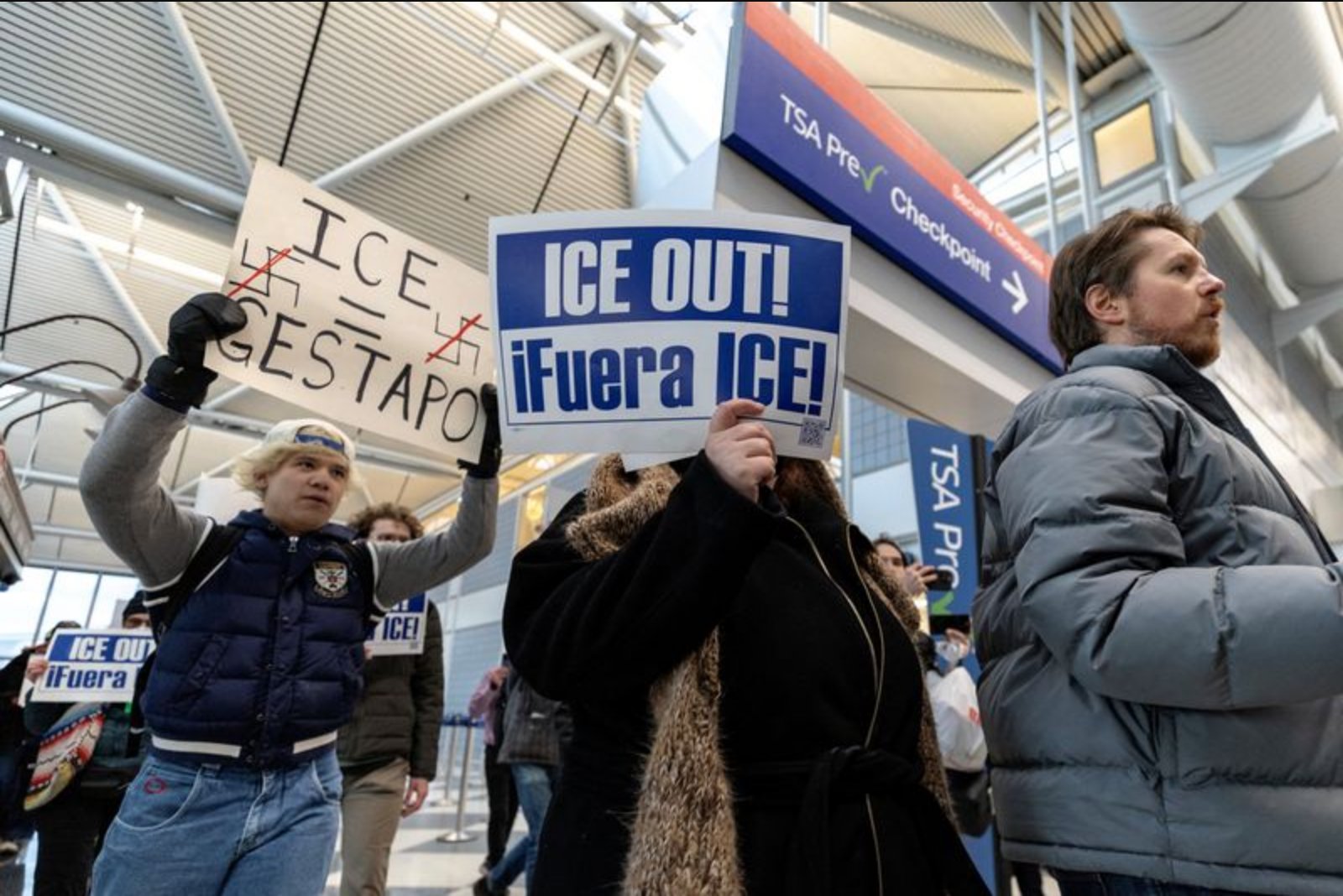
After reports that some unpaid TSA officers began calling in sick, the president deployed ICE officers to more than a dozen airports in March to support security operations. The deployment drew criticism from Democrats, who said the presence of ICE officers in airports could have chilling effects. A group of more than 40 House Democrats wrote to recently installed Homeland Security Secretary Markwayne Mullin, arguing that ICE officers "will cause confusion and fear" if they remain in airport terminals.
Reports of individual airport arrests
Several specific instances of ICE officers arresting travelers at U.S. airports have generated public backlash and legal attention. Among the incidents cited by immigration attorneys were:
- An arrest of a college student who was traveling from Boston to Texas to celebrate Thanksgiving in November.
- The detention of a mother who was arrested at San Francisco International Airport the day before the administration’s airport deployment began; DHS maintained both that arrest and the college student arrest were tied to final orders of removal.
- The detention last summer of an Irish couple who had lived in the United States for more than two decades; according to an immigration attorney familiar with the case, the couple were detained in front of their children while attempting to fly from Florida to New York after a vacation. The parents, who had pending applications for permanent residency, were deported and their two young children, ages 7 and 10, remained in the United States with adult siblings.
- A Chinese woman who had a final order of removal and was seeking permanent residency was detained at the Atlanta airport last year while en route to Philadelphia, according to an attorney familiar with that case.
Immigration attorneys who discussed these cases said they were aware of additional instances in which people without lawful immigration status were detained at airports. DHS defended the cited arrests in the cases it addressed, saying those actions reflected the existence of final orders of removal.
Limits of the available data and outstanding questions
The internal ICE records reviewed for this reporting reveal the number of traveler records shared and the number of arrests tied to those leads, but they do not fully illuminate where the arrests took place or the operational details of each case. Figures for traveler records or arrests that may have been shared with ICE before the current presidential term were not available in the records reviewed.
As both homeland security agencies continue to adjust procedures, the intersection of flight screening data and immigration enforcement remains a focal point for debates about civil liberty, public safety, and the administration of border and interior immigration policy.