
Lede
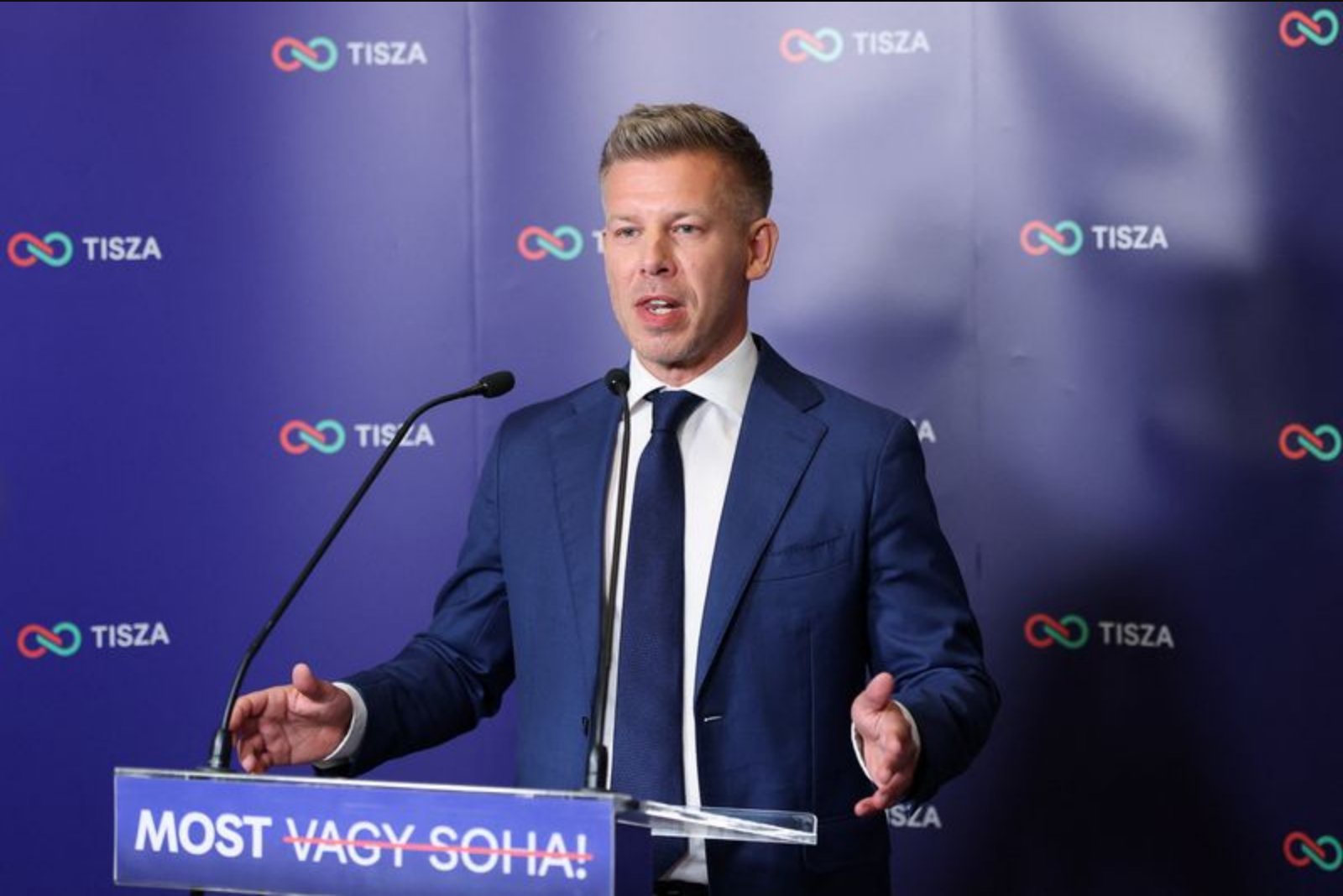
Peter Magyar, who once placed a young Viktor Orban’s photograph on his bedroom wall during Hungary’s first democratic elections, has now unseated the longtime leader in a parliamentary vote that brought record turnout and wide-reaching political reverberations. Magyar’s Tisza party, a centre-right movement that supports Hungary’s membership of the European Union, overtook Orban’s nationalist Fidesz party in Sunday’s election, winning a projected two-thirds majority in the 199-seat parliament.
Election outcome and significance
Partial results indicate Tisza will secure 137 seats, a dominant share of the legislature that effectively ends Orban’s 16-year run as prime minister. The outcome was widely seen as a development with consequences beyond Hungary’s borders - expected to unsettle Russia and to send shockwaves across right-wing circles in Europe and the West, including in the U.S. political arena.
Magyar’s personal and political evolution
Born in 1981 into a family of lawyers, Magyar was nine years old when communism collapsed and the first democratic elections took place in 1990. He has recounted how the excitement surrounding the regime change left a lasting impression on him. Orban, then a young lawyer who publicly demanded in 1989 that Soviet troops leave Hungary, was among the figures that inspired Magyar in his youth.
Magyar later studied law, joined the diplomatic corps where he worked on European Union legislation, held a post at a state bank and led a student-loan agency. He married Judit Varga in 2006; she later served as justice minister and resigned from political roles amid controversy linked to a pardon related to a sex-abuse case that prompted public uproar. Magyar and Varga divorced in 2023 and they have three sons.
Magyar’s public profile rose sharply two years ago after his ex-wife’s resignation. He distanced himself from the governing party, accused it of corruption and propaganda, and said he had become disillusioned with Fidesz. Emerging from relative obscurity following an interview on an online channel, his new party performed strongly in the June 2024 European Parliament elections, winning 30% of the vote and finishing second to Fidesz while outperforming the remainder of the opposition.
Policy platform and campaign tactics
During the campaign Magyar combined elements of his predecessor’s playbook with a message of change. He waged a grassroots campaign that reached into rural Fidesz strongholds and staged rallies that prominently featured national flags and appeals to patriotism. Observers noted his disciplined messaging and adept use of social media as factors in his rapid ascent.
Magyar has pledged a return to a Western-oriented foreign policy and concrete economic steps, including ending Hungary’s dependence on Russian energy by 2035 and unlocking frozen EU funds to help revive a stagnant economy. On the domestic front he vowed immediate anti-corruption measures and an application to join the European Public Prosecutor’s Office, telling reporters on the morning after voting that "On the first day we need to pass anti-corruption measures and we need to submit our application to join the European Prosecutor's Office."
Yet Magyar was careful not to alienate conservative voters. While he does not rule out Ukraine joining the EU in principle at some future point, Tisza’s platform does not support a fast-track admission for Kyiv. On migration, Tisza shares Fidesz’s opposition to EU-mandated migrant quotas and intends to maintain the border fence erected under Orban to prevent illegal crossings.
Regional and political implications
Observers highlight the potential for a recalibration of Hungary’s relations with the European Union. Orban’s governance since 2010 has been characterised by what he termed an "illiberal democracy," with measures that curtailed media freedoms, restricted NGO activity and weakened judicial independence. Those actions prompted conflict with the EU, which suspended billions in funding over concerns about democratic standards.
Orban also cultivated warm relations with both Russian President Vladimir Putin and U.S. President Donald Trump, while repeatedly clashing with EU institutions. Analysts say Magyar’s victory could ease some of those frictions because Tisza is more open to European integration at a practical level. As Botond Feledy of Red Snow Consulting put it, "Orban has lost faith in the current form and direction of European integration, and is pursuing a policy of vetoes and obstruction. Tisza has no objection in principle to integration and would pitch its battles at a practical level."
Political identity and public appeal
Magyar’s personal narrative appears to have resonated with voters: a figure who once idolised Orban but later broke with the ruling party and positioned himself as someone "in conflict with the system," a quality that reassured parts of the electorate according to analysts. Gabor Toka, senior research fellow at the Vera and Donald Blinken Open Society Archives, observed that voters found comfort in Magyar’s image as someone who had irreversibly distanced himself from the old order.
On a personal note, Magyar describes himself as religious, enjoys cooking and playing soccer with his friends and sons, and has acknowledged a softer approach to temper in public life, saying in December that since entering politics, "Now I count to 10."
Conclusion
The election marks a clear transfer of political power in Hungary, with a newly empowered Tisza-led government promising to restore ties with Brussels, pursue anti-corruption measures and reduce dependence on Russian energy while maintaining conservative stances on migration and border security. How these pledges translate into policy and whether frozen EU funds will be unlocked remain near-term points to watch as the new government assumes power.