
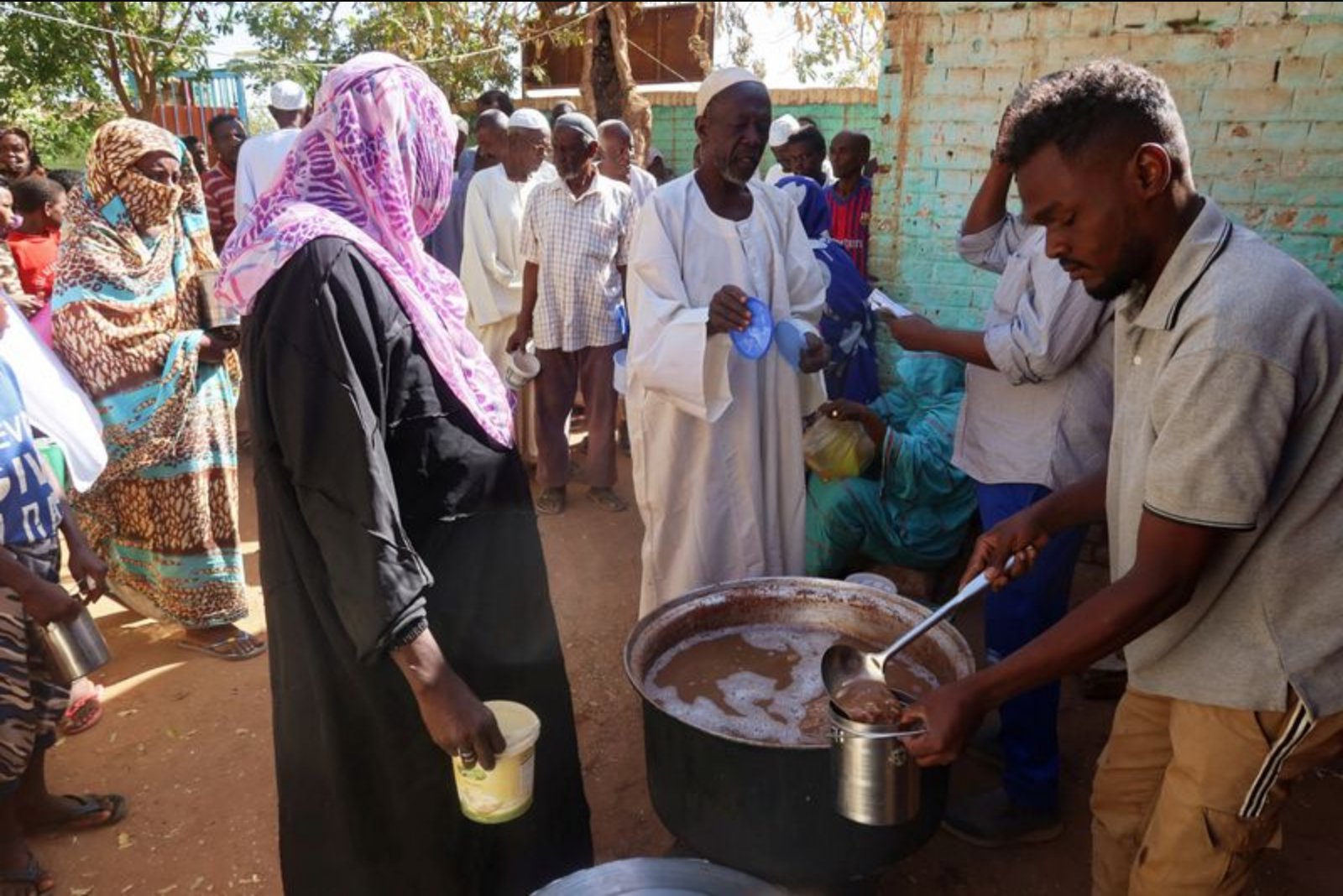
A new report from a coalition of non-governmental organisations finds that millions of people in Sudan are surviving on only one meal a day, with many households skipping meals for whole days and some forced to eat leaves or animal feed to stay alive.
The study, prepared by Action Against Hunger, CARE International, the International Rescue Committee, Mercy Corps and the Norwegian Refugee Council, describes severe food shortages in communities across the country. It points to the ongoing war between the Sudanese army and the paramilitary Rapid Support Forces - a conflict that enters its third year on Wednesday - as a central driver of the crisis.
Scope and indicators
The groups highlight North Darfur and South Kordofan as the two regions hit hardest by the fighting, where millions of families reportedly have access to only a single meal each day. The report also documents cases in which people miss meals entirely and notes that a section of the population has turned to consuming leaves and animal feed.
According to figures referenced in the report, some 61.7% of Sudan's population - equal to 28.9 million people - are classified as acutely food-insecure in the 2026 Humanitarian Needs and Response Plan. United Nations assessments and global hunger monitors cited in the report have confirmed famine conditions in specific locations, including al-Fashir and Kadugli identified in November, and have reported that famine thresholds for acute malnutrition were surpassed in places such as Um Baru and Kernoi in February. In Um Baru the rate of acutely malnourished children under five was nearly double the famine threshold.
Drivers of the crisis
The NGOs base their findings on interviews with farmers, traders and humanitarian workers across Sudan. They cite widespread disruptions to farming activity and the deliberate destruction of farms and markets as mechanisms pushing communities toward famine. The report also raises the use of starvation as a weapon of war as a factor in food availability and access.
Communal kitchens, which have been a lifeline in many areas, are increasingly unable to meet rising needs. At the same time, cuts to major donor funding are constraining aid agencies and limiting their ability to scale responses where hunger is most acute.
Protection and gendered impacts
The report underscores how women and girls are disproportionately affected by the crisis. It details the elevated risks of rape and harassment women face when working in fields, visiting markets or collecting water. Female-headed households are identified as being three times more likely to experience food insecurity than male-headed households.
Official responses
The Sudanese government, which is aligned with the army, rejects the characterisation that famine exists in the country. The Rapid Support Forces have also denied responsibility for the conditions described in the report in areas under their control.
Outlook
The NGOs warn that, unless humanitarian access and funding improve and attacks on agricultural systems and markets are halted, the risk of famine spreading remains substantial. The report portrays a situation in which persistent fighting, constrained aid operations and the collapse of local markets combine to deepen hunger and malnutrition across broad swathes of Sudan.