
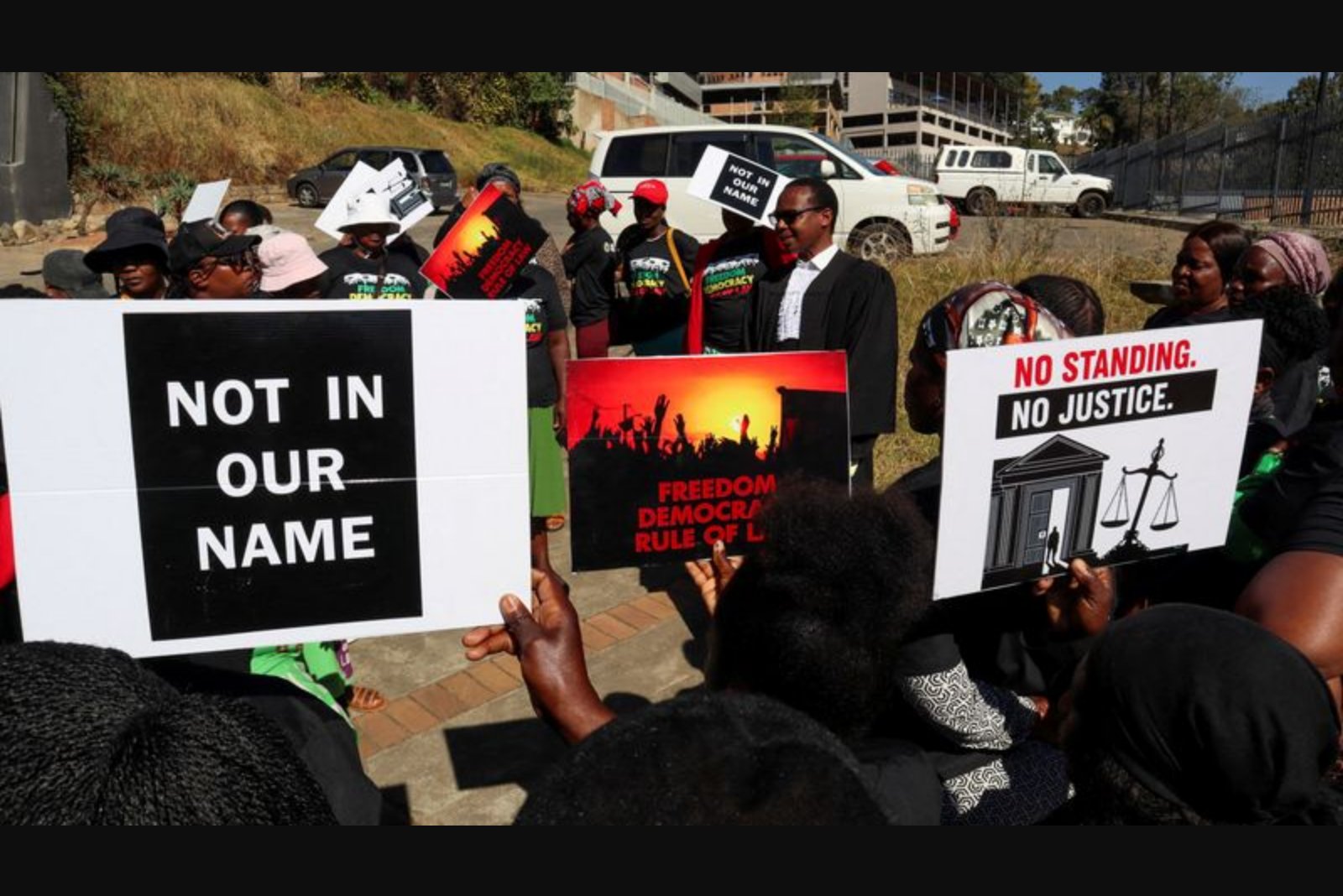
A high court in Eswatini has ruled that the first five migrants flown from the United States to the African kingdom have the right to be represented by counsel after being denied access to a human rights lawyer when they were transferred to a Swazi detention facility in July.
The court dismissed a government contention that the detainees had not expressly asked for the human rights lawyer Sibusiso Nhlabatsi to act on their behalf. Nhlabatsi has been attempting to pursue legal challenges for the migrants despite not having physical access to them.
In a written decision reviewed by Reuters, a panel of three judges held: "There can be no real harm in granting the Respondent access to the detainees," adding: "If they do not wish to see the Respondent (they can) tell this to the Respondent to his face."
The five individuals are among at least 19 third-country migrants from a range of countries across Africa, Asia and the Americas who were deported to Eswatini under a U.S. administration policy aimed at curbing immigration. The ruling applies only to the first five arrivals because the legal challenge was initiated on their behalf, but it could provide a judicial precedent for the remaining detainees.
Eswatini, governed as an absolute monarchy by King Mswati III, has released two of the deportees so far: a Jamaican national last year and a Cambodian national last month.
Separate legal teams in Eswatini and the United States have contested the legality of the $5.1 million agreement between the two governments that facilitated the transfers. That arrangement has resulted in deported individuals being held in Eswatini despite having already completed sentences for offenses committed on U.S. soil.
Last month the high court threw out a case filed by a local human rights attorney that directly challenged the bilateral deal, though that lawyer has filed an appeal against the dismissal.
Context and legal questions
The court's decision centers on detainees' access to counsel and the procedural question of whether a specific, explicit request for a named lawyer is required before access is permitted. The ruling instructs that allowing the Respondent to meet with detainees does not pose demonstrable harm and places the choice in the hands of the detainees themselves.
Because the judge's order concerns only the first five migrants in the challenge, its broader implications depend on whether similar petitions are pursued on behalf of other deportees and on subsequent appellate review of related cases concerning the bilateral agreement.