
World April 13, 2026 01:19 PM

Colombia to Begin Culling and Relocation Effort Targeting Invasive Hippo Population

Environment ministry plans euthanasia of about 80 animals as part of a broader 2026 control program to protect native species and water quality

By Jordan Park
Colombia to Begin Culling and Relocation Effort Targeting Invasive Hippo Population

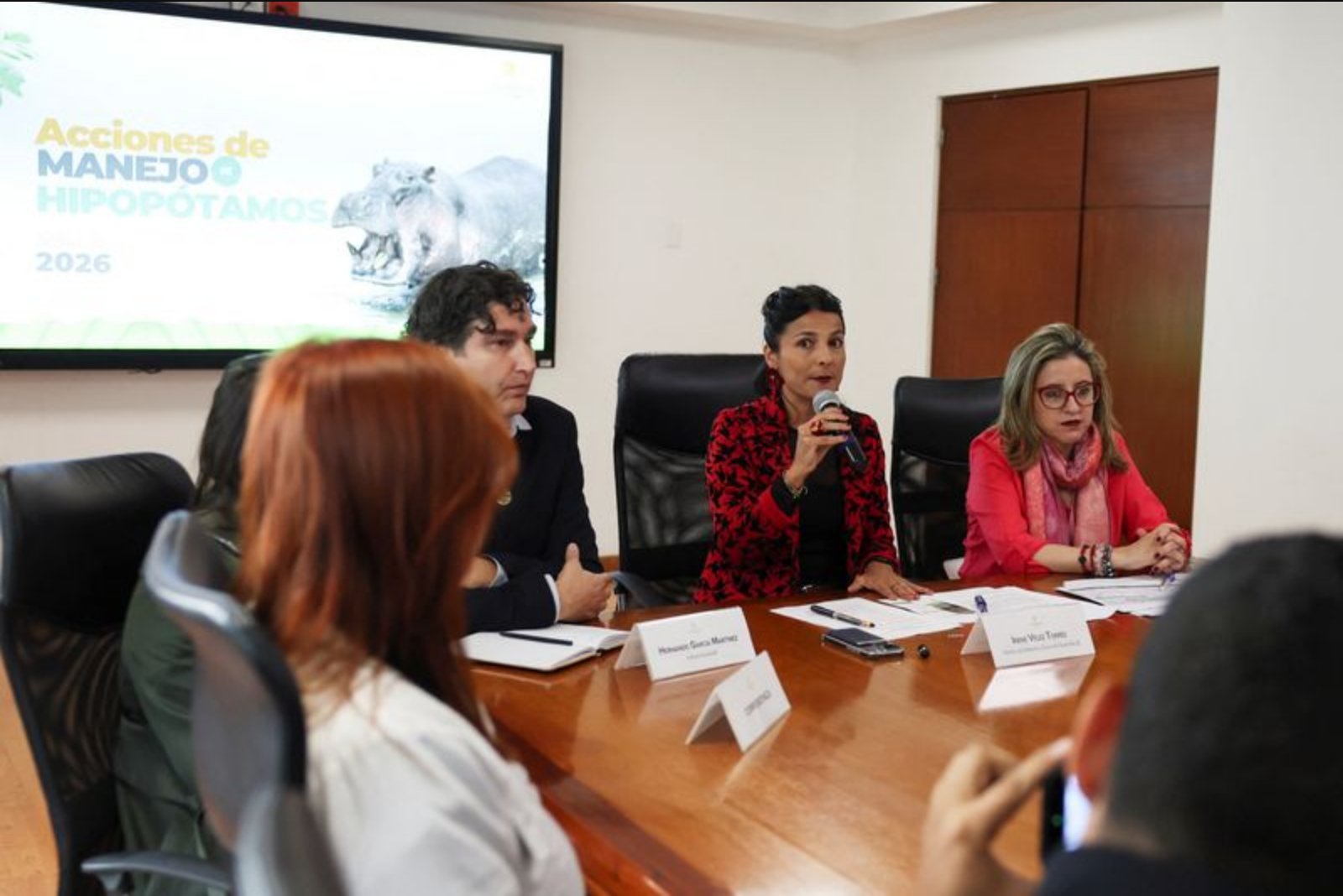
Colombian authorities announced a program set to start in the second half of 2026 aimed at curbing the country's growing population of invasive hippopotamuses. Environment Minister Irene Velez said around 80 animals would be euthanized initially as part of measures that also include confinement and relocation, backed by a 7.2 billion peso budget. The move responds to concerns that the roughly 200 hippos now in the Magdalena River region could swell to as many as 1,000 by 2035, threatening native species and water quality.

Key Points

  • Colombia will initiate a control program in the second half of 2026 that includes euthanizing an initial 80 hippos and measures such as confinement and relocation; the program budget is 7.2 billion pesos.
  • There are about 200 hippos in the central Magdalena River region; without intervention the population could grow to as many as 1,000 by 2035, threatening river turtles, manatees and water quality.
  • The government has negotiated with eight countries, including India, Mexico, Philippines, Ecuador, Peru and South Africa, about transferring animals to foreign zoos or sanctuaries, but required authorizations have not been secured.

Colombia will roll out a plan in the second half of 2026 to rein in its invasive hippopotamus population, with an initial measure calling for the euthanasia of about 80 animals, Environment Minister Irene Velez said on Monday.

Officials estimate roughly 200 hippos currently inhabit the central region near the Magdalena River. Velez warned that without intervention the numbers could surge to as many as 1,000 by 2035, presenting mounting risks to local ecosystems and freshwater quality.

"We must act to reduce the hippopotamus population. These actions are essential to protect our ecosystems and our native species," Velez said, pointing specifically to threats facing river turtles and manatees as well as increased water pollution linked to the expanding hippo population.

The government has allocated 7.2 billion pesos - about $1.98 million - for the program, which encompasses confinement, relocation and the initial euthanasia measure. Velez added that authorities believe there may be approximately 80 individuals that could be subject to the measure.

Colombia's hippo population traces back to four animals illegally brought into the country in the 1980s by the late drug trafficker Pablo Escobar, who established a private zoo on one of his properties. Since then the population has multiplied largely without effective national controls, despite intermittent efforts by provincial environmental agencies.

As part of the strategy, Colombian officials have engaged in talks with eight foreign governments about accepting transfers of some animals to zoos or sanctuaries. Countries involved in those discussions include India, Mexico, the Philippines, Ecuador, Peru and South Africa. However, Velez said the necessary authorizations to carry out such transfers have not yet been obtained.

Complicating relocation efforts, the hippos in Colombia exhibit genetic defects caused by inbreeding, a condition that has reduced interest from some institutions that might otherwise receive animals. Authorities emphasized that confinement and relocation are components of the program alongside the planned euthanasia.

The ministry framed the measures as urgently needed to prevent ecological degradation and to safeguard native wildlife and water resources in the Magdalena River basin.

Risks

  • Relocation uncertainty - talks with multiple foreign governments have not yet yielded the necessary authorizations to move animals abroad, limiting alternatives to in-country measures; this affects conservation organizations and zoo/sanctuary sectors.
  • Genetic limitations - inbreeding has produced genetic defects in the Colombian hippos, reducing some institutions' willingness to accept transfers and complicating rehoming efforts; this impacts animal welfare and sanctuary planning.
  • Rapid population growth - without control, a projected increase to about 1,000 hippos by 2035 poses risks to freshwater ecosystems and native species, potentially increasing demand for government environmental spending and remediation efforts.

More from World

Trump Warns Iran’s Small 'Fast-Attack' Boats Will Be 'Eliminated' if They Approach U.S. Blockade Apr 13, 2026 ICE Reports 16 Deaths in U.S. Custody Through Early April; Agency Lists Details on Each Case Apr 13, 2026 Britney Spears Enters Rehabilitation Program After March Arrest on Suspicion of DUI Apr 13, 2026 Torrential Rains Force Mass Evacuations in Dominican Republic; Three Deaths Reported Apr 13, 2026 Kremlin Signals Willingness to Engage with Hungary’s New Leader as Russian Hardliners Lament Orban’s Exit Apr 13, 2026